Franconia – Where the Silent Main Reflects the Soul of the Vines
Discover Franken in Deutschland. History, terroir, grape varieties and the best wines.
Franconia – Where the Silent Main Reflects the Soul of the Vines
Meta-description: Discover Franconia: Silvaner, Bocksbeutel, steep slopes. Terroir, history, food pairings – the ultimate guide for discerning wine lovers.
Keywords: Franken, Franconian wine, Franconian Silvaner, Bocksbeutel, wine region Franconia, terroir, steep slope, Mainviereck, Maindreieck, Steigerwald, German white wine
---
Introduction: The First Sip of Eternity
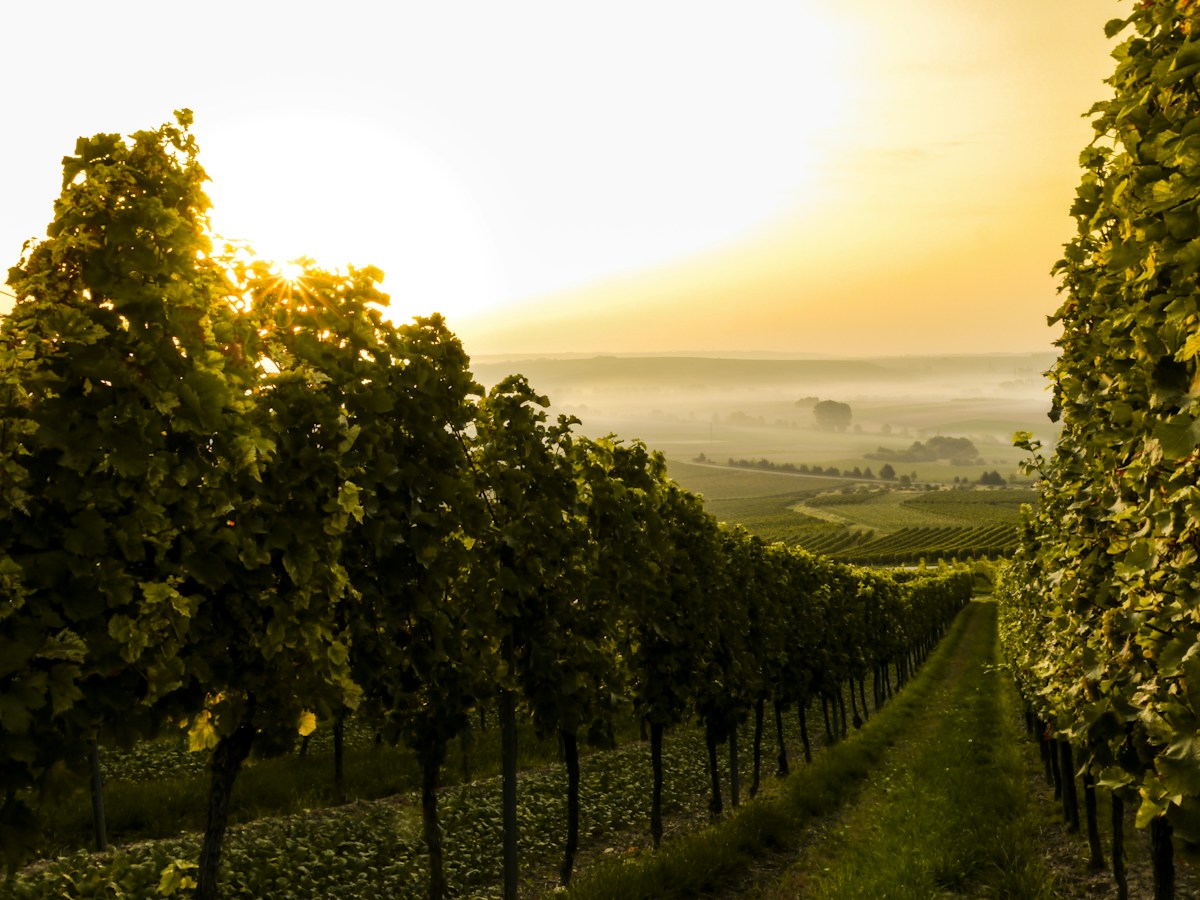
Imagine a cool morning in September. Wisps of fog lie like a gossamer veil over the shell-limestone terraces, the Main glides silently through the landscape, and somewhere between Escherndorf, Iphofen and Randersacker the first harvest crates crackle in the dew of the vines. The air smells of damp stone, herbs, yeast and a hint of anticipation – anticipation of that quiet miracle that has shaped the Franconian wine region for more than a millennium.
A glass of Franconian wine – ideally a large, lean, mineral Silvaner – feels like a deep gaze into history. Delicately yellow-green in the glass, with a fine shimmer reminiscent of the morning gleam on the Main. On the nose: herbs, ripe apple, white blossoms, sometimes a hint of wet limestone. On the palate: taut, precise, cool – like a clear thought.
Franconia is more than a wine region. It is a myth of stone, stillness and consequence. A landscape where soils of shell limestone, Keuper marl and coloured sandstone shape the vines, where winegrowers over generations have learned to deal with a harsher climate, steep slopes and low yields. Here Silvaner is not just a grape variety – it is the language in which the terroir speaks.
In this article we dive deep: into the idiosyncratic soils, the continental climate, the characterful grape varieties, the centuries-long history and the culinary combinations that turn Franconian wines into ideal companions for grand tables and quiet moments.
---
The Unmistakable Terroir and Climate
The soil:
Franconia is a mosaic of rock strata that read like geological chronicles – each vineyard site tells a different story.
- Shell limestone (Muschelkalk) – The backbone of classic Franconian Silvaner
Above all in the Maindreieck (around Würzburg, Randersacker, Escherndorf, Sommerach) light, calcareous soil dominates, shot through with fossil shells. These soils are well-drained, warm up relatively quickly and force the vines to root deeply.
The result in the glass: salty minerality, taut structure, an almost “bone-dry” mouthfeel. Wines from shell limestone often feel serious, linear and possess impressive longevity.
- Keuper – The textures of the Steigerwald
In the Steigerwald (including Iphofen, Rödelsee, Castell), colourful Keuper with clay, gypsum and marl-rich layers shapes the terroir. Keuper stores water extremely well, a blessing in dry years.
Wines from Keuper sites often show more body, subtle spice and a slightly creamy texture. Silvaner and Scheurebe in particular unfold a fascinating, herb-scented depth here.
- Coloured sandstone (Buntsandstein) – Elegance and finesse in the Mainviereck
In the Mainviereck (including Bürgstadt, Klingenberg) reddish coloured sandstone dominates. It heats up strongly during the day and releases the warmth at night.
The red wines – above all Spätburgunder (Pinot Noir) – are fine here, almost Burgundian, with red-berry aromas, filigree texture and a mineral backbone. White varieties also gain in elegance and fragrance here.
It is this interplay of rocks – shell limestone, Keuper, coloured sandstone – that makes Franconia unmistakable. No other German winegrowing area concentrates such geological diversity into such a compact space – and yet the style remains consistently: cool, precise, serious.
The climate:
Franconia lies in the rain shadow of the low mountain ranges. The climate is significantly more continental than, for example, on the Mosel or Rhine:
- Warm summers, cold winters – with sometimes large differences between daytime and nighttime temperatures.
This promotes slow, aromatic ripening while preserving a firm, energetic acidity.
- Relatively low precipitation – many classic sites count among the driest vineyards in Germany.
The vines are thus forced to root deeply; this supports terroir-driven aromas but also confronts winegrowers with major challenges in the context of climate change.
- Sunny exposures – especially the steep south-facing slopes along the Main collect light and warmth, allowing reliable ripening even in cooler years.
- Cooling winds and fogs along the rivers – they often ensure slow ripening and in some hollows protect against excessively early budbreak.
The result: Franconian wines combine ripeness and structure without drifting into opulence. These are wines with backbone that don’t fawn for approval, but demand respect and attention.
---
The Grape Varieties: The Heart of the Region
The main players:
- Silvaner – The voice of Franconia
If one grape defines Franconia, it is Silvaner. Around one-third of the vineyard area is dedicated to it – unique in Germany.
Silvaner in Franconia is never loud, never showy. It thrives on finesse, herbal spice, nutty nuances and an almost “stony-salty” minerality. Vinified dry, with moderate alcohol and precise acidity, it often feels like the distilled expression of the soil. In top sites and as Großes Gewächs, Franconian Silvaner is a white wine of world calibre.
- Müller-Thurgau – Tradition with new seriousness
Long underestimated, Müller-Thurgau is experiencing a renaissance in Franconia. With reduced yields, old vines and careful work, fragrant yet dry wines emerge, with notes of muscat, blossoms and stone fruit that perform brilliantly at the table.
- Bacchus – The aromatic seduction
A Franconian specialty with floral, grapey notes, often reminiscent of elderflower and exotic fruits. When vinified dry, Bacchus can appear surprisingly serious and brings a charming lightness into the glass.
- Riesling – The precise loner
In Silvaner’s shadow, Riesling plays a supporting role in Franconia, yet from shell limestone and Keuper arise mineral, taut wines with citrus, stone fruit and a hint of herbaceousness. The style is often cooler, less fruit-driven than in the Rheingau or on the Mosel.
The white/red varieties:
- Scheurebe – A strong suit of Franconia, often vinified dry. Aromas of cassis, grapefruit and lime, paired with crisp acidity and mineral drive – ideal for sommeliers seeking exciting food pairings.
- Weißburgunder & Grauburgunder (Pinot Blanc & Pinot Gris) – In suitable sites, powerful, structured wines emerge with fine nuttiness and discreet fruit; perfect for ambitious gastronomy.
- Spätburgunder (Pinot Noir) – Above all in the coloured sandstone of the Mainviereck, Spätburgunder shows great class: red cherry, raspberry, often fine smokiness, well-integrated oak, silky, dancing tannins. The top wines can easily hold their own with renowned German and Burgundian Pinot Noirs.
- Domina – A regional red specialty, a crossing of Portugieser and Spätburgunder. Deep colour, dark berries, often spicy notes, moderate tannin – a serious companion for hearty dishes.
Franconia is and remains primarily white-wine country, yet the best reds – especially from coloured sandstone – deserve the utmost attention.
---
History & Tradition
To consider Franconia without its history is like smelling a wine without tasting it.
Viticulture in Franconia is documented as early as the 8th century. The Prince-Bishops of Würzburg and the great monasteries were decisive engines of development. The famous Würzburger Stein was already praised in the Middle Ages; in the 17th century it was coveted at the courts of Europe.
A legendary anecdote: 1540, an extremely hot year, yielded a wine that was allegedly served nearly 300 years later – in 1842 – at a state banquet in London. Myth or reality, the legend underlines the reputation of Franconian wines as long-lived, great growths.
One symbol of the region is the Bocksbeutel – the plump, flat-oval bottle whose origins go back to the 18th century. Today, the Bocksbeutel is recognised in the EU as a protected designation of origin and stands for high-quality Franconian wines. It is not just packaging but a statement: independent, unmistakable, tradition-conscious.
In the 20th century, Franconia – like many regions – went through phases of mass production, but since the 1980s/90s a clear quality shift has taken hold: yield reduction, selective harvesting, renewed awareness of individual sites and a new self-image as a terroir region. The varietal profile has shifted in favour of Silvaner, Burgundy varieties and characterful specialties such as Scheurebe.
With the introduction of site classifications and integration into the system of the VDP (Verband Deutscher Prädikatsweingüter), the focus moved even more strongly to origin: Gutswein, Ortswein, Erste Lage, Große Lage. In particular, the Große Gewächse (GG) from Silvaner and Riesling have placed Franconia firmly on the international map of top white wines.
---
Pleasure & Perfect Pairings
Sensory profile:
Franconian wines are not loud entertainers – they are subtle storytellers. Typical are:
- Aromas: Herbs (chervil, chives, sage), ripe apple, pear, white blossoms, sometimes quince and discreet yellow fruit. In Scheurebe and Bacchus you find grapefruit, cassis and floral notes.
- Minerality: A palpable, almost “stone-salty” impression on the palate, especially in Silvaner from shell limestone.
- Mouthfeel: Dry, structured, with clear but never overwhelming acidity. The best wines have a tense, wiry texture that resonates long on the finish.
- Red wines: Spätburgunder with red fruit, fine spice and silky tannins; Domina darker, more powerful, with more body.
Food pairing:
Franconian wines are outstanding food companions. Some sophisticated combinations:
- Silvaner (dry, shell limestone)
– Fine asparagus, classic with hollandaise or melted butter
– Pike-perch or char, pan-fried on the skin, with fennel or leek
– Poached veal brisket with root vegetables
– Refined vegetarian cuisine: herb risotto, celeriac purée, roasted root vegetables
- Silvaner (Keuper, powerful style, GG)
– Veal loin or poultry (corn-fed chicken, guinea fowl) with creamy sauces
– Mature mountain cheeses such as Comté or Gruyère
– Truffle dishes or mushroom risotto
- Scheurebe (dry)
– Ceviche or marinated seafood
– Asian fusion cuisine with coriander, lime, chilli (e.g. Thai salad, sushi variations)
– Goat’s cheese with herbs
- Müller-Thurgau & Bacchus (off-dry to medium-dry)
– Franconian sausages with sauerkraut
– Smoked trout or “Karpfen blau” (poached carp)
– Aromatic, mildly spicy vegetable dishes
- Spätburgunder (coloured sandstone)
– Saddle of venison or wild duck with lingonberries
– Lamb cutlets with thyme
– Mushroom dishes, especially with porcini or chanterelles
– Mature soft cheeses like Brie de Meaux or Époisses
- Domina
– Braised beef shoulder, ox cheeks
– Blood sausage, robust terrines
– Hearty, region-typical dishes with dark sauces
Regionally, Franconian wines harmonise particularly well with Franconian cuisine: Schäufele (roast pork shoulder), sausages, carp, hearty cold-cut platters. Yet in fine dining they reveal their true stature alongside finely composed, modern dishes.
---
FAQ – The 10 Most Important Questions About Franconia
1. What makes Franconian wines so special?
Franconian wines unite a continental climate with unique soils of shell limestone, Keuper and coloured sandstone. Silvaner in particular shows a terroir-driven, mineral precision here that is unrivalled in Germany.
2. Which grape varieties dominate in Franconia?
Silvaner is the leading variety, complemented by Müller-Thurgau, Bacchus, Riesling, Scheurebe and Burgundy grapes. Among the reds, Spätburgunder and Domina are in the spotlight.
3. How does a typical Franconian wine taste?
Dry, structured, with clear acidity and pronounced minerality. Aromas of herbs, apple, pear, stone fruit and subtle citrus notes are typical; in reds, red berries, spice and fine tannins dominate.
4. How long should you cellar Franconian wines?
Good estate and village wines drink best within 3–5 years. Single-vineyard wines and Große Gewächse from Silvaner or Riesling can age 8–15 years – and longer in outstanding vintages. High-quality Spätburgunder reaches its optimum between 5 and 12 years.
5. Which dishes pair well with Franconian wines?
Silvaner is a versatile partner for fish, poultry, asparagus, vegetarian cuisine and mild cheese. Scheurebe suits intensely flavoured, even exotic dishes. Spätburgunder and Domina harmonise with game, beef, lamb and robust regional specialties.
6. What is special about Franconia’s terroir?
The combination of shell limestone, Keuper and coloured sandstone in a comparatively dry, continental climate. This diversity of soils shapes wines with a clear sense of place, taut structure and pronounced minerality.
7. Which wineries in Franconia are particularly recommendable?
Among the most renowned producers are, for example:
- Weingut Juliusspital (Würzburg)
- Weingut Bürgerspital zum Hl. Geist (Würzburg)
- Weingut Rudolf May (Retzstadt)
- Weingut Hans Wirsching (Iphofen)
- Weingut Fürst (Bürgstadt)
8. What does a good Franconian wine cost?
- Entry level: €7–12 for solid estate wines.
- Mid-range: €12–25 for high-quality village and single-vineyard wines.
- Premium: €25–60 (and above) for Große Gewächse and top Spätburgunder.
9. When is the best time to visit Franconia?
The late spring (May/June) and autumn (September/October) are ideal. In spring the vineyards bloom and seasonal taverns open; in autumn you experience harvest time, golden light and often breathtaking moods in the vineyards.
10. What are good alternatives to Franconian wines?
Those who love Franconian Silvaner will find exciting alternatives in Saale-Unstrut or in Rheinhessen (especially on calcareous sites). For mineral, cool white wines, regions such as the Nahe or some Burgundy crus from Chablis are also options – but Franconia’s specific clarity remains unique.
---
Conclusion: A Wine That Touches the Soul
Franconia is not a wine region that thrusts itself upon you. It whispers. In the coolness of its cellars, in the shadow of centuries-old walls, in the quiet glide of the Main past vineyard slopes whose names you want to murmur like prayers: Würzburger Stein, Escherndorfer Lump, Iphöfer Julius-Echter-Berg, Klingenberger Schlossberg.
A Franconian wine – especially a great Silvaner – is not a quick pleasure. It wants to be understood, felt, experienced. Every sip is a gentle confrontation with origin, with stone, with time. For trainee sommeliers, for demanding connoisseurs and for all those who seek more in wine than fruit and alcohol, Franconia is a treasure chamber.
So: Find yourself a bottle of Franconian Silvaner – ideally from a renowned site, perhaps filled in Bocksbeutel. Chill it gently, open it with respect, pour. Breathe. And let it tell you what shell limestone, Keuper, coloured sandstone and a silent river called the Main have created together in more than a thousand years.
It is not just wine. It is a sip of eternity.