The Sea-Whispering Trebbiano: A Sun-Drenched White Between Sea Spray and Almond Blossom
Ein leiser, salziger Weißwein-Poet: Trebbiano zwischen Adria-Licht, Mandelhauch und glasklarer Säure – perfekt für Meeresbrise, Tavolata & stille Genussmomente.
The Sea-Whispering Trebbiano: A Sun-Drenched White Wine Between Sea Spray and Almond Blossom
---
Introduction
Dear wine lovers,
some wines enter a room like a drum roll – loud, opulent, demanding. And then there are those quiet beauties that don’t overwhelm you, but embrace you like a clear morning by the sea. Trebbiano belongs to these gentle poets in the glass. No loud star, no eccentric diva – but a white wine that paints with light, tells stories with salt and sings with acidity.
Trebbiano is like a sun-drenched morning on the Adriatic, when the air is still fresh, the sea shimmers silver and the first rays of sun gently break on the surface of the water. In the glass it gleams straw yellow with silvery reflections, as if the sea itself had left a part of its light behind. On the nose, lemon peel and green apples, white blossoms and a hint of almond dance on a salty breeze – memories of warm stone walls, herb meadows and ancient olive groves.
But Trebbiano unfolds its true magic on the palate: light in body, crystal clear in texture, carried by vibrant, high acidity that runs over the tongue like a fresh wave washing over hot sand. Nothing heavy, nothing burdensome – just an elegant, zesty flow that makes you crave the next sip, a piece of bread, a little olive oil, life itself.
---
1. The Globetrotter in the Glass: Where Trebbiano Is at Home
Trebbiano is a traveller – a globetrotter on the vine. And yet its heart beats strongest in Italy. Where sea and mountains meet, where ancient monasteries crown the hills and cypress-lined roads point the way into the evening light, Trebbiano has found its true home.
Abruzzen – Sea Breeze in the Wine
In Abruzzen, Trebbiano gazes down from the hills almost directly onto the Adriatic. You can feel this closeness to the sea in every sip. The wines are often feather-light, with crystal-clear freshness and distinct salty minerality.
Lemon zest, green apple, a touch of vineyard peach – that’s the typical chord. The arch of acidity is high and taut, vibrating like a string in the morning sun. Trebbiano from Abruzzen feels as if someone were blowing a cool sea breeze into your face while you stand barefoot on warm pebbles.
Emilia-Romagna – The Table Wines of the North
In Emilia-Romagna, Italy’s great larder, Trebbiano appears side by side with Parmigiano Reggiano, Mortadella and Prosciutto. Here, you’ll often find uncomplicated, honest wines whose main purpose is simple: to be perfect meal companions.
The style is usually subtle and fruity, with notes of pale fruit, green apples and delicate white blossoms. The acidity stays firm, almost crunchy, which makes it ideal alongside the region’s rich, often opulent dishes. A wine that doesn’t dominate, but gives space – like a good host at a long tavolata.
Toscana – When Trebbiano Turns Noble
Toscana is famous for its red wines, but in the shadow of Sangiovese and friends, Trebbiano also grows here. In the right hands, it can show astonishing character.
Tuscan Trebbiano is often somewhat more structured, sometimes aged in wood, with a delicate almond note and riper fruit: vineyard peach, lemon peel, perhaps a hint of herb meadow on a hot summer’s day. The acidity remains present, but is cushioned by a fuller texture. This creates a fascinating contrast: a wine that stays light, yet offers serious depth on the finish.
Lazio – The Quiet One in Rome’s Shadow
In Lazio, the countryside surrounding Rome, Trebbiano has accompanied Roman everyday life for centuries. In the city’s trattorie, it is poured by the glass alongside fried vegetables, Pasta Cacio e Pepe or fresh Pecorino.
The style is often uncomplicated, accessible, very fresh: plenty of green fruit, citrus, white blossoms and a spritzy acidity that feels like a cool sip from a fountain after you’ve walked across sun-baked cobblestones. Here, Trebbiano is a wine of the moment – not for meditation, but for pure enjoyment in the vibrant now.
Umbrien – Herb Meadow and Stone
In Umbrien, the green heart of Italy, Trebbiano shows a somewhat more serious, mineral side. The soils and climate often yield wines in which fine salty minerality mingles with herb meadow, almond and subtle stone fruit notes.
It’s as if you were standing in the afternoon heat in a meadow scented with wild thyme, chamomile and warm stone. The wine remains light in body, yet its structure is clearly drawn, almost architectural – a quiet, sensitive companion.
---
2. Between Steel and Stillness: How Maturation Shapes Trebbiano
Trebbiano is like a delicate fabric: it can remain airy and transparent like fine silk – or be woven a little denser when consciously shaped in the cellar. Two paths in particular leave their mark on its character: maturation in stainless steel and in wooden casks.
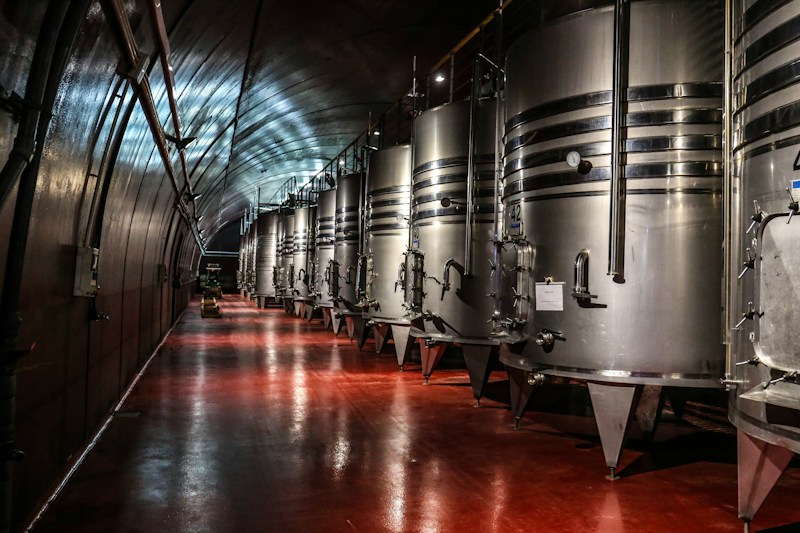
Stainless Steel – The Pure, Salty Wave
In stainless steel, Trebbiano remains completely unadorned. No wood, no vanilla, no toast – just fruit, blossom, acidity and minerality.
Here, the citrus side comes to the fore with special clarity: lemon zest, lime, green apple, white blossoms. The high acidity feels lively, almost dancing, and the salty minerality runs like a gentle thread across the palate.
Stainless-steel Trebbiano is the ideal wine for moments when you long for lightness: a glass on the balcony after a long day, a spontaneous dinner with friends, the first sip when the sea is just coming into view. Served chilled, it’s like a clear bell ringing in the distance.
Wooden Cask – The Quiet Depth of Tone
When Trebbiano is matured in wood – usually in large, used casks – something fascinating happens. The variety remains light, but gains in texture, creaminess and inner calm.
The citrus fruit becomes gentler, vineyard peach and almond step more clearly into view. The herb meadow grows denser, almost a touch more Mediterranean: rosemary, dried herbs, plus a warm, slightly nutty note. The acidity remains high, but feels more integrated, creamier.
Such a Trebbiano is no loud “oaky” white – more like a wine that has aged in the cool shade of an old Tuscan villa: stony, composed, with a view over the valley. It invites you to linger, to sip slowly, to ponder and to feel.
---
3. Pairing Recommendations: The Perfect Partner
Trebbiano is a master of accompaniment. Its lightness, high acidity and salty minerality make it an outstanding food partner – especially in Mediterranean cuisine.
| Gericht | Wein-Stil | Warum es funktioniert |
|-----------------------------------|----------------------------|---------------------------------------------------------------------------------------|
| Spaghetti alle Vongole | Fresh Trebbiano from stainless steel | The salty minerality mirrors the seafood, the acidity cuts through the olive oil and makes the citrus aromas of the clams shine. |
| Gegrillter Wolfsbarsch mit Kräutern | Lightly wood-aged Trebbiano | The delicate almond and peach notes harmonise with the grill flavours and herbs, while the acidity keeps the dish elegant and lively. |
| Büffelmozzarella mit Tomaten & Basilikum | Young, very fresh Trebbiano | The crisp acidity refreshes the creamy texture of the cheese, citrus and apple notes highlight the sweetness of the tomatoes, and the herb-meadow character echoes the basil. |
---
4. FAQ – 10 Questions for Trebbiano Lovers
❓ 1. Is Trebbiano always dry?
In most cases, yes. Trebbiano is predominantly vinified dry, with clear acidity and no noticeable residual sweetness. There are rare exceptions in the form of off-dry or special dessert wines, but in everyday life you will almost always encounter Trebbiano as a dry, refreshing white wine.
❓ 2. What does Trebbiano typically taste like?
It is light, fresh and focused on bright aromas: lemon zest, green apple, white blossoms, vineyard peach, a hint of almond and often clearly salty minerality. On the palate it feels slim and lively, with high, zesty acidity – more sea breeze than tropical storm.
❓ 3. At what temperature should I serve Trebbiano?
Around 8–10 °C is ideal for fresh, stainless-steel-aged versions. For somewhat more structured Trebbiano, possibly matured in wood, 10–12 °C is better, so that almond notes, herb meadow and the finer texture can fully unfold.
❓ 4. How long can I store a bottle of Trebbiano?
Most Trebbiano wines are made for immediate enjoyment – within 1–3 years of the vintage. There are, however, more ambitious examples, especially from Toscana or Umbrien, that develop beautifully with 3–5 years of bottle age and gain in complexity. As a rule of thumb: the simpler and cheaper the wine, the sooner you should drink it.
❓ 5. How do I recognise a good Trebbiano on the shelf?
Look for origins such as Abruzzen, Umbrien, certain Tuscan appellations, and for producers known for their commitment to quality. Clues like low yields, hand selection at harvest or details on maturation (e.g. extended lees ageing) suggest careful craftsmanship. And: if the tasting notes on the shelf mention “salty minerality” and “crystal-clear acidity”, you’re usually on the right track.
❓ 6. Is Trebbiano only a match for fish?
Fish and seafood truly are dream partners, but by no means the only ones. Trebbiano also works wonderfully with light pasta dishes, Pizza Bianca, fried vegetables, fresh summer salads, light poultry and mild young cheeses. Its high acidity makes it a versatile table wine that balances fat and creaminess beautifully.
❓ 7. Is Trebbiano a “simple” grape variety?
Trebbiano has the reputation of being an uncomplicated, sometimes even plain everyday wine – and yes, part of the production fills exactly that role. But don’t underestimate it: in the right sites, with low yields and thoughtful maturation, Trebbiano can achieve astonishing finesse and depth. It remains light, but gains seriousness – a quiet wine that lingers long.
❓ 8. How does Trebbiano differ from, say, Pinot Grigio or Sauvignon Blanc?
Pinot Grigio can be similarly light and fresh, but often feels softer and less salty-mineral. Sauvignon Blanc is usually more aromatic, louder, with notes of gooseberry, cassis leaf or tropical fruit. Trebbiano, by contrast, is more restrained, citrus-driven, more mineral – more like a clear sketch than a colourful painting.
❓ 9. What glass shape do you recommend for Trebbiano?
A classic, medium-sized white wine glass is ideal. It should gently focus the aromas without concentrating them too much. For simple, crisp versions, a straightforward everyday glass is perfectly fine. For more complex, wood-aged wines, the glass can be slightly more bulbous so that the finer nuances of almond, peach and herb meadow can unfold.
❓ 10. Why should I consciously explore Trebbiano if it is often “just” an everyday wine?
Because Trebbiano teaches you to appreciate the quiet. Not every special wine has to be loud and opulent. Trebbiano invites you to listen to the nuances: the salty breeze in the background, the delicate hint of almond, the way acidity and light come together in your glass. It reminds you that a late-morning glass of wine by the coast, with a little bread and olive oil, can sometimes be absolutely enough.
At its best, Trebbiano is a poetic, sun-drenched thought – bright, clear and liberating like that very first glimpse of the sea.