Sun‑Child Amigne: Golden Valais Poetry in a Glass
Amigne ist alpine Poesie im Glas: goldene Wärme, kristallklare Frische und die leise, tiefgründige Stimme des Wallis.
Sun‑Child Amigne: Golden Valais Poetry in a Glass
Dear wine lovers,
there are grape varieties that are loud, that step onto the stage like a rockstar in the spotlight. And then there are those quieter characters that don’t overwhelm you at first sip, but slowly embrace you, make you curious, whisper stories to you. Amigne is exactly such a grape – a gentle, golden melody from the heart of the Wallis.
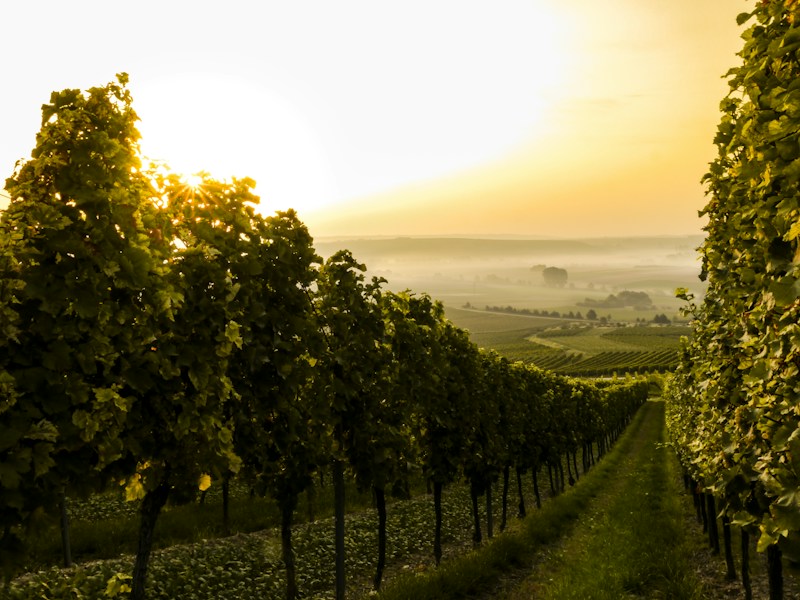
Amigne is like a ray of sunshine lingering in the Valais valley between the vine‑covered slopes, golden and patient. In the glass it shimmers straw‑yellow to amber, as if it carried within it the memory of warm föhn days. Its aroma speaks of ripe apricots, candied citrus zest, white tea and a hint of mountain blossom honey, crossed by the cool line of alpine herbs and the scent of delicate flowers. On the palate it is generous, sometimes gently sweet, yet always held in check by precise, crystalline acidity – like a mountain stream running through a sun‑drenched flower meadow.
What makes Amigne so special is its inner tension: it carries warmth and coolness, richness and transparency, sweetness and freshness within it. It’s a wine that doesn’t just taste, it tells – of terraces clinging to steep slopes, of vintners standing between vine rows at dawn, of a landscape where the mountains stand as silent guardians over the vineyards. When you open yourself to Amigne, you’re not simply drinking wine – you’re drinking a piece of alpine poetry.
---
1. The Globetrotter in the Glass: Where Amigne Is at Home
Amigne is not a globetrotter in the classic sense; it doesn’t grow on all continents, it’s no international star like Chardonnay or Sauvignon Blanc. And yet it is a globetrotter in the glass, because with every sip it takes you to different corners of the Wallis – each area with its own dialect, its own interpretation of this variety.
Vétroz – The Secret Queen
Vétroz is the heartland of Amigne, its birthplace, its most familiar home. Here, on the terraced slopes rising above the Rhône valley, Amigne shows perhaps its most complete form.
The wines from Vétroz are often more powerful and deeper, with ripe, almost velvety fruit: stewed apricots, candied citrus fruits, honey with a hint of wax, plus that fascinating note of white tea and dried mountain herbs. Depending on the style – dry, off‑dry or lusciously sweet – the intensity varies, but the DNA remains the same: a golden, warm soul set within clear, structured acidity. Amigne from Vétroz often feels like an opulent mural in warm yellow tones, finely framed by alpine freshness.
Conthey – The Fine, Elegant Voice
Just a heartbeat away from Vétroz lies Conthey – and yet Amigne speaks a different language here. The wines often appear a little tauter, more delicate in structure, with a touch more citrus zest and less honeyed richness.
In Conthey, Amigne reveals its elegant side: more white tea, more mountain herbs, floral fragrance and an acid‑driven line that makes the wine seem almost weightless. Imagine a clear autumn morning when the sun slowly dispels the night’s chill – this very interplay between freshness and emerging warmth is what you can find in Amignes from Conthey. Ideal for all who prefer finesse over opulence.
Sion – The Urban Interpretation
Sion, the capital of the Wallis, unites history, culture and wine. Here, Amigne often reflects its proximity to the city: precise, clear, sometimes interpreted in a more modern way, with cleanly defined fruit aromas.
Amigne from Sion is frequently medium‑bodied, with a beautiful balance of apricot, citrus zest and floral notes. The honey appears more as a delicate veil than a heavy cloak. The style is accessible, inviting, almost cosmopolitan – like a stroll through Sion’s old town on a warm summer evening, when the air smells of herbs, flowers and stone.
Fully – The Mediterranean Breeze
Further down the valley, Fully already carries a hint of Mediterranean character: more sunshine, a touch more warmth. This is clearly reflected in its Amigne.
Here you often find riper, fuller expressions: intense apricot compote, candied lemon, lavish blossom honey, plus a spicy herbiness that can veer towards thyme and dried mountain flowers. The acidity remains in a pleasant mid‑range, but feels softer, more integrated. Amigne from Fully is like warm, golden afternoons – perfect for unhurried hours of pleasure.
Martigny – Where the Mountains Kiss Your Tongue
Martigny lies at the crossroads of valleys, cultures and winds. Amigne from here can bring remarkable freshness, as if the surrounding mountain ranges themselves were breathing through the wine.
You’ll find notes of citrus zest, white tea and an airy herbaceous quality reminiscent of freshly crushed alpine herbs. The fruit is less opulent, more precise: apricots in their lighter, juicier guise, plus a hint of honey, but more as an accent than the main motif. Amignes from Martigny often feel contemplative, clear, almost crystalline – like the reflection of mountains on the surface of an alpine lake.
---
2. Kissed by Steel, Embraced by Oak: How Maturation Shapes Amigne
Amigne is a variety with character, but also with astonishing versatility. Like a musician who shines both in chamber music and on the big stage, it reveals different facets in stainless steel and oak – and both are captivating in their own way.
Maturation in Stainless Steel – The Pure, Crystalline Voice
In stainless steel, Amigne remains completely naked, completely unadorned. No oak, no vanilla scent, no toast – just the pure essence of the grape and its terroir. Here you get the clearest lines: radiant fruit of apricot and candied citrus zest, flanked by fresh floral notes, white tea and a cool streak of mountain herbs.
The acidity stands out more clearly in stainless‑steel‑aged Amigne, precise and vibrant without being aggressive – more like a fine laser beam than a sharp knife. The body remains medium, slender enough for lightness, yet with enough density to leave its mark. Vinified dry or off‑dry, Amigne shows itself here as a refreshing yet profound food partner.
In terms of taste, stainless‑steel Amigne is like a clear morning in the Wallis: the air cool, the light bright, the contours sharply drawn. A wine for those who love transparency, precision and mineral tension.
Maturation in Oak – The Warm, Enveloping Embrace
In oak, the key changes. Amigne doesn’t become a loud opera diva, but it gains depth, texture and complexity. Especially in large, used barrels it unfolds a wonderful harmony between varietal character and finely integrated oak structure.
The fruit appears riper, creamier: ripe apricot, sometimes almost dried, plus intense honey notes and a certain waxiness. The citrus zest becomes softer, rounder, and the clear, linear acidity gives way to a smoother, almost silky texture. Often a hint of nuts, fine vanilla, biscuit or dried flowers joins in – never dominant, more like a gentle background music.
Especially in off‑dry or lusciously sweet versions, oak maturation can become a true revelation: the sweetness like a golden thread running through the wine, held in balance by moderate yet perceptible acidity. It’s as if you were stepping into a sun‑flooded attic full of memories, where the air is scented with wood, dried flowers and fruit.
Both worlds – steel and oak – suit Amigne beautifully. Which you prefer depends on whether you want to drink it as a clear mountain stream or as golden, warming light.
---
3. Pairing Recommendations: The Perfect Partner
| Gericht | Wein-Stil | Warum es funktioniert |
|-------------------------------------------|-----------------------------------|---------------------------------------------------------------------------------------|
| Zanderfilet auf Fenchel-Orangen-Gemüse | Trockener Amigne aus Stahltank | Die Zitruszeste und Kräuternoten greifen Orange & Fenchel auf, die mittlere Säure erfrischt den Fisch, ohne ihn zu überdecken. |
| Ziegenkäse-Tarte mit Thymian & Honig | Halbtrockener Amigne, teils Holz | Honig- und Aprikosennoten spiegeln die Glasur, Säure kontert die Cremigkeit, Kräutertöne verbinden sich mit dem Thymian. |
| Rehmedaillons mit Preiselbeerjus & Polenta | Edelsüsser Amigne im Holzfass | Süsse und Honigaromen umspielen die Wildwürze, Säure balanciert Fett & Jus, Frucht ergänzt die Preiselbeeren harmonisch. |
---
4. FAQ – 10 Questions for Amigne Lovers
❓ 1. Is Amigne an old or a new grape variety?
Amigne is considered a traditional, autochthonous variety of the Wallis and has been rooted in the region for centuries. Its precise origins are lost in the mists of history, but genetic studies suggest that it belongs to the independent, locally shaped varieties – a true cultural heritage, not a modern fashion grape.
---
❓ 2. Is Amigne always sweet?
No. Amigne can be made in various styles: from dry to off‑dry all the way to lusciously sweet dessert wines. Many producers indicate the sweetness level on the label. In dry form it shows more citrus zest, tea and herbs; off‑dry it brings the honey and apricot notes more to the fore; and lusciously sweet it becomes a golden, sumptuous wine for pure indulgence.
---
❓ 3. What does a typical Amigne taste like?
It is medium‑bodied, with medium acidity and complex aromatics. Typical are ripe apricot, candied citrus zest, floral notes, fine mountain blossom honey, white tea and alpine herbs. On the palate it feels generous, sometimes with delicate sweetness, always structured by clear, crystalline acidity. The best examples combine warmth and freshness like hardly any other white variety.
---
❓ 4. At what serving temperature should I pour Amigne?
For dry or off‑dry Amigne, 9–11 °C is ideal – cool but not icy, so that the herbal and tea aromas can unfold. Off‑dry and sweet versions can happily be served a little warmer, at 11–13 °C. Too cold and you lose the poetry; too warm and the sweetness quickly feels heavy.
---
❓ 5. What glass suits Amigne best?
A medium‑sized white wine glass with a slightly rounded bowl is ideal. It should provide enough room for the complex aromas of apricot, honey and herbs to unfold without concentrating the wine too much. For lusciously sweet styles, a somewhat smaller dessert wine glass works well to focus the intensity.
---
❓ 6. How well does Amigne age?
Well‑crafted Amigne – especially those with some residual sugar – can age surprisingly well. Dry versions can mature beautifully for 5–8 years, off‑dry and sweet ones for 10 years or more. Over time they develop deeper honey notes, more tea and herbal aromas, and sometimes a fine waxiness, without losing their acid structure. Mature Amigne can be deeply moving.
---
❓ 7. Is sweet Amigne only suitable with dessert?
Not at all. An off‑dry or lusciously sweet Amigne is fantastic with tangy cheeses, foie gras, game dishes with fruity sauces or Asian cuisine that plays with heat and sweetness. The sweetness then acts like a culinary buffer and links different flavour worlds. Only the very concentrated, highly botrytised wines are classic dessert partners.
---
❓ 8. How does Amigne differ from better‑known varieties like Riesling or Viognier?
Riesling is usually higher in acidity, more citrus‑driven and often more mineral, while Amigne feels rounder, more honey‑woven and more herbal. Viognier brings more exotic fruit and floral opulence, often with less acidity. Amigne sits in between: it has the poetry of fruit and flowers, but with an alpine, herbal‑tea coolness and medium yet clear acidity – a distinctive voice in the choir of white wines.
---
❓ 9. Is Amigne rare?
Yes, in global terms Amigne is a rarity. The vineyard area is small, concentrated mainly in the Wallis, with a focus on Vétroz and neighbouring villages. This scarcity is precisely what makes it so appealing to wine lovers: those who discover Amigne enter a niche where truly unvarnished characters can still be found.
---
❓ 10. How do I find my favourite style of Amigne?
Consciously taste different expressions: dry from stainless steel for clarity and freshness, off‑dry with some oak for creaminess and depth, and a lusciously sweet version to experience its opulent, golden side. Pay attention to origin (e.g. Vétroz vs. Conthey) and sweetness level. Note which ones touch you most – the crystalline mountain stream or the warm sunlight in your glass. Over time, you’ll compose your very own Amigne symphony.
---
The next time you hold a glass of Amigne in your hand, take a moment, close your eyes and listen. In this straw‑yellow to amber shimmer lies not just a wine, but an entire valley, a climate, a dialect – and perhaps also a small fragment of your own longing for light, warmth and depth.