Gold Dust Godello: The Quiet Poetry of Galician Hills in Your Glass
Godello is the quiet poet among Spain’s white wines – salty, mineral, zesty and zart cremig, voller leiser Tiefe und atlantischer Melancholie.
Gold Dust Godello: The Quiet Poetry of Galician Hills in Your Glass
Dear wine lover,
imagine standing in a Galician vineyard in the early morning hours. Veils of mist wrap around the vines, the ground smells of wet slate, and somewhere in the distance you hear the muffled roar of the Atlantic. That very feeling – this soft, salty whisper from a landscape between sea and mountains – is what Godello captures in your glass.
Godello is not a loud grape variety. It doesn’t scream for attention, it whispers. But if you take the time to listen, you’ll discover one of Spain’s most fascinating white varieties: shimmering pale gold with greenish reflexes, like morning dew on stones; taut and juicy, with high, crystal-clear acidity; and at the same time with a delicate creaminess that feels like the first warm sun after a long winter. Lemon, grapefruit, pear, apple, white blossoms, wild herbs and a salty minerality that evokes sea spray and wet rocks – all of this comes together in a wine that tastes like a walk through an Atlantic highland.
For me, Godello is the “underrated poet” among white wines. It doesn’t need gaudy effects or overblown exoticism. Instead, it tells stories of earth, wind and water, of ancient terraced vineyards and forgotten vines that Galicien almost lost – until a few stubborn winemakers decided to give this grape its voice back. Today, Godello is an insider’s tip for everyone who seeks more than mere refreshment in a white wine: character, depth and a quiet, moving beauty.
---
1. The Globetrotter in the Glass: Where Godello Calls Home
Even though Godello has a deeply Galician soul, it shows different faces depending on where it grows. Let’s travel together through its most important home regions.
Valdeorras – The Cradle on Slate
Valdeorras in Galicien is considered the historic heartland of Godello. Steep slopes, sparse slate and granite soils, a continental climate with Atlantic influence – this is where Godello learns to speak in a slender, precise, mineral voice.
- Style: Taut, focused, with high acidity and clear citrus fruit (lemon, grapefruit).
- Aromas: Lemon zest, green to yellow apple skin, pear, white blossoms, a hint of fennel or other herbs.
- Mouthfeel: Cool, salty, stony – like a sip from a mountain spring in which slate slabs are reflected.
Valdeorras-Godello is the purist expression of the grape, the “mountain poet”: reserved, yet with impressive clarity and length.
Ribeira Sacra – Terraces Above the Abyss
Ribeira Sacra is dramatic: steep terraces rising above the river gorges of Miño and Sil, vines clinging to the slopes as if they never wanted to let go. Here, Godello meets a particularly cool, Atlantic-influenced climate.
- Style: More elegant, often a touch lighter in alcohol, with pronounced acidity and delicate structure.
- Aromas: Subtle lemon, fresh pear, white blossoms, sometimes an almost smoky-stony note from the soil.
- Mouthfeel: Airy and fine-boned, yet with a clear, salty line – like a fresh breeze sweeping across the river.
Ribeira-Sacra-Godello often feels like a meditating monk at the edge of a monastery: quiet, profound and filled with inner calm.
Monterrei – The Gentle Warmth
Further inland, in Monterrei, Godello feels a bit more sun. Days are warmer, nights still cool enough to preserve the acidity – an ideal environment to show more ripeness without losing freshness.
- Style: Rounded, with a somewhat fuller body (still medium), and riper fruit.
- Aromas: Yellow pear, ripe apple, a bit more grapefruit, sometimes a hint of tropical nuances, but never loud.
- Mouthfeel: Softer, creamier on the palate without sacrificing freshness – like a slightly more mature vintage of a trusted friend.
Monterrei-Godello is the gentle charmer: approachable, inviting, yet with depth.
Ribeiro – Between Rivers and Mists
Ribeiro lies in the hinterland of the Atlantic, shaped by rivers like the Miño and a patchwork of different soils. Godello is often blended here, but as a varietal wine it shows its playful, aromatic side.
- Style: Fruit-driven, playful, with pronounced citrus and floral notes.
- Aromas: Lemon, grapefruit, fresh apple, white blossoms, fine herbaceous notes.
- Mouthfeel: Juicy, lively, with dancing acidity – like a freshly pressed lemon-apple juice on a spring morning.
Ribeiro-Godello is the cheerful face of this grape: lively, accessible, perfect for convivial gatherings.
Bierzo – Between Atlantic and Meseta
Although Bierzo is better known for Mencía, Godello here shows a thrilling combination of Atlantic freshness and ripeness influenced by the continental plateau.
- Style: Structured, mineral, often with good density and ageing potential.
- Aromas: Citrus, yellow apple, slightly smoky-mineral notes, dried herbs.
- Mouthfeel: Firm core, fine creaminess, salty length – like a walk across wet pebbles after a summer rain.
Bierzo-Godello is the reflective intellectual: with edges, corners and plenty of substance for patient tasters.
---
2. Of Steel and Slate Dreams: How Ageing Shapes Godello
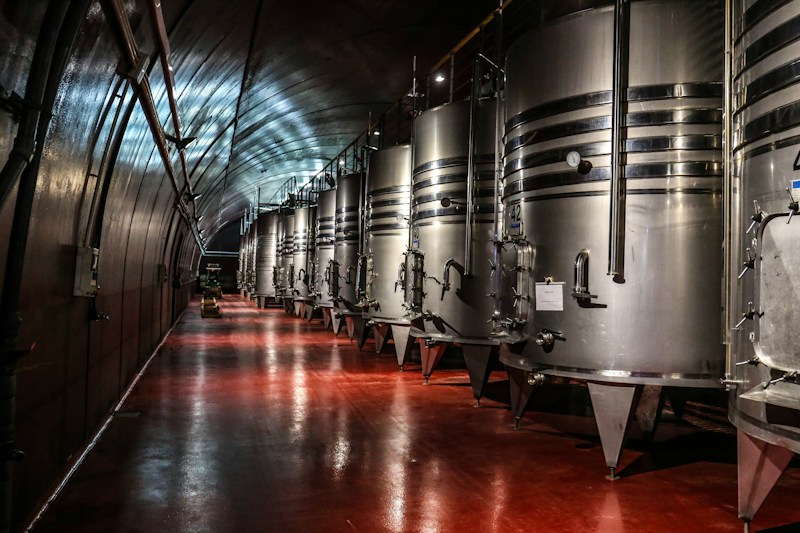
Godello is a chameleon in the cellar – not in the sense of losing its identity, but in its ability to absorb different ageing styles and translate them into its own quiet elegance. Two worlds shape its character: stainless steel and wooden barrels.
In Stainless Steel: The Crystal-Clear Voice
Godello aged in stainless steel is like an unaccompanied soloist in a silent cathedral: every nuance is audible, nothing distracts.
- Aromatics:
- Lemon, grapefruit
- Fresh pear, green to yellow apple
- White blossoms, delicate herbs
- Distinct, salty minerality
- Taste & Structure:
- High, lively acidity
- Medium body, very clear and linear
- Cool, stony impression – “wet stones”, mountain spring, sea breeze
This style emphasizes freshness, precision and a direct link to the terroir. Ideal when you want to experience the pure, unadulterated essence of Godello.
In Wood: Whispering Depth
In wooden barrels – often used barriques or larger casks, sometimes with some lees ageing (sur lie) – Godello unfolds a deeper, almost meditative side. The wood should never dominate but act like a frame that underlines the picture.
- Aromatics:
- Riper citrus fruit, sometimes candied lemon
- Yellow pear, baked apple
- Subtle: vanilla, brioche, roasted nuts (when wood use is more pronounced)
- Herbs and salty minerality remain, but are more softly embedded
- Taste & Structure:
- Acidity stays present, but feels creamier and rounder
- More volume on the mid-palate, slightly oily-creamy texture
- Longer, multi-layered finish that opens up further with air
Barrel-aged Godello is like a sunbeam falling through church windows: warm, soft, golden – without forgetting the cool stone cathedral it breaks in. This is the style for those who love Burgundian structures but are looking for something saltier, fresher.
---
3. Pairing Suggestions: The Perfect Partner
Godello is a dream at the table because it unites two rare traits: taut acidity and subtle creaminess. That makes it a bridge-builder between simple and sophisticated dishes, between sea and land.
| Gericht | Wein-Stil | Warum es funktioniert |
|---------------------------------------|----------------------------------|----------------------------------------------------------------------------------------|
| Gegrillter Wolfsbarsch mit Zitrone & Kräutern | Godello aus dem Stahltank | Die hohe Säure schneidet durch das Fischöl, die Zitrus- und Kräuternoten spiegeln das Aroma, die salzige Mineralität umarmt die Meeresaromen. |
| Galicischer Pulpo (Pulpo a la Gallega) | Holzfass-gereifter Godello | Die leichte Cremigkeit und Struktur des Weins balanciert die Textur des Oktopus; Paprika, Öl und Salz werden durch die Mineralität und feine Würze perfekt aufgefangen. |
| Zitronen-Risotto mit Meeresfrüchten | Godello mit teilweisem Holz- & Hefelager | Die Cremigkeit des Risottos trifft auf die zarte Cremigkeit des Weins; Säure und Zitrusfrucht sorgen für Frische, die salzige Note verbindet sich mit den Meeresfrüchten. |
---
4. FAQ – 10 Questions for Godello Lovers
❓ 1. Is Godello comparable to Albariño?
Godello and Albariño both hail from northwest Spain and share Atlantic freshness, but their characters differ. Albariño often appears more aromatic, with more stone fruit and exotic notes. Godello is subtler, more mineral, with a stronger focus on citrus, apple, pear and salty, stony depth. If Albariño is the extroverted singer, Godello is the quiet lyricist.
❓ 2. What does a typical Godello taste like?
A classic Godello shows bright citrus fruit (lemon, grapefruit), juicy pear, fresh apple, white blossoms and a distinct herbal spice. On the palate it is medium-bodied, with high, clear acidity and salty minerality reminiscent of sea breeze and wet stones. Depending on the ageing, a fine creaminess may appear, without ever feeling heavy.
❓ 3. At what temperature should I serve Godello?
For Godello from stainless steel, 8–10 °C is ideal to fully reveal freshness and fruit. Barrel-aged, more complex Godellos can be served a bit warmer, at 10–12 °C – this allows the texture to open up and the subtle aromas to be more expressive.
❓ 4. Is Godello suitable for ageing?
Yes – much more than you might think at first glance. Simple, fresh Godellos are designed for 2–3 years. High-quality, structured examples, often aged in wood, can mature for 5–8 years, some even 10 years and longer. Over time they develop more complex notes of honey, nuts, dried herbs and baked apple, while retaining their salty freshness.
❓ 5. Does Godello only work with fish?
Not at all. While it’s a dream partner for fish and seafood, its combination of acidity and creaminess makes it incredibly versatile: poultry, creamy pasta dishes, risotto, vegetarian cuisine with fennel, lemon, herbs, even mildly spiced Asian dishes with ginger or coriander – Godello remains composed and harmonious.
❓ 6. Is Godello more for beginners or for connoisseurs?
Both. For beginners, Godello is easy to approach because it is fresh, not overly aromatic and very drinkable. For advanced tasters, there is a lot to discover: differences in terroir, ageing styles, ageing potential, subtle nuances. Anyone who appreciates Burgundy, Chenin Blanc or high-quality Vinho Verde will find in Godello a new, equally fascinating voice.
❓ 7. How do I spot a good Godello on the shelf?
Look for the appellation (DO Valdeorras, Ribeira Sacra, Monterrei, Ribeiro, Bierzo) and for “Godello” clearly stated on the label. Price-wise, solid quality usually starts at a mid-level; particularly cheap examples tend to be simple and fruit-driven. Terms like “fermentado en barrica”, “sobre lías” (lees ageing) or “crianza en roble” indicate more complex wines with structure and ageing potential.
❓ 8. Is Godello an old or a new grape variety?
Godello is historically old but was almost forgotten in modern times. Only in the last few decades have dedicated winemakers in Galicien searched out the remaining old vines, propagated them and brought them back into the spotlight. In a way, Godello is a “rediscovery” – an old soul in a new guise.
❓ 9. How does Godello differ from well-known varieties like Chardonnay or Sauvignon Blanc?
- Chardonnay: Can be similarly creamy and structured, especially with wood, but often shows more yellow fruit, butter, vanilla. Godello feels tighter, more mineral, saltier, with higher, tauter acidity.
- Sauvignon Blanc: Is usually more aromatic (gooseberry, cassis, green bell pepper), sometimes grassy. Godello is more restrained, elegant, less loud, with a focus on citrus, apple/pear and “wet stone” notes.
❓ 10. When is the perfect moment for a glass of Godello?
Whenever you feel longing for sea and mountains at the same time. When you want a wine that refreshes your mind without tiring your palate. During long conversations with friends, with a simple plate of mussels, on a quiet evening with a good book – Godello is not a wine for a big show, but for genuine, lived moments. A soft whisper that lingers for a long time.
---
Next time you stand in front of a shelf full of white wines, let your gaze pause for a moment when you see “Godello” on a label. Picture the Galician mist, the slate terraces and the salty Atlantic breeze – and take a bottle home. You might just discover your new, quiet favourite poet in that glass.