Sea-Salt-Whisper Picpoul: The Lemon-Souled Mediterranean in Your Glass
Picpoul ist wie eine salzige Meeresbrise im Glas – zitrisch, lebendig, maritim und wie geschaffen für alles, was nach Meer schmeckt.
Sea-Salt-Whisper Picpoul: The Lemon-Souled Mediterranean in Your Glass
Dear wine lovers,
come with me to a place where the wind tastes of the sea, the air smells of wild thyme, and the light is so bright that even the vines have to squint. There, in the shimmering glow of the southern French Mediterranean, lives a grape variety made for summer days, salty lips, and the gentle melancholy of sunset: Picpoul.
Picpoul is like a salty sea breeze captured in grape form – born on the shores of the Étangs, the lagoons of the Languedoc, where oyster beds, pine groves, and garrigue weave a mosaic of aromas. In the glass it shimmers pale gold with greenish reflections, like sunbeams on the waves of the Étangs of Sète. On the nose, lemon zest, lime, white flowers, green apple, and fresh herbs dance together, laced with a hint of sea salt and crushed seashells. On the palate it is razor-sharp and yet tender, with vibrant acidity that awakens your saliva and calls insistently for the next sip.
What makes it so special? Picpoul is not a wine that shouts. It is a whisper – but one you will never forget. It unites lightness and clarity with an almost oceanic saltiness that makes it unique. It is the quiet hero at your side with oysters, clams, and everything that tastes of the sea – and at the same time a wine that carries you back to a beach you may never have visited and yet feel you somehow know.
---
1. The Globetrotter in the Glass: Where Picpoul Feels at Home
Picpoul de Pinet – The Luminous Icon by the Lagoon
The heart of Picpoul beats in Picpoul de Pinet, an appellation along the lagoon landscape of the Côtes de Thau in the département of Hérault. Here, between the Mediterranean and the Étangs around Sète, the vines grow on calcareous, often stony soils that function like heat reservoirs. By day they bathe in blazing sun, by night sea breezes cool their brows.
The style?
Light, crystal clear, with high, dancing acidity. Here you’ll find everything that defines Picpoul: lemon and lime zest, green apple peel, white flowers, plus that unmistakable maritime note: sea salt, seashell, sometimes a hint of wet stone. These wines are like a plunge into clear water – invigorating, refreshing, immediate.
Coteaux du Languedoc – Picpoul in the Choir of Garrigue
In the broader region of Coteaux du Languedoc (today Languedoc-AOC), Picpoul often appears as part of blends or as a stand-alone interpretation. Here, the influence of the Garrigue – that wild Mediterranean vegetation of thyme, rosemary, juniper, sage – is more clearly felt.
The style?
A touch fuller, often with more spice. To the citrus notes are added herbal aromas: a hint of thyme, fennel, sometimes sage. The acidity remains high, but the mouthfeel can be a little rounder without ever becoming heavy. These are wines that take the step from simple “terrace wine” to fully-fledged, serious food partner.
Côtes de Thau – The Intimate Mirror of the Sea
The Côtes de Thau around the Étang de Thau act like a natural mirror of the Mediterranean. Here, Picpoul is especially shaped by its proximity to oyster beds, mussel farms, and salty winds.
The style?
Delicate, mineral, and even more "sea" in the glass. Here you can almost taste the seashell: chalk, salt, a hint of iodine. The citrus notes lean more toward lime, a little cooler, sometimes complemented by subtly bitter hints of grapefruit. It’s as if you were sitting on a rock with your feet in the water, and someone handed you a glass of wine that captures precisely that moment.
Languedoc & Hérault in General – The Wide Homeland of Picpoul
The Languedoc, and especially the département of Hérault, is the wide, sun-drenched homeland of Picpoul. Outside the classic appellations you’ll find winemakers here who experiment with the variety: from purist stainless-steel wines to rarer barrel-aged versions or spontaneously fermented natural wines.
The style?
Diverse. From crisp-fresh everyday wines to characterful, lightly textured terroir wines. Yet the fingerprint remains recognizable: high acidity, lemony freshness, a fine saltiness, and that light, vibrating transparency through which the terroir shines.
---
2. Between Seashell and Lemon Zest: How Aging Shapes Picpoul
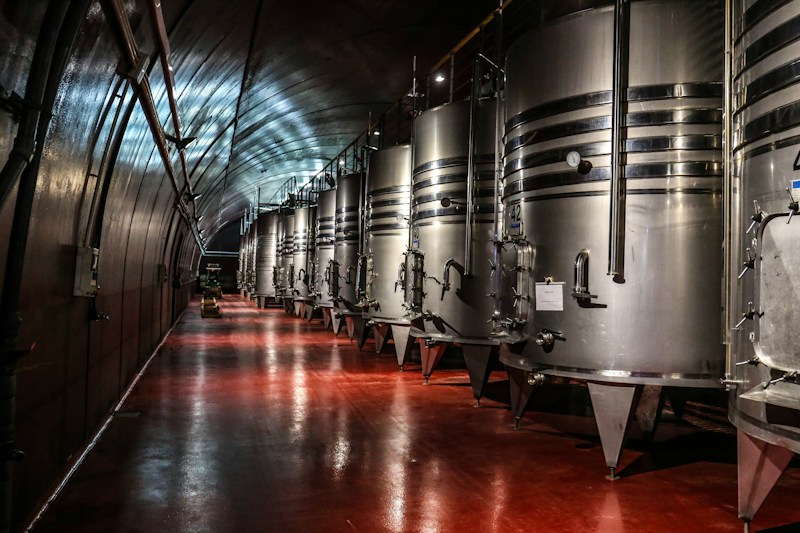
By its very nature, Picpoul is a child of light and clarity. Most winemakers want to preserve exactly that in the glass – and therefore prefer stainless steel tanks. But sometimes the grape is also given a gentle whisper of oak along the way.
In Stainless Steel: The Pure, Salty Breeze
Maturation in stainless steel is the classic, almost archetypal form of Picpoul. Here the focus is on freshness, precision, and immediacy.
- Aromas: Lemon, lime, green apple, white flowers, subtle herbal notes of the garrigue, sea salt, seashell
- Mouthfeel: Light, taut, racy. The high acidity delivers a razor-sharp but not aggressive bite.
- Character: Slender, straightforward, like a cool sea wind blowing through your hair.
Stainless-steel aging makes Picpoul the perfect wine for mild afternoons on the terrace, for an aperitif, or as an ideal companion to all kinds of seafood. Without any distracting oak notes, the variety can show its full citrus-salty spectrum in unadulterated form.
In Oak: A Gentle Echo of Depth and Warmth
Oak and Picpoul – that’s not a loud drumroll, but a very carefully struck chord. Only a few winemakers take this path, and if they do, then mostly with large, used barrels that impart little of their own aroma yet influence structure and texture.
- Aromas: The citrus fruit becomes somewhat riper (more lemon confit than lime zest), green apple can shift towards yellow apple or pear, the floral notes become creamier, sometimes a hint of vanilla or brioche shimmers through – but always delicately.
- Mouthfeel: Somewhat fuller, with more gloss and often a slightly creamy texture, yet always supported by high acidity.
- Character: More depth, a touch of contemplation, ideal for moments of pleasure when you don’t just want to be refreshed, but also immersed.
Oak aging can turn Picpoul into a fascinating food wine: it remains salty and fresh, yet gains in structure. A wine that doesn’t just call for a beach bar, but also for white tablecloths and candlelight.
---
3. Pairing Recommendations: The Perfect Partner
Picpoul is a culinary soul mate to everything that smells of the sea. Its salty minerality, high acidity, and light body make it one of the most authentic partners for fish, seafood – and, surprisingly, also for some vegetarian dishes.
| Gericht | Wein-Stil | Warum es funktioniert |
|-----------------------------------|-------------------------|-----------------------|
| Frische Austern auf Eis mit Zitrone | Klassischer Picpoul de Pinet aus dem Stahltank | Die salzige, muschelige Note des Weins spiegelt den Geschmack der Austern wider, die hohe Säure schneidet durch das Meeresfett und die Zitrusaromen verstärken den Spritzer Zitrone – Meer und Wein verschmelzen. |
| Gegrillter Wolfsbarsch mit Kräutern der Provence | Languedoc-Picpoul mit leichtem Holzeinfluss | Der fein strukturierte Körper und die zarten Holznoten umarmen den gegrillten Fisch, während die Säure das Gericht frisch hält. Die Garrigue-Kräuter im Wein flirten mit Rosmarin und Thymian auf dem Teller. |
| Zitronen-Risotto mit grünem Spargel | Reiner Stahltank-Picpoul mit ausgeprägter Zitrusnote | Die lebhafte Säure des Weins balanciert die Cremigkeit des Risottos, die Zitrusaromen heben die Zitronennoten im Gericht hervor, und die grüne, knackige Frische von Apfel und Spargel finden im Wein ein harmonisches Echo. |
---
4. FAQ – 10 Questions for Picpoul Lovers
❓ Is Picpoul always dry?
Yes. Picpoul is classically made dry. Its high acidity and fresh aromatics call for a fully fermented style. Residual sugar would blur its clear, salty character and is uncommon in quality wines from Picpoul de Pinet and the like.
---
❓ What does Picpoul typically taste like?
Imagine Picpoul as a bite into a lime by the sea: lemon, lime, green apple, white flowers, plus sea salt, seashell, and often a hint of herbs of the garrigue. It is light in body but with high, lively acidity that literally makes your mouth water.
---
❓ Which dishes pair best with Picpoul?
Its supreme discipline is seafood: oysters, mussels, shrimp, grilled fish. But ceviche, sushi, grilled vegetables, lemon chicken, or fresh goat cheese styles also make great partners. The key: rather light dishes in which salt, acidity, and freshness play a role.
---
❓ Is Picpoul a wine only for summer?
It’s a summer star, but no seasonal worker. In winter it brings the sea into your living room when rain drums against the windows. A bowl of mussels in white wine sauce, plus a glass of Picpoul – and you can almost hear the waves crashing, even in the depths of December.
---
❓ How should I serve Picpoul (temperature, glass)?
Picpoul loves it cool but not icy: 8–10 °C is ideal. Too cold and it falls silent; too warm and the acidity can seem more dominant. Use a classic white wine glass: not too large, so the fine, citrus-salty aromas remain focused, but with enough space to swirl and release its aromatic diversity.
---
❓ Can Picpoul be aged, or should it be drunk young?
Most Picpoul is made to be enjoyed young and fresh – within 2–3 years of harvest. That’s when citrus fruit and sea salt shine brightest. There are, however, a few structured or lightly oak-aged versions that, after 3–5 years, can show an intriguing development with slightly nutty and honeyed nuances. But the classic magic lies in its youth.
---
❓ How does Picpoul differ from Sauvignon Blanc or Albariño?
Picpoul plays in the same league of fresh, maritime-influenced white wines, yet remains its own character:
- Compared to Sauvignon Blanc, Picpoul is usually less "green" (less gooseberry, less grass), but saltier and more citrus-driven.
- Compared to Albariño, it often feels slimmer, more direct, with an even stronger emphasis on lemon and lime rather than stone fruit.
Picpoul is the distilled Mediterranean breeze, where Sauvignon evokes cool meadows and Albariño the Atlantic.
---
❓ What does the name “Picpoul” actually mean?
The name likely comes from "pique-poule" or "picapol", meaning something like "chicken peck" or "pecks at the palate". A charming allusion to its piquant acidity, which tickles the palate awake and – like a chicken scratching in the soil – curiously pecks for depth. A name that brings a smile and fits remarkably well.
---
❓ Is Picpoul also known as a red or rosé wine?
Historically, Picpoul Noir and Picpoul Gris also existed in southern France, but internationally it is almost exclusively the white Picpoul that has become famous. The red and grey variants are rare curiosities today; if you come across them, you have a small wine rarity in your glass. For the typical style – citrusy, salty, light – white Picpoul is the benchmark.
---
❓ When is the perfect moment for a glass of Picpoul?
Whenever you long for clarity, freshness, and the sea. The first evening on the balcony in spring, an impromptu oyster picnic by the river, a plate of spaghetti alle vongole with friends, or simply that instant when you feel: "I need light in my glass right now." Picpoul is the wine for exactly this quiet yet unmistakable craving.
---
Next time you stand in front of a shelf and spot a pale-golden label bearing the name Picpoul de Pinet, reach for it – and let yourself be transported to the shores of the Mediterranean. From that moment on, you might always carry a little hint of sea salt in your heart whenever you think of white wine.