[Morgentau] Elbling: The Quiet Soul of the Mosel in Your Glass
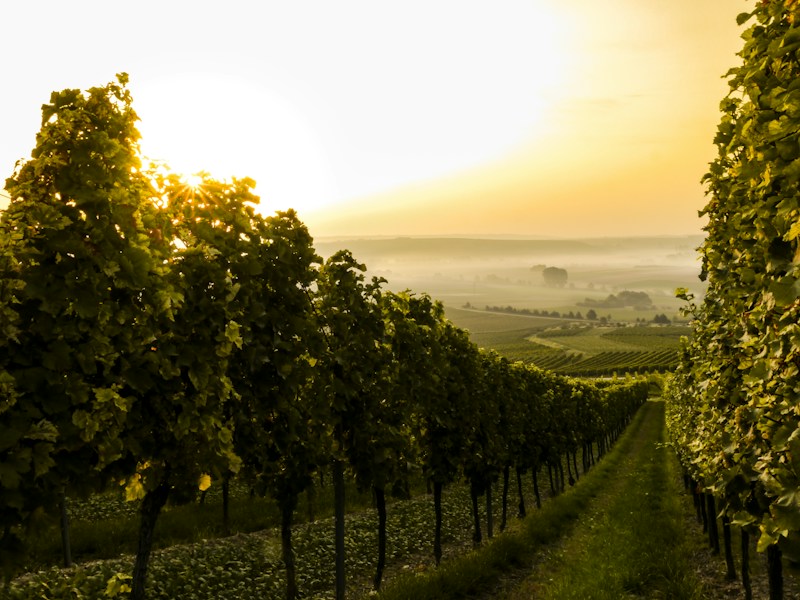
Elbling – zart, kühl und klar wie Morgentau an der Mosel. Eine leise Rebsorte mit großer Strahlkraft im Glas.
[Morgentau] Elbling: The Quiet Soul of the Mosel in Your Glass
Dear wine lovers,
sometimes a wine whispers where others shout. It doesn’t need a grand entrance, no opulent fruit bomb, no baroque opulence. It arrives quietly – and that’s exactly where its magic lies. That’s Elbling: one of Germany’s oldest yet most modest grape varieties, and still one that can transport you, with a single sip, to the cool early hours of the morning on the Mosel.
Elbling is like a fresh morning mist over the Mosel, silent and delicate yet full of hidden energy. In the glass it shimmers pale lemon, like sunlight shyly reflected in slate. On the nose, green apples, lime zest and a hint of white blossoms dance, accompanied by the cool dampness of old cellar vaults. On the palate, it is featherlight, crystal-clear and as swift as rapids, a sparkling river of acidity that doesn’t just quench thirst but ennobles it – like a clear mountain stream gliding over stones and waking every thought with a kiss.
While other grape varieties have long claimed their place on the great stages of the wine world, Elbling remains a quiet poet, writing its own verse on the terraced slopes of the Mosel, Saar and Ruwer. It tells of slate and limestone, of wind over river bends, of craftsmanship and history. If you’re ready to listen, it opens up a world where lightness is not a lack, but a promise.
---
1. The Globetrotter in the Glass: Where Elbling Calls Home
Mosel – The Cradle of Clarity
On the Mosel, that endless chain of loops, steep slopes and slate cliffs, Elbling finds its very own voice. Here it shows itself bright, wiry and racy. The wines are often crystal-clear, with aromas of green apple, lemon and a touch of white blossoms. The high acidity acts like a fine laser beam: precise, invigorating, never tired.
The slate soils contribute a delicate minerality, almost like wet stone after summer rain. Mosel-Elbling is the wine you drink at midday on the terrace, when the sun sparkles and you feel as if the day could last forever.
Obermosel – Limestone, Chalk and Cool Herbs
A very special microcosm is the Obermosel, where the subsoil is less slate-based and more defined by limestone and shell limestone. Here Elbling finds a different voice: somewhat more herbal, even tauter, often with an almost salty pull on the finish. These wines recall lime zest, green herbs and sometimes freshly baked bread – a delicate yeasty note that nestles against your tongue.
The style is both purist and down-to-earth. Obermosel-Elbling is like a walk along dust-dry limestone paths in early summer, when the air shimmers and the wind smells of herbs and chalk.
Saar – Cool Elegance
The Saar is considered one of the coolest regions in the Mosel area – a paradise for grape varieties that love acidity. Here, Elbling shows its tautest, most linear side. The wines are light in body but highly concentrated in freshness: crisp lemon, lime, green apple peel, often accompanied by a very delicate, almost floating florality.
Saar-Elbling is not a wine that cuddles up to you; it’s the one that shakes you awake. A wine for purists and for all who love it when a sip feels like a clear breath on a mountaintop.
Ruwer – The Whisper of Cellars
Ruwer, small, cool, shaped by forests and narrow valleys, produces Elbling that is often more restrained in fruit yet more intense in minerality. Here you feel the “cool dampness of old cellar vaults” particularly clearly: a delicate yeast tone, a hint of moist stone underpinned by citrus zest and white blossoms.
Ruwer-Elbling is like a black-and-white photograph: reduced, focused on lines and contours. For connoisseurs who can hear nuances in silence.
Rheinland-Pfalz – Tradition Meets Everyday Joy
In other parts of Rheinland-Pfalz, Elbling is above all an everyday wine – and I mean that with the greatest respect. Here, uncomplicated, fresh, dry white wines are produced, the kind you pull chilled from the fridge when friends drop by unexpectedly. They often highlight fresh apple and lemon fruit, are low in alcohol and designed for uncomplicated enjoyment.
Elbling from Rheinland-Pfalz is that heartfelt “Come, take a seat” glass: unpretentious, thirst-quenching, honest.
---
2. Between Steel and Stillness: How Maturation Shapes Elbling
By nature, Elbling brings lightness, high acidity and fine, citrus-driven aromatics. Like a raw diamond, it can be shaped by how it’s matured – and yet its core always remains clear and unadorned.
Stainless Steel – Pure, Glassy Freshness
The classic path for Elbling is maturation in stainless steel. Stainless steel is neutral and cool; it doesn’t transform, it preserves. Here the focus remains entirely on freshness, fruit and clarity. The crisp acidity, notes of green apple, lemon and lime, delicate white blossoms and salty minerality take center stage.
Elbling wines matured in stainless steel are:
- featherlight in body
- very fresh, taut and linear
- fragrant with citrus, green apple and sometimes delicate yeast
- perfect as an aperitif, terrace wine or partner for light dishes
This is Elbling like morning dew in the glass – crystalline, clear, vibrating.
Wooden Casks – A Gentle Frame, Not a Loud Brushstroke
Wood and Elbling – at first, that sounds like a contradiction, because this grape thrives on its transparency. But in large, used casks (Stück, Halbstück or Fuder), often made from old oak or regional wood, Elbling can gain an extra dimension without being overwhelmed.
Here, it’s not about vanilla or toast, but about:
- gently rounding the acidity
- a finer, creamier impression on the palate
- subtle notes of yeast and bread crumbs
- more texture on the palate without heaviness
Elbling from wooden casks remains light, but it feels more composed, quieter, almost meditative. The minerality often comes to the fore more clearly, the citrus fruit becomes a touch riper, the herbal note can deepen.
While stainless-steel Elbling is like glassy mountain water, Elbling from wooden casks is like a river that has already carried a few more stones with it: still cool, but with softer edges.
---
3. Pairing Recommendations: The Perfect Partner
Elbling is a master of understatement at the table: its high acidity, light body and citrus freshness make it a brilliant food partner – especially where other wines fail because fat, salt or acidity dominate.
| Gericht | Wein-Stil | Warum es funktioniert |
|-----------------------------------|----------------------------|---------------------------------------------------------------------------------------|
| Flammkuchen mit Speck & Zwiebeln | Trockener Stahltank-Elbling | Die hohe Säure schneidet durch Fett und Speck, die Frische trägt Zwiebel-Süße, Mineralik hält alles leicht. |
| Gebratener Zander mit Kräutern & Zitronenbutter | Holzfass-gereifter Elbling | Zitrusnoten spiegeln die Zitronenbutter, Kräuterigkeit ergänzt die Fischwürze, leichte Cremigkeit passt zur Sauce. |
| Spargelsalat mit Ei & Vinaigrette | Trockener, säurebetonter Elbling | Die straffe Säure kontert die Vinaigrette, der leichte Körper überfordert den Spargel nicht, Kräuter- und Hefenoten runden das Ei ab. |
---
4. FAQ – 10 Questions for Elbling Lovers
❓ 1. Is Elbling some kind of “simple” wine?
Elbling is simple in the best sense of the word: clear, direct, unpretentious. It doesn’t try to impress with richness or exotic fruit, but with freshness, drinkability and authenticity. “Simple” here is not a judgment of quality, but a description of style – and in the right hands, Elbling can be stunningly precise and full of character.
---
❓ 2. What does Elbling typically taste like?
It is light in body with high, lively acidity. Aromatically, green apple, lemon, lime and white blossoms dominate, along with a often tangible minerality – wet stone, chalk, river pebbles. Depending on maturation and region, subtle yeast notes and a herbal component join in, reminiscent of fresh herbs or meadow herbs in spring.
---
❓ 3. Is Elbling related or comparable to Riesling?
Historically and genetically, Elbling is a very old grape variety with its own story. In style, it shares Riesling’s love for acidity and minerality, but is generally simpler in its aromatic profile: less peach and exotic fruit, more apple, lemon and lime. Elbling is usually lighter, more restrained – a sparse mountain path compared to the panoramic highway of Riesling.
---
❓ 4. Should Elbling be drunk young, or can it age?
Most Elbling wines are made for early enjoyment: young, fresh, within 1–3 years of the vintage. There are, however, producers who deliberately craft structured, mineral Elbling bottlings, often matured in wood or on the lees for an extended period. These can remain exciting for 5 years and more, developing more herbal notes and a more complex, almost salty depth.
---
❓ 5. What is the ideal serving temperature for Elbling?
Between 7 and 10 °C, Elbling shows its strengths. The very simple, fresh versions can be served well chilled (7–8 °C), especially on warm days. More ambitious, mineral or wood-matured Elbling wines shine at 9–10 °C – that’s when the subtle yeast tones and herbal nuances really come through.
---
❓ 6. What does Elbling pair particularly well with in the kitchen?
With anything that calls for freshness: salty snacks, Flammkuchen, quiches, fish, seafood, light poultry dishes, asparagus, vegetable cuisine, salads with vinaigrette. Its assertive acidity also makes it a great partner for fried foods and spicy but not searingly hot dishes. It’s your best friend when a dish seems “too difficult” for many other wines.
---
❓ 7. Is Elbling mostly dry, or are there sweet versions too?
Traditionally, Elbling is predominantly vinified dry – bone-dry, as they like to say in the Mosel region. Off-dry or semi-dry versions exist but are less common than with Riesling. Sweet or noble-sweet Elbling wines are rarities and the result of stylistic experiments by individual winemakers.
---
❓ 8. Why is Elbling so little known, even though it’s so old?
For centuries, Elbling was an important variety, especially as the base for simple, refreshing wines. With the rise of Riesling and international varieties, it slipped somewhat into the background. Today it is experiencing a quiet renaissance, as many winemakers and wine lovers are once again seeking authentic, regional, light wines that don’t follow a global uniform taste.
---
❓ 9. What should I look for when buying Elbling?
Pay attention to origin (Mosel, Obermosel, Saar, Ruwer) and to maturation notes (steel, wood, “feinherb” or “trocken”). Producers who explicitly champion the variety and offer several Elbling bottlings often show particular ambition. Vintages with cooler weather generally emphasize the citrusy, taut style; warmer years can bring slightly riper fruit.
---
❓ 10. For whom is Elbling the “right” wine?
For you if you love lightness and aren’t afraid of acidity. For people who would rather drink two glasses of a clear, refreshing wine than one glass of something over-concentrated. For curious drinkers who value regional typicity over international uniformity. And for those moments when all you long for is a sip that clears your head and makes your heart smile quietly.
---
Elbling may not be the wine that gets the loudest applause. But it is often the one you most wish you could pour again after the last sip. If you give it a little attention, you’ll discover: in its delicacy lies a power that lingers – like the first light of a new day over the still slopes of the Mosel.