The Whisperer of Light Palomino Fino: How Andalusia’s Salt, Sun and Wind Dance in Your Glass
Palomino Fino – eine leise, salzige, kreidige Poesie Andalusiens, in der Terroir statt Frucht die Hauptrolle spielt.
The Whisperer of Light Palomino Fino: How Andalusia’s Salt, Sun and Wind Dance in Your Glass
---
Dear wine lovers…
If you’ve ever wandered through the narrow streets of Jerez on a hot afternoon, the air filled with chalk dust, sea breeze and the dark scent of old bodegas, then you’ve already felt Palomino Fino – long before you ever had it in your glass. This grape variety is not a loud, colourful storyteller. It’s a whisper. A murmur of sun on white chalk, of wind on salty cheeks, of silence in cool barrel cellars.
Palomino Fino is the bright shimmer of the Andalusian sun in your glass, the whisper of the Poniente across the Albariza soils of Jerez. Its colour is pale like white sand at midday, a soft glimmer of straw and ivory that gently dazzles the eyes. On the nose, salty breezes, almond skins and a hint of chamomile rise up, as if you were sitting in an old bodega between chalky walls and shadowy barrels. On the palate it is dry like an Andalusian siesta, yet underneath pulses a quiet, medium‑bodied energy – carried by medium body, medium acidity and this unmistakable mix of salt, almonds, lemon zest, chalk, green apples and hay flowers.
This grape variety is no showstar pushing itself to the front. It is more a stage on which the terroir takes the lead role. Palomino Fino is the canvas on which the winds Poniente and Levante paint, on which the Albariza soil leaves its bright chalky handprint, on which cellar masters live out centuries‑old traditions in barrels. If you surrender to it, a world opens up: quiet, subtle, salty – and profoundly Andalusian.
---
1. The globetrotter in your glass: Where Palomino Fino feels at home
Even though Palomino Fino is planted all over the world, its heart beats in southern Spain – in a triangle of sun, sea and chalk known as the “Marco de Jerez”. Here this variety unfolds all its finesse.
Jerez-Xérès-Sherry – The cathedral of Palomino
Jerez is the spiritual centre of Palomino Fino. On the bright Albariza soils – those shimmering, almost blinding chalky hills – the ground stores winter moisture and slowly releases it to the vines in the summer heat. This is where the Palomino wines are born that later become the famous Sherrys.
Typical for Jerez is a style shaped by salty precision and fine almond notes: hints of chalk, green apple, lemon zest and dried hay flowers. In dry vinification – as a base for Fino or Manzanilla – the wine is lean to medium‑bodied, with medium but clearly defined acidity that sweeps across the palate like a fresh breeze. In Jerez, Palomino Fino tastes of chalky rock, of still heat and the cool darkness of old soleras.
Sanlúcar de Barrameda – A breath of the Atlantic
Sanlúcar de Barrameda, right on the Atlantic, is the gentle, maritime brother of Jerez. Here Palomino Fino breathes the salty air of the ocean. The Poniente winds cool the town and sneak into the bodegas, where they influence the ageing process under the flor yeast.
The style here is even lighter, even airier. In Manzanilla wines made from Palomino Fino you’ll find a dancing freshness: more salt, more chamomile, the delicate bitterness of fresh lemon zest, a memory of green apples and tender almonds. It’s as if you were drinking a glass of sea breeze – a wine that tastes like the fish market in the morning and like sunset at the harbour.
El Puerto de Santa María – The quiet bay of light
El Puerto de Santa María forms the third corner of the classic Sherry triangle. Here maritime coolness and intense sun merge. The Palomino Fino wines from this region are often something in between the robust power of Jerez and the filigreed salinity of Sanlúcar.
They show the typical aromas of chalk, almond and chamomile, carried by a medium body that can appear a touch rounder and softer. Acidity is also medium, but with a fine bite that keeps the wine lively. In El Puerto the variety becomes a harmonious whole: less extroverted than Manzanilla, less strict than a classic Fino from Jerez, yet wonderfully balanced and irresistibly drinkable.
Marco de Jerez – The wider mosaic
“Marco de Jerez” refers to the broader area around the classic triangle, a mosaic landscape of villages, sites and soil types. Here Palomino Fino shows its versatility. Depending on site and proximity to the sea, the wines can be somewhat more fruit‑driven (green apple, subtle citrus hints) or markedly more chalky and structured.
The characteristic style: bright, elegant, reserved in primary fruit, with an all the more pronounced presence of texture and minerality. The wine feels like a clear line on which salty, almondy and hay‑flower accents rest. Nothing pushes itself forward – and yet everything is there.
DO Condado de Huelva – The quiet outsider
A little west of Jerez, closer to Portugal, lies the DO Condado de Huelva. Here Palomino Fino is often blended with other varieties, made both dry and in off‑dry to sweeter styles.
In Condado de Huelva, the variety can feel a bit softer, sometimes a bit juicier, with a touch more green apple and citrus at the forefront. The salty signature is present but less pronounced than in Jerez or Sanlúcar. Here Palomino Fino speaks with a gentler voice: a Mediterranean white wine with an Andalusian accent that pairs beautifully with food.
---
2. Under flor and sun: How ageing shapes its character
Palomino Fino is a grape variety that naturally has rather restrained fruit aromas. That is precisely what makes it so unique – because it reacts like a sensitive instrument to every intervention in the cellar. Whether stainless steel tank or wooden barrel, still wines or classic Sherry ageing: the style changes drastically, while the core – salt, almond, chamomile, chalk – remains.
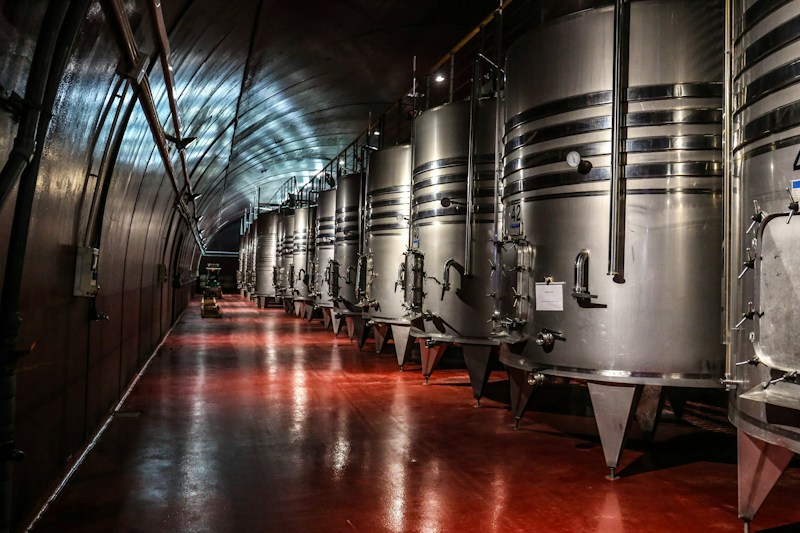
In stainless steel – The pure, quiet voice
Aged in stainless steel, Palomino Fino shows its clearest, most unadorned side. Steel preserves freshness, acidity and the subtle primary aromas of the grape. Here you’ll mainly find:
- Delicate scent of green apple
- Fine lemon zest
- A hint of hay flowers and dried chamomile
- A salty, chalky line running through the wine
The body remains medium, the acidity also medium but clear. These wines are precise, linear and almost meditative. They are ideal partners for light cuisine, fish, seafood – and they show just how much elegance can be found in an apparently modest grape variety.
In wooden barrels – The voice of the cellar
When Palomino Fino is aged in wood, the real magic begins. Whether in neutral used barrels or with a touch of fresh oak – the wood gives depth, structure and additional aromas. This is often where the classic Sherry styles come into play, but there are also dry, “still” barrel‑aged Palomino wines.
Barrels and especially ageing under flor yeast (as with Fino and Manzanilla) bring:
- More intense almond notes (from sweet almond to almond skin)
- Pronounced salt and chalk aromas
- More chamomile, hay flowers, sometimes delicate bread or yeasty tones
- A firmer, almost creamy mouthfeel despite the dry, austere impression
Compared with stainless steel, barrel‑aged Palomino feels broader, more complex and more persistent. The body stays in the medium range, yet the texture feels denser. The acidity is still medium, but it’s woven into a mesh of salt, nuttiness and gentle oxidation.
Picture two images:
- The stainless‑steel Palomino is a clear, cool morning in the vineyards.
- The barrel‑aged Palomino is the afternoon in the bodega, shafts of light falling through small windows, dust motes dancing in the warm half‑light.
Both are authentic faces of the same variety – and both tell you about Andalusia, just in different tones.
---
3. Pairing recommendations: The perfect partner
Palomino Fino is a master of understatement – and precisely for that reason a brilliant food partner. Its salty, chalky nature, notes of almond, chamomile and lemon zest, its medium acidity and medium body make it a true chameleon at the table.
| Dish | Wine style | Why it works |
|------------------------------------|------------------------------------|-----------------------------------------------------------------------------------------------------------------|
| Grilled sardines with sea salt | Stainless‑steel, dry Palomino | The salty, maritime freshness of the fish merges with the salty, chalky character of the wine; citrus and apple add clarity and lift. |
| Jamón Ibérico & salted almonds | Fino/Manzanilla (barrel‑aged) | Nut meets nut: almond aromas and salt in the wine caress the fat and umami of the ham and bring out its sweetness. |
| Tortilla Española with onions | Barrel‑aged, dry Palomino | Medium body and chamomile‑hay aromas harmonise with the texture of egg and potato; gentle acidity and lemon zest bring lightness. |
---
4. FAQ – 10 questions for Palomino Fino lovers
❓ 1. Is Palomino Fino always a Sherry?
No. Palomino Fino is the grape from which many Sherrys (Fino, Manzanilla, Amontillado, Oloroso) are made, but it is also vinified as a still, dry white wine – especially in modern projects in the Marco de Jerez and in DO Condado de Huelva. You can discover Palomino both as “classic Sherry” and as a “quiet white wine”.
---
❓ 2. What does a typical Palomino Fino wine taste like?
It is more subtle than loud: medium‑bodied, with medium acidity, dry to bone‑dry. Typical aromas are salt, almonds, chamomile, lemon zest, chalk, green apple and hay flowers. Fruit is present but never dominant – the focus is on texture, minerality and this unmistakable salty elegance.
---
❓ 3. Why do people so often talk about “salt” and “chalk” in Palomino Fino?
The variety grows around Jerez primarily on Albariza soils – extremely bright, chalky limestone that stores water and offers the roots a lean, mineral environment. Combined with proximity to the sea and salty air, this creates wines that on the palate really do recall salt and chalk. It’s less actual salt in the chemical sense and more a flavour impression of salty freshness and dry minerality.
---
❓ 4. Is Palomino Fino an aromatic grape like Riesling or Sauvignon Blanc?
No. Palomino Fino is the opposite of showy. It is restrained, quiet, almost minimalist. Where Riesling and Sauvignon like to speak in intense fruit tones, Palomino Fino tells its story through structure, yeast, soil and ageing. It’s a wine for connoisseurs who enjoy nuances and subtle in‑between notes.
---
❓ 5. How does Palomino Fino from stainless steel differ from that from barrels?
In stainless steel, the wine feels purer, fresher, lighter on its feet: green apple, lemon zest, delicate hay flowers, a clear salty line.
In barrels (and even more so under flor yeast as in Fino/Manzanilla), it becomes more complex and nuttier: almonds, chamomile, stronger chalk notes, sometimes yeasty and bready accents. The body feels denser, the wine gains depth and length.
---
❓ 6. What food does Palomino Fino pair with best?
It loves everything that tastes of sea, salt and simplicity: grilled fish, prawns, shellfish, tapas, olives, salted almonds, Jamón Ibérico. Simple dishes like Tortilla Española, grilled vegetables or mildly aged hard cheeses also work beautifully. The key is not to drown its finesse in very powerful sauces or very sweet dishes.
---
❓ 7. Is Palomino Fino always vinified dry?
As a grape, Palomino Fino yields rather neutral, moderately aromatic musts, which makes it predestined for dry styles. In the Sherry world, it is mainly used for dry wines (Fino, Manzanilla, Amontillado, Oloroso). Sweeter styles are usually created by adding sweeter wines (for example from Pedro Ximénez), not by the Palomino grape itself. In some regions such as Condado de Huelva there are also off‑dry and gentler versions.
---
❓ 8. How should Palomino Fino be served – temperature and glass?
For dry still Palomino wines and Fino/Manzanilla, 8–10 °C is ideal. That’s cool but not icy, so the delicate aromas can unfold. A medium‑sized white wine glass works very well; for Fino and Manzanilla, slightly tulip‑shaped glasses that focus the salty and yeasty notes are also suitable. Important: don’t serve too warm – otherwise the wines lose their taut, vibrant character.
---
❓ 9. Does Palomino Fino age well?
At the basic level, especially as very simple, young still wines, Palomino Fino is made for early drinking. But: barrel‑aged versions, especially Sherrys based on Palomino, can age sensationally. Over time, almond, chamomile and chalk deepen and complex nutty, sometimes spicy and gently oxidative aromas develop. Some modern, high‑quality still Palomino Fino wines also show fascinating ageing potential over 5–10 years and more.
---
❓ 10. Why is it worth discovering Palomino Fino consciously?
Because it teaches you to hear quiet tones. Palomino Fino is not a wine that overwhelms you with fruit and volume. It demands attention – and rewards it with depth, texture and a uniquely salty, chalky poetry. You taste the light on white soils, the wind from the Atlantic, the silence of old bodegas. If you’re willing to listen, this wine will tell you stories that go far beyond the glass – stories of a land, a culture and a centuries‑old wine tradition.
---
Next time you hold a pale straw‑coloured glass of Palomino Fino in your hand, take a moment of silence. Look through the bright gold, breathe in chamomile, almond and salt. And then drink – slowly. You are tasting Andalusia.


![[Meerwind] Albariño: Die salzige Seele des Atlantiks im Glas](https://images.unsplash.com/photo-1566754436808-0fddc0c0c4c6?w=800)
![[Atlantikflüstern] Alvarinho: Die salzige Seele des grünen Nordens](https://images.unsplash.com/photo-1566995541428-f2246c17cda1?w=800)
