Golden Soul Sémillon: When Fog, Sun and Time Turn into Wine
Sémillon – leise, wandelbar, goldschimmernd. Eine Rebsorte zwischen Nebel, Botrytis, Trockenstil und flüssigem Nektar – und ein leiser Star im Glas.
Golden Soul Sémillon: When Fog, Sun and Time Turn into Wine
---
Dear wine lovers,
sometimes there are grape varieties that don’t shout for attention, but shine quietly, almost mysteriously – like a piece of amber you happen to find in the sand. Sémillon is exactly such a jewel: unassuming in name, overlooked by many, and yet – at the right moment – nothing less than liquid gold.
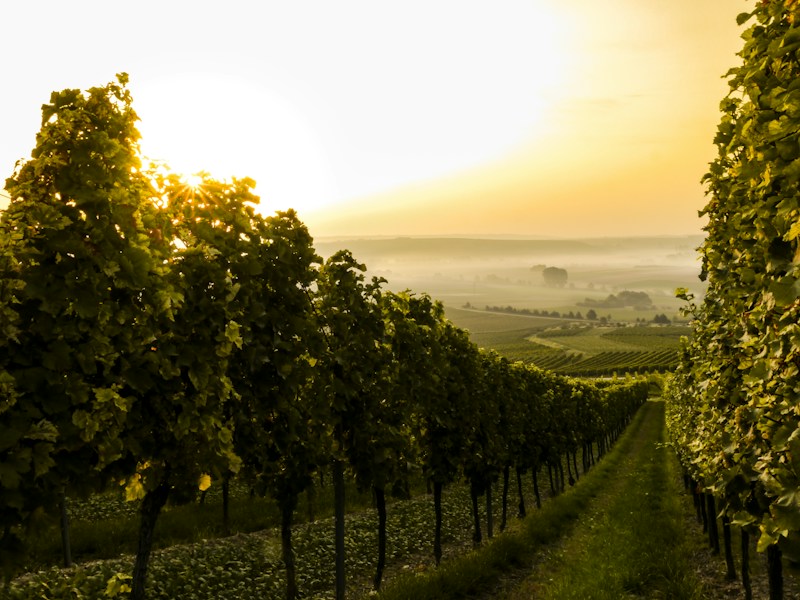
Sémillon is like morning fog over the river meadows of Bordeaux, transformed into wine. It tells of damp autumn mornings along the Garonne, of patient winegrowers, of noble rot that, paradoxically, conjures life into the glass. In the glass it shimmers from straw yellow to deep gold, as if it were holding on to the last rays of an autumn evening and only reluctantly letting them go again. Every sip feels like slow motion: aromas of quince, honey, white peach, apricot and fine citrus zest, framed by a delicate scent of beeswax and blossoms – as if time itself had left its signature.
What makes Sémillon so special is its versatility. It can be the silent, creamy partner in a dry white wine, the gentle, full-bodied companion to a warm summer evening – or the majestic sweet wine that, with Botrytis noble rot, has become an essence of fruit, honey and eternity. Sémillon is a chameleon in the cellar and a storyteller in the glass. If you give it time and attention, it will reward you with depth, emotion and a length that resonates long after the glass is empty.
---
1. The Globetrotter in the Glass: Where Sémillon Is at Home
If Sémillon could speak, it would tell you about rivers and mists, about sun and patience. Its real home lies on the banks of the Garonne and Dordogne in Bordeaux – but its soul has long since begun to travel the world.
Bordeaux – Sauternais: The Cradle of Liquid Gold
In the Sauternais, around villages such as Sauternes or Barsac, Sémillon shows its most famous face. The vineyards lie close to the Garonne; in autumn, cool morning fogs meet warm days – a perfect climate for Botrytis cinerea, the noble rot. What sounds threatening in everyday life is a blessing here: the berries shrivel, concentrating sugar, acidity and aromas, and Sémillon transforms into one of the world’s most iconic sweet wines.
The style: opulent, dense, almost oily in feel, with intense aromas of honey, dried apricot, candied citrus zest, juicy quince and a hint of saffron and beeswax. Despite all this opulence, a delicate yet firm acidity holds everything in balance, like a fine thread keeping a precious cloth together. Sauternes is Sémillon in full royal regalia.
Bordeaux – Graves & Entre-Deux-Mers: Quiet, Dry Elegance
In Graves and Entre-Deux-Mers you’ll most often encounter Sémillon as a dry wine – frequently blended with Sauvignon Blanc and occasionally Muscadelle. Here it is not the sole star, but the mysterious character actor that contributes depth, creaminess and structure.
The style: medium- to full-bodied white wines, often with a restrained nose of white peach, yellow apple, quince, fine lemon and a hint of wax. In their youth they can show fresher, more citrus-driven notes; with barrel ageing they develop creamy, slightly nutty nuances and an almost waxy texture. These are wines you don’t just drink – you feel them in your mouth, like a fabric softly gliding over your skin.
Bergerac & Monbazillac: The Little Siblings with Big Personality
East of Bordeaux, in Bergerac and Monbazillac, Sémillon reveals its kinship with Sauternes – but with its own accent. Noble rot often plays a role here too, especially in Monbazillac, where sweet wines of impressive intensity are produced, though generally accessible a little earlier than the great Sauternes.
The style: sweet, aromatic, but often a touch lighter and fresher in their expression. Alongside quince, honey and apricot, more pronounced floral accents emerge, sometimes with a lively citrus note that gives the wine a playful character. It’s as if Sémillon smiles a bit more casually here – less regal, more heartfelt.
Gaillac & Côtes de Gascogne: The Sunny, Fragrant Side
In the southwest of France, in Gaillac and the Côtes de Gascogne, you’ll often find Sémillon as part of light, easy-drinking white blends or in fruit-driven, sometimes off-dry styles. The climate here is a little warmer, the wines feel more direct and uncomplicated, without losing any charm.
The style: fruit-forward, sometimes delicately floral white wines with aromas of white peach, citrus zest, subtle apricot and fine blossom notes. The body remains medium to full, but the focus is more on freshness and drinkability than on opulence. These are wines made to share with friends – no loud showstoppers, but charming companions to long evenings.
---
2. From Fog to Nectar: How Ageing Shapes Sémillon
Sémillon is like a talented actor: the script, the direction and the stage determine which role it plays. Stainless steel or oak – this choice fundamentally changes its character.
In Stainless Steel: The Clear, Radiant Voice
Aged in stainless steel, Sémillon shows its brightest, most direct side. The tank preserves the primary aromas and protects the wine from oxidation – everything remains precise, fresh and well-defined.
In the glass, this translates to:
- aromas of white peach, fresh quince, yellow apple, citrus zest and delicate blossom notes.
- medium acidity that feels livelier, with a clear, taut texture, even though the wine can still come across as quite full-bodied.
- a more linear impression on the palate, less creamy, but juicier and more invigorating.
Dry, stainless-steel-aged Sémillon wines are ideal food partners: they bring enough body not to be overwhelmed by more substantial dishes, yet also enough freshness to enliven the palate.
In Oak: Depth, Creaminess and Quiet Reverence
In oak – especially barrique – Sémillon reveals its contemplative side. Its natural richness and waxiness harmonise in an almost magical way with wood. Unlike very high-acid varieties, there is no harsh contrast here, but rather a velvety dialogue.
Ageing in oak brings:
- a creamier, denser texture, sometimes almost oily.
- additional aromas: vanilla, toast, fine roasted notes, subtle nuttiness, occasionally brioche or beeswax.
- an evolution in the fruit: instead of crisp citrus you’ll find riper quince, baked apple, dried apricot, honey.
For sweet wines affected by Botrytis, oak ageing is almost mandatory. Noble rot provides incredible aromatic concentration – honey, dried fruits, candied zest, saffron, chamomile – and the wood contributes structure, spice and a framework that can carry the wine for decades. A great Sémillon sweet wine matured in oak is no longer just a wine, but an experience to savour meditatively rather than drink casually.
---
3. Pairing Recommendations: The Perfect Partner
Sémillon is no shy companion. It calls for dishes that can embrace its fullness without overpowering it – plates that pick up its honey notes, quince and peach aromas and its gentle acidity, and ideally mirror them.
| Dish | Wine Style | Why It Works |
|--------|-----------|-------------|
| Seared scallops on parsnip purée with lemon butter | Dry Sémillon aged in oak (e.g. Graves) | The creamy texture of the Sémillon caresses the sweet, nutty scallops; its quince and peach notes echo the gentle sweetness of the sea. The medium acidity and citrus zest in the aroma spectrum pick up the lemon butter and bring everything into balance. |
| Duck liver terrine with apple–quince chutney | Noble sweet Sémillon (Sauternes, Monbazillac) | The wine’s opulence and sweetness meet the richness of the liver – fat and sweetness merge into pure luxury. Quince, apricot and honey in the wine mirror the chutney, while the acidity balances the terrine’s richness and “cleans” the palate. |
| Roast chicken with rosemary, lemon and oven-roasted root vegetables | Dry or lightly matured Sémillon (stainless steel or subtle oak) | The full-bodied structure easily stands up to the roast, while citrus notes and floral accents underline the rosemary and lemon. The gentle acidity cuts through the roasting juices and root vegetables; the subtle waxy tone and yellow fruit aromas wrap themselves around the roasted flavours. |
---
4. FAQ – 10 Questions for Sémillon Lovers
❓ Is Sémillon always a sweet wine?
No. Sémillon is incredibly versatile. In regions like Sauternes or Monbazillac it is often made as a noble sweet wine from botrytised grapes. In Graves, Entre-Deux-Mers, Gaillac or the Côtes de Gascogne, however, you’ll mainly encounter it as a dry or off-dry white, often blended with Sauvignon Blanc. The variety is more of an all-rounder than tied to sweet wine alone.
---
❓ What does Sémillon typically taste like?
Sémillon is full-bodied with medium acidity. Typical aromas include ripe quince, honey, white peach, apricot, citrus zest, floral notes and a characteristic hint of wax or beeswax. In sweet wines you’ll also find dried fruits, candied citrus, caramel, sometimes saffron and chamomile. With age, many Sémillon wines develop nutty, waxy notes, almost reminiscent of old Champagne.
---
❓ How does Sémillon differ from Sauvignon Blanc?
Sauvignon Blanc is usually higher in acidity, more aromatic and distinctly “greener” – with notes of gooseberry, grass, blackcurrant leaf, citrus and sometimes exotic fruit. Sémillon, on the other hand, is rounder, creamier, with softer acidity and yellow-fruited, waxy aromas. In Bordeaux, the two complement each other perfectly: Sauvignon brings freshness and aromatics, Sémillon adds depth, body and ageing potential.
---
❓ Can dry Sémillon age well?
Yes – and how! Well-made dry Sémillon, especially from Graves or top Entre-Deux-Mers sites, can develop beautifully over many years, sometimes decades. With time, primary fruit recedes and complex notes of honey, wax, nuts and brioche emerge. The colour deepens to a richer gold, and the wine gains in texture and depth. Those who are patient are richly rewarded.
---
❓ What is Botrytis and why is it important for Sémillon?
Botrytis cinerea is a fungus that can attack grapes. Under specific conditions – humid, misty mornings and dry, sunny days – it leads to so-called noble rot: the berry skins become permeable, water evaporates, sugar and aromas concentrate. Sémillon, with its thin skin and late ripening, is particularly well-suited to Botrytis. The result is highly concentrated, noble sweet wines with unique complexity.
---
❓ Which dishes pair best with a noble sweet Sémillon?
Classics include foie gras, blue cheeses (Roquefort, Bleu d’Auvergne), creamy desserts with apricot, lemon or honey, and fruity tarts (e.g. Tarte Tatin). Exciting pairings can also be found in Asian cuisine – mildly spicy dishes with coconut milk and a gentle chilli heat work beautifully: the sweetness of the wine softens the spice and lifts the flavours.
---
❓ At what temperature should I serve Sémillon?
- Dry Sémillon: 10–12 °C – cool but not ice cold, so the aromas can unfold.
- Noble sweet Sémillon: 10–13 °C – slightly cooler for young, fruit-driven wines, a touch warmer for mature, complex vintages. Too cold and the texture feels hard and the aromas shut down; too warm and the sweetness dominates.
---
❓ How long does an opened bottle of Sémillon keep?
Dry Sémillon: well sealed in the fridge, usually 2–3 days with a relatively stable aroma profile.
Noble sweet Sémillon: thanks to sugar and often higher extract and sometimes higher alcohol, surprisingly stable – once opened and well sealed in the fridge, often a week, sometimes even longer. The aromas may shift slightly, occasionally becoming even more complex.
---
❓ Is Sémillon suitable for wine beginners?
Yes, very much so – with the right choice. A young, fruity, dry Sémillon (or Sémillon blend) from Côtes de Gascogne or Entre-Deux-Mers is uncomplicated, approachable and not marked by aggressive acidity. Noble sweet styles often captivate beginners instantly because they are sensual, soft and aromatic. Very mature or extremely complex Sauternes, by contrast, can be more suited to enthusiasts who are looking for fine nuances.
---
❓ Why do we hear so little about Sémillon if it’s so good?
Sémillon is a quiet star. It is rarely alone on the label – more often the name of the appellation (Sauternes, Graves, Entre-Deux-Mers) or a château takes centre stage. It is also less “fashionable” than, say, Sauvignon Blanc or Chardonnay. Yet this is precisely its charm: those who delve into Sémillon discover a world beyond the mainstream – a grape variety that speaks softly but lingers long in the memory.
---
Perhaps that is exactly what makes Sémillon so irresistible: it doesn’t push itself forward – it waits to be discovered. Next time you hold a glass that shimmers straw yellow to golden in the light, take a moment. Breathe in deeply. Perhaps you’ll hear the river fogs of Bordeaux whisper – and recognise, in this quiet murmur, the golden soul of Sémillon.