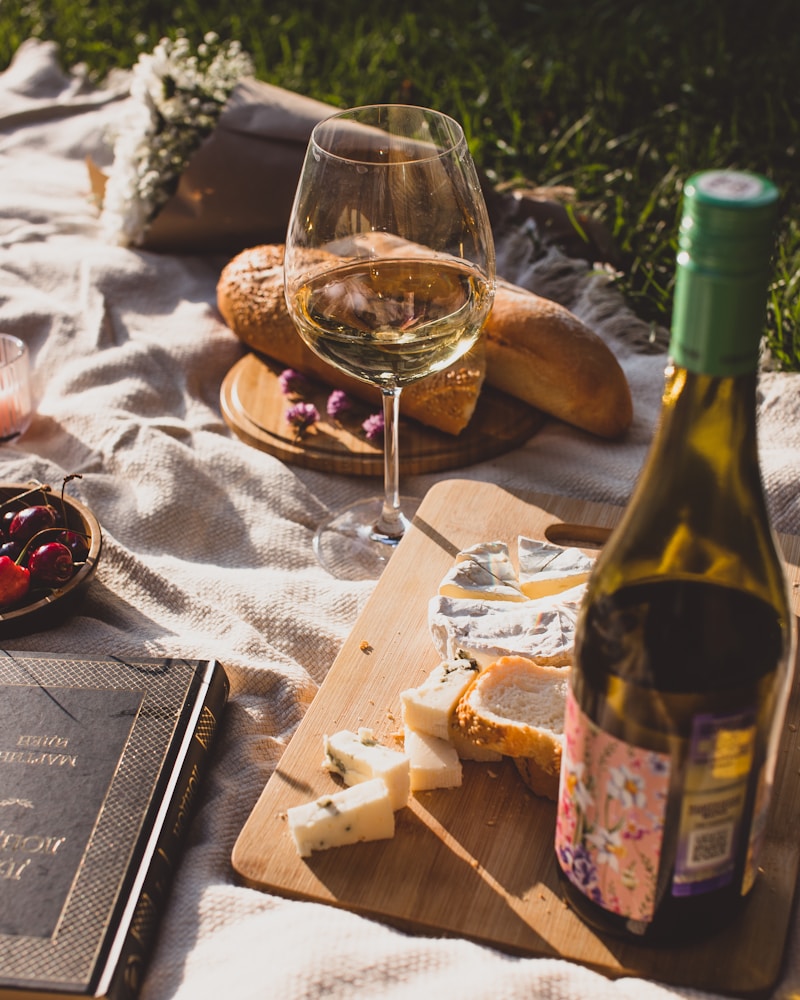
Seabreeze Muscadet: The Quiet Poetry of the Atlantic Coast in Your Glass
Muscadet ist leise, salzig, glasklar – ein Wein wie Meeresbrise und nasser Stein, geschaffen für Austern, Meer und Momente stiller Intensität.
1. TITEL
Seewind Muscadet: Die leise Poesie der Atlantikküste im Glas
---
2. EINLEITUNG
Dear wine lovers,
some wines speak loudly, push themselves into the spotlight, demand applause. Muscadet is different. It is the soft whisper of the surf in the early morning, when the mist still hangs over the waves and the world is only slowly getting used to the light. A wine that doesn’t boast – but listens, accompanies, carries.
Muscadet is like a sea breeze captured in crystalline liquid. In the glass, it shimmers pale gold with silvery reflections, as if the Atlantic light were dancing on wet sand. On the nose you’ll find lemon zest, green apple, lime, white flowers and that unmistakable scent of wet stone, of salty spray on harbour walls. On the palate it’s taut, pure and vibrant – a slender arrow of freshness that wakes, cleanses and invigorates your mouth.
What makes this grape variety – strictly speaking the variety Melon de Bourgogne, from which Muscadet is made – so special is its quiet radicalism: it renounces opulent fruit bombs, loud oak, sweetness. Instead, it serves you pure clarity, high acidity, salty minerality and a texture reminiscent of fine sea spray. This wine tells of fishermen casting off at dawn, of oyster beds in the cold Atlantic, of stone walls over which the sea crashes on stormy nights.
---
1. The Globetrotter in the Glass: Where Muscadet Lives
When you have Muscadet in your glass, you’re actually holding a piece of Pays Nantais in your hand – that stretch of coastline at the mouth of the Loire, in the Loire-Atlantique, where the sea sets the tone and the wind has the last word. Muscadet is no globetrotter in the literal sense, because its true heart beats here. And yet: in your glass it travels, with you, everywhere. Let’s look at its most important homelands.
Muscadet Sèvre-et-Maine – The Classic of the Coast
Muscadet Sèvre-et-Maine is the pulsing centre, the best-known and qualitatively most important appellation. Between the rivers Sèvre and Maine, on schist, gneiss and granite soils, some of the most precise and saltiest Muscadets of all are born.
The style:
– very light in body
– razor-sharp, high acidity
– intense notes of lemon, lime, green apple
– lots of wet stone, a touch of salt, sometimes grapefruit
Here you’ll find the famous “sur lie” wines, which mature on the fine lees and thereby develop a delicate creaminess and the finest yeast notes (brioche, fresh bread, dough) without losing any freshness. Sèvre-et-Maine is the Muscadet you pour when getting to know the style for the first time – and often never leave again.
Muscadet Côtes de Grandlieu – The Quiet Depth of the Lake
Southwest of Nantes, around the Lac de Grand-Lieu, lies the Muscadet Côtes de Grandlieu appellation. Here, the large body of water acts as a natural temperature regulator: summers are held a little cooler and nights milder, which benefits the ripening of the grapes.
The style:
– likewise light, but often a bit rounder
– fruit driven by riper apple, citrus, sometimes yellow stone fruit
– elegant, delicate white flowers, a little less steely than Sèvre-et-Maine
– still clearly high acidity, but more supple
These Muscadets often feel a bit more approachable, almost playfully friendly, without losing their maritime soul. They’re wonderful if you love freshness but aren’t only looking for the cutting blade – you also want a little silk on the tongue.
Muscadet Coteaux de la Loire – The Voice of the River
Northeast of Nantes, Muscadet Coteaux de la Loire stretches along the northern banks of the Loire. Here the Atlantic’s influence is noticeable, but somewhat tempered; the river speaks more softly than the sea, but no less insistently.
The style:
– very straightforward, sometimes a little stricter
– pronounced lemon and lime notes, fresh green apple
– stronger expression of minerality: wet stone, chalk, a hint of smoke
– high, firmly structuring acidity
These wines are like a cool morning on the riverbank: clear, quiet, almost meditative. They can age surprisingly well and gain in complexity – herbs, almond skin, delicate honeyed notes – without ever losing their lightness.
Pays Nantais & Loire-Atlantique – The Bigger Frame
Beyond the tightly defined appellations, Pays Nantais is the true homeland of Muscadet, nestled within the Loire-Atlantique region. Here, in this belt of land between river and ocean, salty winds, meagre soils and a rough, maritime climate shape the character of the grapes.
The style in the broader frame:
– always light, dry, fresh
– dominated by lemon, lime, green apple, grapefruit
– often distinctly salty and stony
– uncompromisingly crisp acidity
No matter which corner of the Pays Nantais your Muscadet comes from: it bears this unmistakable coastal handwriting. It is never loud, never ponderous, never chatty – more a concentrated gaze, a quiet smile that says far more than a thousand words.
---
2. Dancing on the Lees: How Maturation Shapes Muscadet
Muscadet lives from its clarity. But like every finely tuned character, it can show different faces – depending on how it’s treated in the cellar. Two key words are decisive: stainless steel tank and lees ageing (“sur lie”). Oak plays only a supporting role in Muscadet, and that’s a good thing: its pure, maritime voice shouldn’t be drowned out.
Stainless Steel – Crystalline Purity
Classic Muscadet is matured in stainless steel tanks: reductively, cool, with minimal oxygen, to preserve the freshness and primary aromas of the grape.
In the glass, this style shows as:
- extremely clear and straight
- pronounced lemon and lime aromas, green apple, grapefruit
- chiselled minerality, wet stone, a hint of salt
- very light, racy, invigorating acidity
This is the Muscadet that feels like a plunge into cold seawater: alert, cool, energising. Perfect as an aperitif, with oysters, with anything that comes from the sea – or simply when you want to reset your senses.
“Sur lie” – Fine Lees as a Silken Cloak
The true magic of Muscadet often unfolds in “sur lie” ageing. In this case, the wine rests on its fine lees for several months after fermentation, sometimes until the next harvest. This layer of yeast acts like a gentle cushion, gifting texture, complexity and a soft, creamy note.
This is how Muscadet “sur lie” tastes:
- still light, but with more volume on the palate
- still lemon, lime, green apple, sometimes with slightly riper fruit
- subtle yeast notes: fresh bread, brioche, dough, roasted nuts
- softer yet clearly defined acidity that carries the wine
- fine, almost creamy mouthfeel without any heaviness
Imagine someone draping a fine silk scarf over a steel frame: the structure remains, but it feels softer. That is exactly what happens in the glass. Muscadet “sur lie” is made for the table, for long evenings with seafood, fish, but also with vegetables and light meat dishes.
Oak – The Quiet Exception
You’ll rarely come across Muscadet with oak ageing. When you do, it is usually from ambitious winemakers working with old, large barrels to gain extra depth but very little flavour from the wood itself.
The effect, when used with finesse:
- a bit more structure and sense of maturity
- delicate notes of nuts, bread crust, dried herbs
- still defining freshness and saltiness
But the heart of Muscadet remains stainless steel, fine lees, the play between coolness and texture. Oak here is never the lead actor, but at most a very quiet supporting role.
---
3. Pairing Recommendations: The Perfect Partner
Muscadet is one of the greatest food wines of all – precisely because it holds itself back and gives dishes space to shine. Its salty freshness, high acidity and light body make it an ideal canvas for food, especially, though not only, from the sea.
| Gericht | Wein-Stil | Warum es funktioniert |
|---------------------------------|---------------------------|----------------------------------------------------------------------------------------|
| Frische Austern auf Eis | Muscadet Sèvre-et-Maine „sur lie“ | The wine’s salty spray merges with the iodine freshness of the oyster; citrus and acidity cleanse the palate and make every oyster feel like the first. |
| Gebratener Seezunge mit Zitronenbutter | Muscadet Côtes de Grandlieu (Stahltank) | The high acidity cuts through the butter, the citrus notes mirror the sauce, and the light body never overwhelms the delicate fish. |
| Ziegenkäse-Tarte mit Kräutern | Muscadet Coteaux de la Loire (sur lie) | Firm acidity counters the creaminess of the cheese; mineral notes and white flowers harmonise with herbs and pastry without weighing them down. |
---
4. FAQ – 10 Questions for Muscadet Lovers
❓ 1. Is Muscadet a grape variety or a region?
Muscadet is first and foremost the name of the wine and the appellations in the Pays Nantais. The underlying grape variety is called Melon de Bourgogne. When you read “Muscadet”, you’re drinking a wine from this variety, grown in the western Loire area near the Atlantic.
---
❓ 2. What does Muscadet typically taste like?
Muscadet is light, very dry, with high acidity. Typical aromas are lemon, lime, green apple, grapefruit, white flowers, wet stone and salty notes. It feels like a cool breeze from the sea: taut, fresh, invigorating, with a clear, mineral finish.
---
❓ 3. What does “sur lie” mean on the label?
“Sur lie” means that the wine has been aged on its fine lees for an extended period, usually several months. This gives it more texture, a gentle creaminess and subtle yeast notes, without losing freshness. Muscadet “sur lie” is ideal with food – especially seafood.
---
❓ 4. Is Muscadet the same as Muscat or Moscato?
No. Despite the similar names, they have nothing to do with each other.
- Muscadet: dry, light white wine from Melon de Bourgogne, salty, citrusy, cool.
- Muscat/Moscato: mostly aromatic grape varieties with intensely grapey aromas, often off-dry or sweet, usually fruitier and more opulent.
Don’t confuse them – stylistically they are worlds apart.
---
❓ 5. What food does Muscadet pair best with?
Muscadet is a dream wine for seafood: oysters, mussels, prawns, scallops, fish in all variations. But also:
- goat’s cheese and other fresh cheeses
- vegetable dishes with lemon, herbs, olive oil
- light starters, ceviche, sushi
Its high acidity and saltiness make it a fantastic “palate cleanser” between bites.
---
❓ 6. Can Muscadet age, or should it be drunk young?
Most Muscadets are made to be drunk young and fresh, within 2–3 years.
High-quality Muscadets – especially from Sèvre-et-Maine and aged longer “sur lie” – can, however, age beautifully for 5–10 years and more: the fruit becomes quieter, while nutty, herbal and honeyed notes emerge and the minerality grows even more pronounced.
---
❓ 7. How cold should I serve Muscadet?
Ideally at 8–10 °C. Too cold (fridge at 4–5 °C) numbs the aromas; too warm makes the acidity seem harsher and the freshness fade. Take the bottle out of the cooler about 10–15 minutes before serving – that’s when the wine sings most beautifully.
---
❓ 8. Is Muscadet always dry?
Yes, Muscadet is traditionally bone dry. Residual sweetness or off-dry styles are atypical and practically never seen. The style lives from dryness, acidity and salinity – that is its essence.
---
❓ 9. How do I recognise a good Muscadet on the shelf?
Look for:
- origin: Muscadet Sèvre-et-Maine, Côtes de Grandlieu or Coteaux de la Loire
- the term “sur lie” if you want more texture
- producers focused on quality and terroir (often smaller, named estates)
- vintage: for freshness, aim for younger vintages; for complexity, consciously choose slightly more mature bottles
If in doubt, choose a Muscadet Sèvre-et-Maine sur lie from a named producer – an almost foolproof starting point.
---
❓ 10. Who is Muscadet the right wine for?
For you if you:
- love freshness, lightness and dryness
- enjoy seafood, fish and clean, focused cuisine
- like wines that don’t need to be the centre of attention, but support your dishes
- appreciate the quiet poetry of a wine that speaks more of the sea and stone than of exotic fruits
Muscadet is the wine for those who can listen: to the sea, to the wind, to the delicate chime of glass on glass. A wine that doesn’t overwhelm you, but takes you by the hand – down to the Atlantic coast, where salt hangs in the air and every wave sounds like a verse.