The Atlantic’s Whisper: Loureiro – When Fog, Sea and Lemon Blossoms Turn into Wine
Loureiro ist der leise, salzige Atlantik-Hauch im Glas: zitrusfrisch, floral, vibrierend und tief – ein Wein wie ein Morgen im Minho.
1. TITEL
Der Flüsterton des Atlantiks Loureiro: Wenn Nebel, Meer und Zitronenblüten zu Wein werden
---
2. EINLEITUNG
Dear wine lovers,
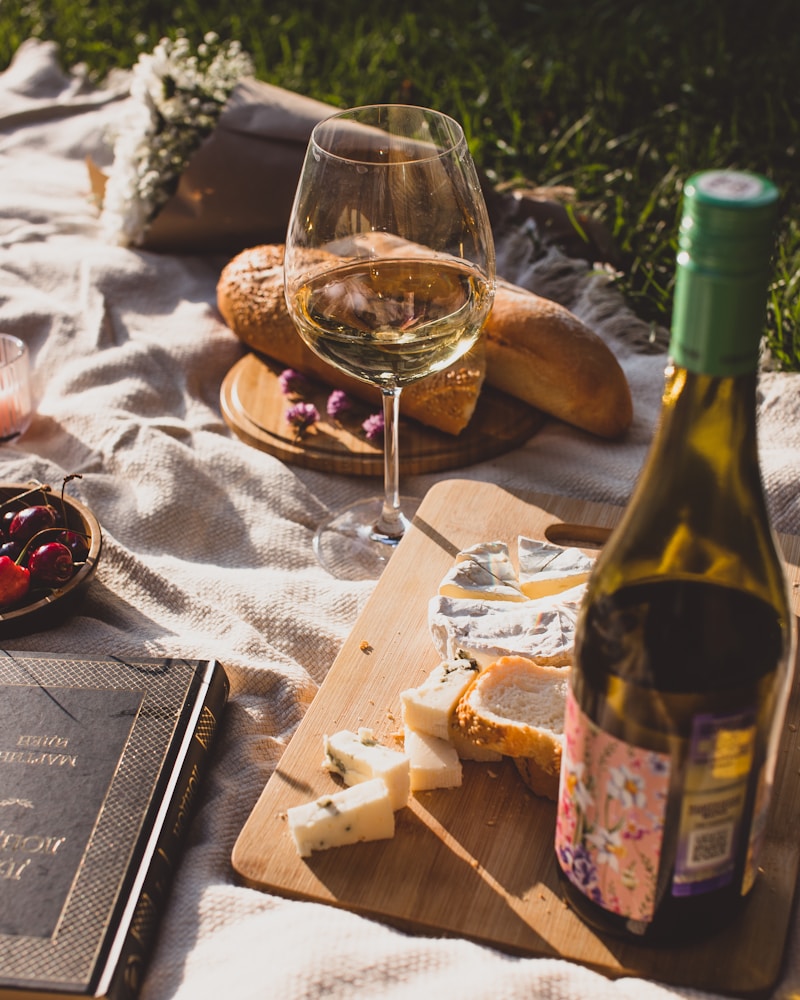
some grape varieties speak loudly, others sing – and then there are those that whisper. Loureiro belongs to the latter. It’s not a wine that dominates the room; it’s the soft, salty breath of wind that drifts through an open window. A wine that doesn’t shout at you, but gently tugs at your soul. When you hold a glass of Loureiro up to the light, it’s as if the cool morning fog of Portugal’s Minho had gathered in it – pale gold, with greenish reflections, as though it carried the first light of a young day inside.
Loureiro is like a morning in Minho, when the fog still clings to the vines and the Atlantic breathes quietly in the distance. On the nose, it unfurls aromas of lemon blossom, green apples, white peach and a hint of bay leaf – as if you were strolling through a garden on the Costa Verde while the air still faintly smells of summer rain. On the palate, it’s wide awake, vibrant, with high, tingling acidity and a salty breeze that recalls sea spray and wet stones.
What makes Loureiro so special? It unites lightness with depth. It is light in body, but never lightweight in character. It carries all the cool freshness of northern Portugal, captured in a grape that knows the sea, the rain and the light – and tells of all this quietly, yet insistently.
---
1. The Globetrotter in the Glass: Where Loureiro Calls Home
Loureiro is not a grape variety that has travelled the world like Chardonnay or Sauvignon Blanc. It is more a guardian of its homeland, deeply rooted in the northwest of Portugal. And yet, with every sip, you travel: through valleys and hills, along river valleys, all the way to the coastline where the Atlantic shapes the climate.
Vinho Verde (Lima) – The Cradle of Elegance
The Lima valley is regarded as the heartland of Loureiro. Here the variety reveals itself in what is probably its purest form: crystal clear, fragrant, with a fine, almost weightless structure. Wines from Lima are often very floral: lemon blossom, a hint of orange blossom, bay leaf after a rain shower, plus crisp green apple. The high acidity works like a breath of fresh air here, and the salty vein recalls the closeness of the Atlantic. In style: feather-light, dancing, with a delicate minerality – like morning dew on wet stones.
Vinho Verde (Cávado) – The Balance of Fruit and Freshness
Between the Cávado and Ave rivers, Loureiro wines are created that often seem a touch more fruit-driven. White peach steps more clearly into focus, joined by riper apple and a shimmer of lime zest. Here, the typical freshness is joined by a certain fullness on the palate, without ever becoming heavy. Wines from Cávado are often extremely moreish – the kind of wine where the bottle is empty faster than you’d like.
Vinho Verde (Ave) – The Secret Sea Breeze
In the Ave area, you feel the proximity to the Atlantic even more directly. The Loureiros here often seem even saltier, even more “maritime”. The sea-salt aroma is more pronounced; the association with wet stones, spray and fresh breeze is unmistakable. The fruit remains citrus-driven – lots of lime zest, sometimes almost a hint of grapefruit – and the acidity runs like a clear line through the wine. Perfect for all who don’t just like freshness, but actively seek it.
Minho in General – The Land of Green Light
“Minho” is more than a region – it is a feeling. Lush, green landscapes, vines trained on pergolas, rain drifting in from the Atlantic. In the wider Minho region, Loureiro reveals its typical DNA: light in body, high in acidity, with aromas of lemon blossom, bay leaf, apple and white peach. Depending on the microclimate, the style ranges from taut and mineral to delicately fruity, yet there is always this piercing freshness that makes Loureiro so unmistakable.
Entre-Douro-e-Minho – Between River Legends and Atlantic Poetry
The historic wine region “Entre-Douro-e-Minho” encompasses the classic Vinho-Verde area. Here, between Portugal’s great rivers and the ocean, Loureiro is part of a larger choir, yet its voice is clearly recognisable: floral, citrus-fresh, with a cool, salty signature. Depending on the site, the style can be somewhat more powerful or more delicate, but Loureiro here is always the wine of lively acidity and clear, bright aromatics – like a luminous song about stones and water.
---
2. Steel and Stillness: How Maturation Shapes Loureiro
By nature, Loureiro is a variety that lives from freshness, fragrance and lightness. The work in the cellar decides whether these qualities shine with crystal clarity or whether the wine is given an additional dimension of texture and depth.
Stainless Steel – The Pure Voice of the Atlantic
Classic Loureiro is matured in stainless steel tanks – and for good reason. Stainless steel does not interfere with the aroma, but lets the variety tell its truth unadulterated. In this form, Loureiro shows itself at its most immediate:
- Aromas: lemon blossom, green apple, white peach, lime zest, fresh bay leaves, sea salt, wet stones
- Style: light in body, very high, lively acidity, crystal-clear freshness
- Impression: cool, precise, almost “spritzing”, sometimes with a slight touch of CO₂, like a delicate breath on the tongue
A Loureiro matured in stainless steel is like an unmade-up morning – direct, radiant, vulnerably beautiful. It suits moments when you long for clarity: an evening on the balcony, lunch by the water, a quiet conversation in which every word matters.
Oak – When the Sea Breeze Puts on Velvet
Maturation in oak barrels is rare for Loureiro – and precisely for that reason so fascinating. When small or larger barrels are used with a gentle hand, wines emerge that show a new side of this variety:
- Aromas: less primary fruit, instead subtler, riper nuances of yellow stone fruit, dried herbs, sometimes a hint of almonds or biscuit
- Texture: creamier, broader on the palate, the acidity feels more softly integrated
- Impression: more contemplative, layered, a “wine for reflection”, without completely losing its freshness
Oak must never overpower Loureiro – it should be more a whispering echo in the background than a loud accent. A well-oaked Loureiro is like the sea on a calm autumn day: the salt is still there, but the waves are rounder, the light is softer, time seems to pass more slowly.
---
3. Pairing Recommendations: The Perfect Partner
Loureiro is a natural talent at the table. Its high acidity, light body and salty note make it one of the most rewarding partners for food – especially wherever sea, citrus and freshness take centre stage.
| Gericht | Wein-Stil | Warum es funktioniert |
|------------------------------------------|-------------------------------|---------------------------------------------------------------------------------------|
| Gegrillte Sardinen mit Zitrone & Meersalz | Frischer Loureiro aus Stahltank | The wine’s salty breeze mirrors the sea on the plate, the acidity cuts through the fattiness of the sardines, citrus notes blend with the lemon – an echo of the Atlantic. |
| Ceviche vom weißen Fisch mit Limette & Koriander | Knackiger, junger Vinho-Verde-Loureiro | The high acidity supports the freshness of the fish, lime zest and green apple in the wine pick up the flavours of the marinade, and the lightness doesn’t overpower the delicate flesh. |
| Risotto mit Zitrone, grünem Spargel & Parmesan | Etwas gereifter Loureiro, gerne mit zarter Holz- oder Hefenote | The creamy texture of the risotto gains backbone from the acidity; citrus, herbal and bay nuances in the wine play with the asparagus, while salty minerality balances the Parmesan. |
---
4. FAQ – 10 Questions for Loureiro Lovers
❓ 1. Is Loureiro the same as Vinho Verde?
No. Vinho Verde is a region (and at the same time a style), Loureiro is a grape variety. Many Vinho-Verde wines consist wholly or partly of Loureiro, but not every Vinho Verde is a pure Loureiro, and not every Loureiro has to be labelled as “Vinho Verde”.
---
❓ 2. What does Loureiro typically taste like?
Loureiro is usually light, very fresh and marked by high acidity. You can expect aromas of lemon blossom, green apple, white peach, bay leaf, lime zest, sea salt and wet stones. On the palate it feels invigorating, salty-fresh, almost like a plunge into cool water.
---
❓ 3. Is Loureiro a wine for beginners or for connoisseurs?
Both. For beginners, Loureiro is very approachable because it is not heavy or overbearing, but refreshing, fruity and animating. For connoisseurs, it is exciting because its salty, mineral style and floral finesse bring lots of character and a strong sense of terroir. It is a wine you can simply enjoy – or study in depth.
---
❓ 4. How cold should I serve Loureiro?
Ideally at around 8–10 °C (46–50 °F). Too cold, and the delicate aromas of blossom and peach retreat; too warm, and the acidity feels less taut, the wine loses precision. Put the bottle in the fridge for about two hours and then let the glass gain a little temperature as you drink – you’ll be able to watch the bouquet open up.
---
❓ 5. How long can Loureiro be aged?
Most Loureiro wines – especially the simpler Vinho-Verde bottlings – are made for early drinking, within the first 1–3 years after harvest. Higher-quality, more concentrated examples (with lower yields, possibly some oak or extended lees ageing) can age very intriguingly for 5–7 years, sometimes longer. Over time, floral and citrus notes step back in favour of herbal, honeyed and nutty nuances.
---
❓ 6. Does Loureiro only pair well with fish?
Fish and seafood are its parade discipline, but not its only one. Loureiro harmonises beautifully with fresh, citrusy dishes, with salads, goat’s cheese, grilled vegetables, light pasta dishes and Asian cuisine with lime, coriander or ginger. What matters is: the dish shouldn’t be too heavy, too fatty or extremely spicy – then Loureiro can truly shine.
---
❓ 7. Why does Loureiro sometimes seem slightly fizzy?
Many Vinho-Verde wines, especially young ones, have a slight carbon dioxide content. This either arises naturally during fermentation or is deliberately added to emphasise freshness. The gentle prickle on the palate boosts the lightness and makes Loureiro even more drinkable.
---
❓ 8. How does Loureiro differ from Albariño/Alvarinho?
Alvarinho (Albariño in Spain) is often somewhat fuller-bodied, with riper stone-fruit and sometimes tropical notes, and appears more structured. Loureiro, on the other hand, is usually more floral, more citrus-driven, a little lighter and saltier in expression. Where Alvarinho is sometimes the “soprano with the big voice”, Loureiro is the clear, bright, almost ethereal tone – delicate yet compelling.
---
❓ 9. Is Loureiro always dry?
Most Loureiro wines are dry or at most off-dry, with just a little residual sugar. Thanks to the high acidity, even a touch of sweetness is very well integrated and often barely perceptible. Traditionally, though, Loureiro stands for dry, refreshing white wines.
---
❓ 10. When is the perfect moment for a glass of Loureiro?
Whenever you long for lightness. A hot summer’s day, a picnic by the river, a plate of fresh fish, a spontaneous get-together with friends on the terrace – Loureiro is the wine that drifts through these moments like a cool breeze. But even in winter, when you miss the sea, a glass of Loureiro can feel like a brief holiday on the Portuguese Atlantic coast: salty, bright, full of lemon light.
---
Loureiro is not a wine that calls out loudly. It waits patiently in the glass until you are ready to listen. And when you do, you’ll realise: in its quiet whisper lies the whole story of a land where fog, rain and sea transform into light – and into wine.