Sonnenpoet Moscato Bianco: When Summer Lingers in Your Glass
Moscato Bianco ist flüssiges Sonnenlicht – ein duftiger, moussierender Sommermoment im Glas, der Leichtigkeit und Tiefe sinnlich verbindet.
Sonnenpoet Moscato Bianco: When Summer Lingers in Your Glass
Dear wine lovers,
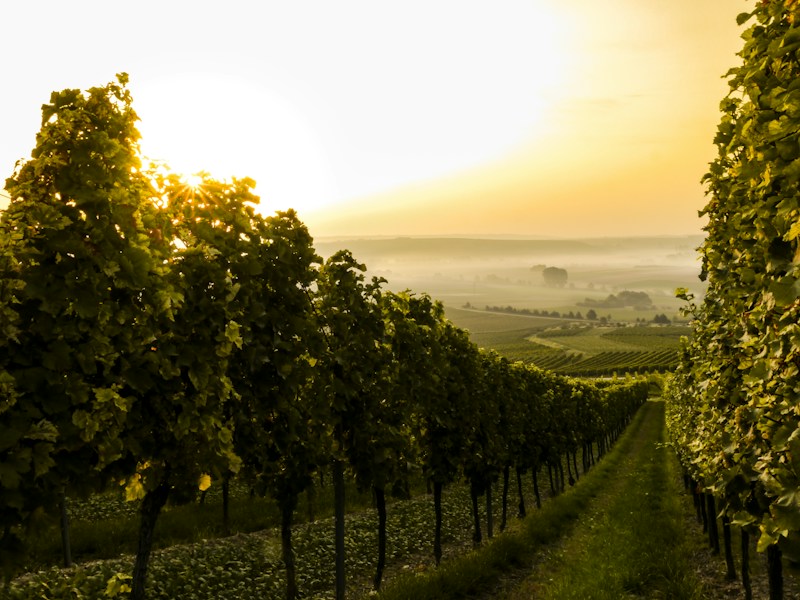
there are grape varieties you taste – and there are grape varieties you experience. Moscato Bianco undoubtedly belongs to the second category. It’s not just a white wine, it’s a quiet, luminous moment captured in the glass: like that instant just before sunset, when the world is bathed in warm golden light and time seems to stand still for a heartbeat.
Moscato Bianco is like a summer’s day that refuses to end – liquid sunlight in the glass, shimmering in delicate straw yellow with silvery sparkles. On the nose, orange blossom, white peach and ripe apricot dance together, joined by the most delicate hint of sage, as if a gentle breeze were drifting through a Ligurian garden by the sea. On the palate it is sweet, yet never heavy. A vibrant thread of freshness carries the sweetness like a love letter that never turns kitschy. And when it comes into the glass with a gentle mousse, it rises like soft laughter in a fine, creamy perlage.
What makes this grape variety so special? It’s its openness, its unpretentious charm, without ever becoming trivial. Moscato Bianco smells of grape must and honey, of citrus zest and blossoms, as if someone had distilled the scent of a Mediterranean morning. It’s a wine that invites you not to analyze, but to feel: to enjoy, to smile, to share. A wine for all those who believe that lightness and depth don’t have to exclude each other, but at best walk hand in hand.
---
1. The Globetrotter in the Glass: Where Moscato Bianco Feels at Home
Moscato Bianco is an ancient grape variety, deeply rooted in Italy’s wine-loving soul. And yet it reveals a different face wherever it grows, shaped by landscape, soils and winds.
Piemonte – The Heart: Asti and Langhe
In Piemonte, especially in Asti and the gentle hills of the Langhe, the heart of Moscato Bianco beats strongest. This is where those famous lightly sparkling or fully sparkling styles are born that many people see as the very essence of the “Moscato moment”.
- Asti: The soils are rich in limestone, the climate moderate, with warm days and cool nights. Moscato Bianco from Asti is usually light, buoyant and seductively aromatic: orange blossom, white peaches, ripe apricot, a touch of sage and a sensation of freshly pressed grape must. The sweetness is balanced by a noticeable, medium acidity that keeps it from ever becoming cloying. In the glass: delicate straw yellow, lively perlage – like a fine summer rain of tiny bubbles.
- Langhe: Here, Moscato Bianco often shows a touch more structure and can be slightly more complex, with subtle mineral undertones. The fruit remains playful – citrus zest, honey, stone fruit – but the wines can feel quieter, more layered, like a poem you want to read twice.
Oltrepò Pavese – Elegant Lightness
In Oltrepò Pavese in Lombardy, Moscato Bianco finds a somewhat different home. The rolling hills, the proximity to the Alps and the marl- and limestone-based soils lend it remarkable freshness.
The wines are often:
- highly aromatic, with pronounced citrus and floral notes,
- structurally light, sometimes strikingly delicate,
- with a sharp edge of freshness that makes the sweetness appear very slender.
Moscato from Oltrepò Pavese feels like a cool morning breeze just as the sun begins to chase away the mist over the hills.
Sicilia – Sun‑Kissed Opulence
On Sicilia, Moscato Bianco carries the full, warm power of the south. The more intense sunshine, Mediterranean winds and often volcanically influenced soils bring forth a different, more sensual expression.
- Aromas here tend to lean towards:
- ripe apricot,
- candied citrus fruits,
- orange blossom honey,
- sometimes almost exotic nuances.
- The body remains light, yet the perception of sweetness is more intense, creamier.
- The acidity is still in the medium-fresh range, but rounder, softer, like a hidden backbone.
Sicilian Moscato Bianco is like a late summer day by the sea, when the air is warm and time seems to stretch.
Liguria and Coastal Sites – The Salty Breeze
Along the Ligurian coast and in other coastal zones, Moscato Bianco also shows its talent for capturing landscape in a glass. Here it is:
- the salty sea air,
- the stony, often sparse soils,
- the strong temperature swings
that give it a distinctive freshness and sometimes even a fine, herbal-spicy touch. Sage, citrus zest, fresh grapes, plus a very faint salty note – as if someone had let a single drop of seawater fall into the wine.
---
2. Between Stainless Steel and Poetry: How Winemaking Shapes Character
Moscato Bianco is a grape whose greatest strength lies in its aromatic purity. How the winemaker chooses to mature it decides whether this fragrance comes across as a clear, bright solo or as a delicate, multi-layered melody.
Stainless Steel – The Pure Voice of the Grape
Stainless-steel fermentation and maturation is the royal road for Moscato Bianco – and the standard in most key regions. Stainless steel is neutral, adding nothing, taking nothing away.
What that means:
- Aromatics: Maximum clarity. Orange blossom, white peaches, apricot, grape must, citrus zest – everything feels fresh, precise and vibrant.
- Structure: Light-bodied, with medium acidity standing out more clearly and carrying the sweetness.
- Sparkling styles: The fine perlage intertwines with the aromas in a dance – airy, playful, utterly weightless.
Moscato Bianco raised in stainless steel is like a freshly composed song – direct, honest, unadorned.
Oak – The Quiet, Nuanced Interpretation
Maturation in oak barrels is much rarer for Moscato Bianco, but some winemakers like to experiment – especially with larger, used casks that have a gentler impact on aroma. Here, the focus is less on wood flavours and more on texture and maturity.
What changes:
- Aromatics:
- blossoms and fruit remain, but often step slightly into the background,
- honey, dried apricot and hints of nuts can appear alongside,
- the aromatic picture becomes calmer, less bell-clear, but more complex.
- Mouthfeel:
- somewhat creamier, rounder,
- the sweetness feels more “integrated”,
- the acidity seems softer and melds more fully into the overall impression.
Moscato Bianco matured in or at least touched by oak is like hearing your favourite song in an acoustic version: familiar yet new, with extra depth and resonance.
Levels of Sweetness and Stylistic Choices
Even without oak, winemaking style plays a major role:
- Frizzante / Spumante (sparkling): Usually sweet or off-dry, low in alcohol, with vibrant acidity and lively perlage – ideal as an apéritif or with dessert.
- Still, sweet: Here the aromatic fullness is front and centre, often denser and more honeyed, yet still carried by that typical, medium acidity.
- Rare: dry: A dry Moscato Bianco can be surprisingly fascinating – aromas of orange blossom, sage and citrus zest become even more pronounced, and the wine feels almost like a floral, Mediterranean white with a gentle herbal edge.
Moscato Bianco is a chameleon of lightness: the basic mood is always summery and bright, while the nuances shift with the winemaker’s hand.
---
3. Pairing Recommendations: The Perfect Partner
Moscato Bianco is a wine that loves company. Its sweetness, freshness and aromatic intensity make it a wonderful companion for desserts, but also for savoury and surprising combinations.
| Gericht | Wein-Stil | Warum es funktioniert |
|----------------------------------|-------------------------------|------------------------|
| Zitronen-Tarte mit Baiser | Moscato d’Asti (moussierend, süß) | Die Zitruszeste im Wein greift die Zitrone auf, die Süße balanciert die Säure der Tarte, die Perlage nimmt die Cremigkeit des Baisers leichtfüßig auf und sorgt für Frische. |
| Ziegenfrischkäse mit Honig & Thymian | Still, süßer Moscato Bianco | Die Honignoten des Weins spiegeln den Honig auf dem Käse, die aromatische Süße mildert die Säure und Würze des Ziegenkäses, während die mittlere Säure des Weins das Ganze saftig und lebendig hält. |
| Pikantes Thai-Curry mit Kokosmilch | Frizzante, halbsüß | Die leichte Süße des Moscato d’Asti dämpft die Schärfe, die Aromen von Aprikose, Pfirsich und Zitrus unterstreichen die exotischen Gewürze, die Perlage erfrischt den Gaumen zwischen den Bissen und macht Schärfe zugänglicher. |
---
4. FAQ – 10 Questions for Moscato Bianco Lovers
❓ Is Moscato Bianco always sweet?
Moscato Bianco is most frequently made in sweet or lightly sparkling sweet styles, especially in and around Asti. However, there are also dry or off-dry versions, particularly from experimental producers or in less traditional areas. You’ll almost always recognise the typical aromas – orange blossom, apricot, grape must – no matter how sweet the wine is.
---
❓ What’s the difference between Moscato Bianco and “Moscato d’Asti”?
Moscato Bianco is the grape variety, Moscato d’Asti is an Italian denomination of origin (DOCG) for a lightly sparkling, sweet wine from Piemonte, specifically from the area around Asti. Moscato d’Asti is made from Moscato Bianco, has usually low alcohol, gentle perlage and a very expressive, fruity-floral nose.
---
❓ Is Moscato Bianco a good entry-level wine for beginners?
Absolutely. Low alcohol, charming sweetness, intense, easy-to-understand fruit and playful bubbles make it an ideal wine for anyone not yet ready to dive into complex, tannic or very dry wines. It’s uncomplicated without being simple, and it delivers joy immediately.
---
❓ At what temperature should I serve Moscato Bianco?
It’s best to enjoy Moscato Bianco well chilled, at 8–10 °C. Too cold and the aromas withdraw; too warm and the sweetness feels broader. In this temperature window, orange blossom, peach, apricot and citrus zest shine brightest and the perlage shows its liveliest side.
---
❓ How long can I keep a bottle of Moscato Bianco?
Most Moscato Bianco wines are meant for early drinking – within 1–3 years after harvest. During this time, floral and fruity aromas are at their most intense. There are exceptions, such as more concentrated dessert wines or special cuvées that can age well, but in general, Moscato Bianco is a wine of the moment, not of eternity.
---
❓ How long does an opened bottle keep?
For sparkling styles like Moscato d’Asti, you should enjoy them within 1–2 days, well sealed in the fridge. The perlage will fade noticeably after that. Still sweet Moscato wines can often stay aromatic for 3–4 days if kept cool and closed, but they gradually lose freshness.
---
❓ Is Moscato Bianco only suitable with desserts?
No. While it’s an excellent dessert wine, its sweetness and freshness also make it a wonderful partner for:
- spicy, hot dishes (e.g. Thai curry, flavourful Asian cuisine),
- salty, creamy cheeses (goat’s cheese, blue cheese),
- fruity starters (carpaccio of peach or melon with prosciutto).
Its versatility really shines when you play boldly with sweet–salty–spicy contrasts.
---
❓ Is Moscato Bianco the same as Muscat?
Moscato Bianco belongs to the large Muscat family, which is found all over the world. In France, for instance, it’s called “Muscat Blanc à Petits Grains”; in other regions, simply Muscat. So we’re dealing with close relatives, often essentially the same variety line under different regional names. Stylistically, however, the wines can differ dramatically – a dry Muscat from Alsace is a completely different experience from a sweet Moscato d’Asti.
---
❓ Is Moscato Bianco suitable as an apéritif?
Very much so. A sparkling Moscato Bianco – especially Moscato d’Asti or Frizzante styles – makes a fantastic apéritif:
- low in alcohol,
- enticing sweetness,
- seductive aromas,
- lively perlage.
It whets the appetite without overwhelming, and gently tunes your senses to an evening of pleasure.
---
❓ How do I recognise a good Moscato Bianco on the shelf?
Look for:
- Origin: Names like Asti, Moscato d’Asti, Langhe, Oltrepò Pavese or Sicilia are reliable signposts.
- Vintage: Favour younger vintages for maximum freshness.
- Producer quality: Renowned estates or co-operatives with a focus on quality are a safe harbour.
- Style hints on the label: Terms like “Frizzante”, “Spumante”, “Dolce”, “Secco” etc. tell you whether you’re in for a sweet, sparkling temptation or a drier, still wine.
Once you open the bottle, you’ll recognise quality on the nose: a good Moscato Bianco is clear, intensely aromatic and feels like opening a freshly packed basket of summer fruit and blossoms – with no trace of heaviness.
---
In the end, Moscato Bianco is a wine that reminds us that pleasure is allowed to be light. It doesn’t strive to impress – it wants to touch. It’s the wine you open when you want to bring back summer, when you wish to share a smile, when an evening is simply meant to shine a little brighter. And that is precisely why it has so deservedly found its place in the hearts of so many wine lovers.