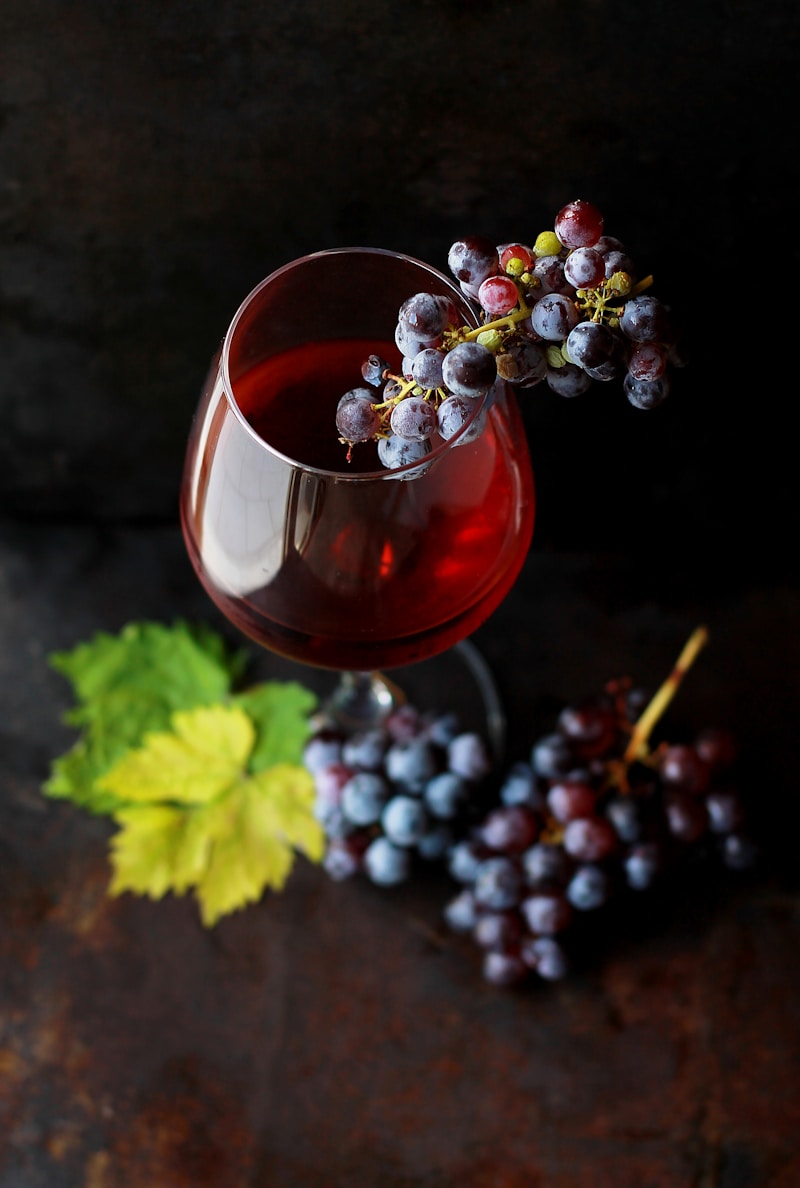
The Rebel Carignan: The Smoky Voice of the Southern Sun
Carignan ist kein Everybody’s Darling, sondern die wilde, rauchige Stimme des Südens – voller Kräuter, Säure, Charakter und unverstellter Ehrlichkeit.
1. TITEL
Der Rebell Carignan: Die rauchige Stimme der südlichen Sonne
---
2. EINLEITUNG
Dear wine lover,
there are grape varieties that whisper – and there are those that sing. Carignan doesn’t sing, it calls out. It calls for dusty paths in the Languedoc, for the dry heat of a late summer’s day, for hands made rough by harvest work and for evenings when the sky slowly fades from purple to black. Carignan is not a wine you drink “on the side”. It is an encounter – sometimes unruly, often surprising, always honest.
This old, long underrated variety is the dark-shimmering voice of the southern sun. On the nose you’ll find wild blackberries, black cherries, red currants and ripe plums, interwoven with the herbs of the garrigue – thyme, rosemary, wild fennel – and a hint of pepper and smoke. Carignan is no courtly aristocrat knocking with silk gloves. He is the sturdy farm worker who pushes the door open with sun‑weathered hands, boots full of dust, and a smile that has seen more than it will ever tell.
What makes him so special? His vibrant, almost cool acidity inside the body of a southern red. A medium body, grippy tannins, a rustic honesty – and that peculiar, earthy beauty that doesn’t need to hide from any nobler name. Carignan proves that character is always more interesting than perfection. If you’re ready to leave your comfort zone and embrace a wild, authentic side of the South, then take the glass in your hand – Carignan has long been waiting for you.
---
1. Der Globetrotter im Glas: Wo der Carignan zu Hause ist
Carignan may be deeply rooted in the south of France, but its soul is full of wanderlust. It feels at home wherever the sun shines generously, the wind moves through the vines, and the soil doesn’t give the vines everything – just what they truly need.
Languedoc – Die sonnenverliebte Klassikerin
In the Languedoc, that wide, rugged stretch of land between the Mediterranean and the garrigue, Carignan finds its natural stage. Here it produces wines scented with blackberry, black cherry and plum, underpinned by the typical herbs of the garrigue: thyme, rosemary, sage. The wines are often intense, with high acidity, a lively pulse and a faint smoky tone reminiscent of sun‑dried wood and glowing charcoal.
Young Carignans from the Languedoc show a wild, almost untamed fruit, accompanied by peppery spice. With some bottle age, notes of dried herbs, leather and tobacco join in – the South in its more mature, contemplative phase.
Roussillon – Das Land des Lichts und des Windes
A little further south, in the Roussillon near the Spanish border, Carignan comes across a touch warmer and deeper. Here, Mediterranean sun meets strong winds and sparse, stony soils. The result: darker fruit, pronounced black cherry and blackberry, sometimes almost liqueur‑like in impression, yet always held in tension by the characteristically high acidity.
The wines from Roussillon often feel more powerful, denser, with more pronounced pepper and smoke and sometimes a fine, mineral salinity on the finish. It’s as if the wind whipping through the vines continues to sing in the glass.
Corbières – Wild, windig, wunderbar kantig
Corbières is storybook Carignan country. Steep slopes, wind‑lashed vines, barren, stony soils and, in between, nothing but garrigue as far as the eye can see. Carignan from Corbières often shows a particularly “rustic” honesty: firm tannins, high acidity, dark fruit accompanied by dried herbs, pepper and an earthy, almost animal undertone.
You’ll find many traditional cuvées here in which Carignan forms the backbone – supported by Grenache, Syrah or Mourvèdre. But increasingly, single‑varietal bottlings are appearing that show what Carignan can do on its own: rough, edgy, full of character – and all the more fascinating for it.
Minervois – Eleganz in staubigen Schuhen
In the Minervois, Carignan shows itself a touch more elegant without denying its origins. The wines here often stand between rustic and refined: red currants join the dark fruit, a hint of floral notes hovers above, alongside spicy herbs and a bit of smoke. The structure remains lively and fresh, but in the better sites the tannins feel rounder, more polished.
Minervois Carignan is like a farm worker who’s put on his best shirt for market Sunday: still entirely himself, but with a whisper of finesse.
Fitou – Der salzige Hauch des Meeres
Fitou, close to the coast, brings forth Carignan with a special, almost maritime note. The wines smell of black cherries, blackberries, dried herbs and black pepper, yet in the finish they sometimes carry a subtle salty breeze – as if someone had wafted a light sea air through the glass.
The structure is full yet medium‑bodied, with taut acidity, grippy tannins and a smoky, slightly savoury finish. Fitou is Carignan for lovers of character wines who don’t mind when the wine talks to you instead of just smiling politely.
---
2. Von Beton, Stahl & Holz: Wie der Ausbau den Carignan formt
For a long time, Carignan was the workhorse grape of the South: high yields, rustic tannins, simple wines. Today the picture has changed – growers are taming its power with lower yields and thoughtful élevage. Above all, the choice between stainless steel and oak shapes the wine’s personality.
Carignan aus Stahltank – Die pure, wilde Frucht
Carignan aged in stainless steel shows itself unadorned and direct. Here, fruit takes centre stage: blackberry, black cherry, red currant, plum. The high acidity remains clearly present and gives the wine a juicy, almost vibrating freshness. The herbs of the garrigue appear brighter, greener, sometimes a bit wilder, and the pepper note makes the wine thrillingly lively.
Such wines are often lower in alcohol, medium‑bodied, highly drinkable and more easy‑going without ever being trivial. They are like an afternoon walk through the vineyards – dust on your shoes, sun on your neck and fruit‑stained hands. They’re ideal slightly chilled, especially on warm evenings when you want something full of character but not overwhelming in the glass.
Carignan im Holzfass – Die gereifte, rauchige Tiefe
In oak – especially in large casks or used barriques – Carignan changes its tone of voice. The fruit becomes darker, riper, sometimes almost velvety, without losing its acidity. The peppery character remains, but smoke, tobacco, a hint of vanilla or cedar join in. The rustic power slowly transforms into a deep, calm authority.
Oak helps to round out the firm tannins and give them a finer texture. A well‑made, oak‑aged Carignan is a dream at the table: enough structure for hearty dishes, enough freshness to never feel heavy, and that unmistakable garrigue spice that intertwines perfectly with herbs and roasted flavours from the kitchen.
Modern winemakers tend to use oak with a light touch, not to smother the variety but to frame it. This way, Carignan remains entirely itself – just with an extra shade of depth, length and complexity. If you want to experience Carignan as a “serious” wine, these matured versions are your perfect starting point.
---
3. Pairing-Empfehlungen: Der perfekte Partner
Carignan is no silent companion. It wants to join the conversation at the table. Its high acidity, dark fruit, herbal notes and smokiness make it an ideal partner for aromatic, powerful Mediterranean dishes – but also for simple, honest cooking.
| Gericht | Wein-Stil | Warum es funktioniert |
|-------------------------------------------|------------------------------------|----------------------------------------------------------------------------------------|
| Geschmorte Lammkeule mit Rosmarin & Knoblauch | Carignan im Holzfass, aus Languedoc oder Corbières | Die Kräuter der Garrigue spiegeln Rosmarin & Thymian, Tannine greifen das Lammfett auf, Rauch & Pfeffer vertiefen die Röstaromen. |
| Ratatouille mit mediterranen Kräutern | Frischer, im Stahltank ausgebauter Carignan | Die hohe Säure schneidet durch das Gemüse und die Olivenöl-Süße, Kräuternoten verbinden sich mit Thymian & Oregano, die rote Frucht sorgt für Saftigkeit. |
| Gegrillte Merguez & würzige Grillwürste | Würziger Carignan aus Roussillon oder Fitou (Holz oder Misch-Ausbau) | Pfeffer, Rauch und dunkle Frucht nehmen es mit Würze & Röstaromen auf, die Säure erfrischt den Gaumen, der mittelkräftige Körper überlagert die Wurst nicht. |
---
4. FAQ – 10 Fragen für Carignan-Liebhaber
❓ 1. Was zeichnet Carignan geschmacklich besonders aus?
Carignan is a red wine with dark, wild fruit – blackberry, black cherry, plum – combined with red currant, high acidity and firm tannins. Typical are the herbs of the garrigue (thyme, rosemary, lavender), peppery spice and a hint of smoke. It often feels rustic and honest, yet surprisingly lively and fresh.
---
❓ 2. Ist Carignan eher leicht oder schwer?
Carignan is generally medium‑bodied. It has enough structure to pair with hearty dishes, yet thanks to its high acidity it never feels heavy. Modern interpretations focus more on freshness and drinkability than on sheer power.
---
❓ 3. Kann Carignan auch reinsortig sein oder nur in Cuvées?
Traditionally Carignan was often part of cuvées in the Languedoc, Roussillon, Corbières, Minervois and Fitou, frequently as the structure‑giving variety alongside Grenache, Syrah or Mourvèdre. In recent decades, however, many winemakers have rediscovered Carignan’s character and are increasingly bottling single‑varietal wines – especially from old vines. These mono‑cépages reveal just how distinctive and fascinating Carignan can be.
---
❓ 4. Wie unterscheidet sich Carignan von Syrah oder Grenache?
Syrah is often spicier, with notes of black pepper, violets and sometimes olive tapenade, and usually a bit denser in body. Grenache feels lighter in colour and sweeter in fruit, with strawberry and cherry and softer tannins. Carignan, by contrast, combines dark and red fruit with higher acidity and more gripping tannins. It is edgier, more rustic, more reminiscent of herbs, earth and smoke – less melting, more “land and labour”.
---
❓ 5. Welche Trinktemperatur empfiehlst Du für Carignan?
Between 15 and 17 °C is ideal. Younger Carignans aged in stainless steel can be wonderfully refreshing lightly chilled (14–15 °C), especially in summer. More powerful, oak‑matured versions show their full aromatic spectrum at 16–17 °C. Better to pour a touch too cool – the wine will warm up quickly in the glass.
---
❓ 6. Wie lange kann man einen guten Carignan lagern?
Simple, fruit‑driven Carignans are usually meant to be enjoyed within 3–5 years. Better qualities from old vines and with oak ageing can easily mature for 8–12 years and longer. Over time, fruit aromas recede somewhat, while herbs, leather, tobacco, undergrowth and a finer tannin structure become more important. If the wine shows energy, depth and good balance from the start, the wait is worth it.
---
❓ 7. Passt Carignan nur zu mediterraner Küche?
No, though that’s where it feels most at home. Beyond lamb, ratatouille and Mediterranean‑seasoned dishes, Carignan also pairs beautifully with barbecues (steaks, sausages, grilled vegetables), slow‑cooked dark meats, hearty stews, lentil dishes, lamb burgers or a rustic board of cured meats and hard cheeses. The key is bold flavours, fat or umami – that’s when Carignan really shines.
---
❓ 8. Ist Carignan eine „edle“ Rebsorte?
Historically, Carignan was seen more as a high‑yield workhorse than as a noble variety. But that had more to do with vineyard practices than with the grape itself. Today, with reduced yields, old vines and careful élevage, Carignan shows a depth and personality that is easily on par with many so‑called “noble” varieties. It proves that true nobility sometimes lies in the heart of the grape, not on the label.
---
❓ 9. Worauf sollte ich beim Kauf eines Carignan achten?
Look at origin (Languedoc, Roussillon, Corbières, Minervois and Fitou are especially exciting), at indications such as “vieilles vignes” (old vines) and at producers known for artisanal work. Ask specifically for single‑varietal Carignan or cuvées in which it plays a major role. Many excellent Carignans are still very fairly priced – a real insider tip for explorers.
---
❓ 10. Für wen ist Carignan genau der richtige Wein?
For you, if you’re not afraid of edges. If you love wines that tell stories – of sun and wind, of dust and sweat, of wild herbs and long evenings on the terrace. For people who are tired of smooth, interchangeable flavours and instead seek character, honesty and a touch of wildness in the glass. Carignan is no everybody’s darling – but for those who understand it, it quickly becomes a loyal, indispensable companion.
---
So, pour yourself a glass, open a bottle of Carignan and pause for a moment. Breathe it in, close your eyes, and you’ll hear it: the call of the South, cicadas in the background, the wind in the vines. Carignan is not a wine to forget – it’s a wine to remember.