Goldkehlchen Viognier: When Apricot Light in Your Glass Begins to Sing
Viognier ist flüssiges Aprikosenlicht im Glas – sinnlich, duftend und voller Geschichten von Rhône-Hängen, Sonne und mediterranen Träumen.
Goldkehlchen Viognier: Wenn Aprikosenlicht im Glas zu singen beginnt
---
Einleitung
Dear wine lovers,
there are grape varieties that speak softly – and there are those that sing. Viognier belongs to the singers. It doesn’t whisper, it shimmers. It fills the glass with a glow that recalls liquid apricot light, that golden moment just before sunset, when the day is still warm but the night is already softly beginning to sound.
Viognier is not a wine you drink on the side. It’s a wine you need to give space – in the glass, in the nose, in your mind. It caresses you with white blossoms, with the scent of jasmine and orange blossom, of ripe apricot, juicy peach skin and a fine hint of honey. As if summer had found a place to sleep in your glass. On the palate it shows as full-bodied, soft and broad-shouldered, yet never clumsy: a sensual richness carried by a flattering, medium acidity that frames it like a delicate contour.
What makes this wine so special? Viognier is a character actor. It carries within it the warmth of the Rhône slopes, the scent of Mediterranean herbs, the dream of centuries-old terraces where the Mistral blows through the vines. It can be purist like a clear morning on the river – or opulent like a late-evening feast in the South. In every sip a story resonates, in every glass a landscape, in every nose a touch of wanderlust.
---
1. The globetrotter in the glass: Where Viognier feels at home
You might think Viognier is a child of light – and that’s exactly how it behaves in its home regions. It loves warmth, but not scorching heat; it needs sun, but not burning fire. Its classic heart chambers lie along the Rhône, but from there it has set out into the world.
Condrieu – The cradle of seduction
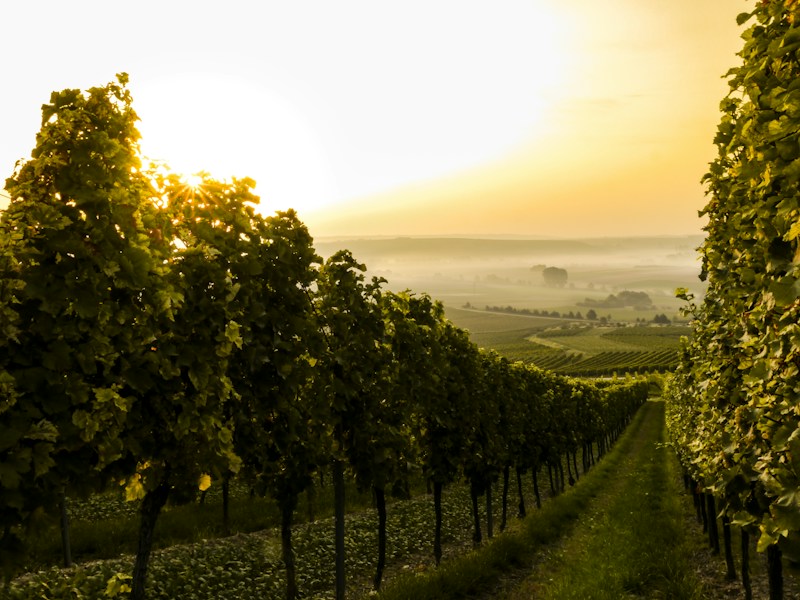
Condrieu on the northern bank of the Rhône is something like the mythical birthplace of great Viognier. Here, on dizzying granite terraces, it grows on steep slopes that resemble amphitheatres more than vineyards.
The style from Condrieu is sensual, deep and often almost beguiling:
apricot, peach, candied orange, white blossoms, sometimes a hint of exotic fruit – mango, lychee, passion fruit – and with it this fine, balsamic note that recalls honey and sometimes almonds. On the palate it is full-bodied, creamy, rich, yet still with an elegant finesse that never feels completely heavy. Condrieu is Viognier in operatic costume: dramatic, emotional, unforgettable.
Côte-Rôtie – The quiet role in the red wine theatre
Côte-Rôtie is world-famous for great Syrah red wines, yet right in the middle of this stage of dark aromas Viognier plays a secret supporting role. In small proportions it is often blended with Syrah – an old, traditional play of contrasts.
Here it does not appear as a soloist, but as a fragrance magician: it gives the red wine an extra dose of floral notes, some orange blossom, jasmine, light stone fruit. Even if you don’t “see” it in the bottle, you sense its presence. The wines become more fragrant, finer, sometimes almost weightless. In Côte-Rôtie, Viognier is the delicate, bright voice in a dark choir.
Rhône septentrional – The northern Rhône ribbon
Beyond Condrieu you find smaller plantings of Viognier in the northern Rhône area. Here, elegant, somewhat tighter versions often emerge: less opulent, somewhat cooler fruit, more focus on floral tones, a fresher, often livelier acidity.
These wines are like the Sunday morning among Viogniers: clear, harmonious, inviting – with notes of apricot, white blossoms, sometimes a subtle touch of herbs and citrus zest. They are ideal if you love the aromatic soul of Viognier but don’t necessarily seek the full, creamy richness.
Rhône méridional – Southern warmth, Mediterranean soul
Further south, in the Rhône méridional, it becomes warmer, sunnier, more Mediterranean. Here Viognier wines are created that are happy to show their body and volume:
ripe stone fruit, partly exotic fruit, honeyed notes, sometimes an almost oily melt on the palate. The acidity recedes discreetly into the background; the texture gains in density.
Here you can smell the South: dried herbs in the wind, warm stones, sun-drenched apricots. These wines are ideal for sensual evenings, for terrace dinners, for moments when you want to feel the South in your glass – even if you are sitting at your kitchen table at home.
Languedoc – The modern stage of Viognier
In Languedoc, this large playground of modern viticulture, Viognier has found a new home. A lot of experimentation is going on here: with yields, ageing, stylistics.
Languedoc Viogniers range from fresh, stainless-steel-fermented, fruit-driven versions to powerful wines partly aged in oak. Typical are aromas of peach, apricot, white blossoms and exotic fruits, sometimes with a hint of salty minerality from the limestone and schist soils.
They are often inviting and easy-going in the best sense – wines that tell you: “Sit down, take a breath, I’ll tell you about the sun.”
---
2. Between steel and oak: How élevage shapes Viognier
Viognier is like an actor who can shine in different roles. Depending on whether it was born in cool stainless steel or matured in warm oak, it shows you a different facet of its personality.
The stainless steel tank – The clear, luminous voice
Viognier aged in stainless steel is the pure, unadulterated expression of the grape variety. Steel does not add its own aroma to the wine; it is like a mirror in which the fruit and floral notes appear without make-up.
These wines often exude intense aromas of apricot, peach, white blossoms, orange blossom and sometimes a hint of exotic fruit. On the palate they are full-bodied, yet with a clear, fresh contour. The medium acidity feels more present, providing structure and drinkability.
Stainless-steel Viognier is ideal if you want to experience the liveliness and aromatics of the grape in its purest form: unvarnished, radiant, almost crystalline in its abundance of fruit.
The oak barrel – The velvet curtain and the deep stage
In oak – whether in large foudres or barriques – Viognier steps onto a somewhat more dramatic stage. The wood adds vanilla, fine roasted notes, sometimes coconut or spices. At the same time the texture becomes creamier; the wine appears rounder, fuller, almost like a silk scarf that drapes itself across your palate.
The already generous aromas of apricot, peach and honey meld with the spicy nuances from the oak. Notes of nuts, brioche or beeswax often appear as well. The acidity seems even softer, the wine almost floating, opulent, lavish – but ideally without becoming tiring.
Oak-aged Viognier is a wine for big tables, substantial dishes, intense moments. It is not a quiet companion, but a fellow player. If you choose it, give it space – in the glass as well as in your menu.
---
3. Pairing recommendations: The perfect partner
Viognier is a wonderful food companion because its aromatic richness and gentle acidity embrace many dishes instead of clashing with them. Here are three pairing ideas:
| Gericht | Wein-Stil | Warum es funktioniert |
|-------------------------------------------|--------------------------------|------------------------|
| Gebratenes Maishähnchen mit Orangen-Thymian-Sauce und Wurzelgemüse | Holzfass-Viognier aus Rhône méridional oder Condrieu | Die cremige Textur und die Noten von Honig, Aprikose und zarter Vanille schmiegen sich an die Sauce, während die Kräuteranklänge des Weins den Thymian aufgreifen. Die mittlere Säure hält das Gericht im Gleichgewicht. |
| Garnelen in Knoblauch-Zitronen-Olivenöl mit frischen Kräutern | Frischer, stahltankgereifter Languedoc-Viognier | Die fruchtig-floralen Aromen und die klare, saftige Struktur harmonieren mit der Süße der Garnelen. Die Zitrus- und Blütennoten ergänzen das Zitronen-Olivenöl, ohne es zu übertönen. |
| Mild-würziges Thai-Curry mit Kokosmilch und Huhn oder Gemüse | Aromatischer, nicht zu stark holzbetonter Viognier aus dem Rhône-Gebiet | Die exotische Frucht und die Honignoten umspielen die leichte Schärfe des Currys, während die weiche Säure und der volle Körper den Kokosmilch-Schmelz aufgreifen. Der Wein wirkt verbindend, nicht konkurrierend. |
---
4. FAQ – 10 questions for Viognier lovers
❓ 1. Is Viognier always sweet?
No. Because of its intense fruit and honey notes, Viognier often seems “sweetish” in its aromatics, but it is usually vinified dry. Especially high-quality Viogniers from Condrieu or Languedoc are clearly dry, even if the nose recalls ripe apricots and honey.
---
❓ 2. What does Viognier typically taste like?
Typical are aromas of apricot, peach, orange blossom, jasmine, white blossoms and often a hint of honey or exotic fruit. On the palate Viognier is full-bodied, soft, creamy, with medium, caressing acidity. It feels sensual, generous, yet ideally at the same time elegant.
---
❓ 3. At what temperature should I serve Viognier?
Ideal are about 10–12 °C for fresh, stainless-steel-fermented wines and 12–14 °C for oak-aged, full-bodied versions. Too cold and the aromas remain closed; too warm and the wine can feel heavy. Give it a slightly larger white wine glass so the bouquet can unfold.
---
❓ 4. Is Viognier suitable for ageing?
Many simple Viogniers are meant to be enjoyed within 2–4 years, when their fruit is at its brightest. High-quality examples – for instance from Condrieu or top sites in the Rhône and Languedoc area – can mature for 5–10 years and longer. They then develop more complex notes of honey, dried fruits, nuts and wax.
---
❓ 5. Why did Viognier almost disappear in the past?
In the mid-20th century Viognier was seriously threatened, especially in the northern Rhône: low yields, difficult cultivation on steep slopes and little demand made it economically unattractive. In the 1960s only a few hectares in Condrieu remained planted. Only the renaissance of aromatic, characterful white wines and the dedication of a few passionate winegrowers saved Viognier – and led it to new greatness.
---
❓ 6. How does Viognier differ from Chardonnay?
Chardonnay is a “shape-shifter” whose character is strongly influenced by terroir and élevage. Viognier, by contrast, almost always brings its typical, intense aromatics of apricot, peach and blossoms. It is more aromatically expressive, more fragrant, often more exotic. It also generally has softer acidity and feels more sensual, more opulent on the palate than many Chardonnays, especially those from cooler regions.
---
❓ 7. Does Viognier go with spicy food?
Yes, but with care. Mildly spicy Asian dishes – such as Thai curries or gently seasoned, aromatic foods – can harmonise beautifully with an aromatic Viognier that is not too high in alcohol. The fruit and soft texture gently wrap around the spice. With very spicy cuisine, however, the alcohol can amplify the heat – here a bit of sensitivity is needed.
---
❓ 8. Can Viognier be used in blends?
Absolutely. Traditionally, in Côte-Rôtie it is blended in small proportions with Syrah to lend the red wine floral and fragrant notes. In Languedoc or the southern Rhône you also find white blends in which Viognier is combined with varieties such as Grenache Blanc, Roussanne or Marsanne – often resulting in aromatically complex, Mediterranean white wines.
---
❓ 9. Is Viognier a good entry-level wine for people new to white wine?
For many, yes. Those who enjoy aromatic, fruit-driven wines with gentle acidity – perhaps previously used to aromatic varieties like Muscat or fruity, not too high-acid wines – will often fall for Viognier. It is accessible, flattering, sensual. Those who prefer very dry, taut, high-acid whites sometimes need a second attempt to appreciate its generous style.
---
❓ 10. How do I recognise a good Viognier in retail?
Pay attention to origin and producer. Names like Condrieu or renowned sites in the northern Rhône are quality indicators, as are carefully working producers in Languedoc or Rhône méridional. Read the label: notes on low yields, selective harvesting and gentle élevage are positive signs. In terms of price, a truly good Viognier often starts somewhat above the very basic entry-level segment – its cultivation is demanding and its yields are usually limited.
---
Perhaps Viognier is not an everyday wine – but it is a wine for those moments when you want to treat yourself to a small celebration. Next time you hold a glass of this “liquid apricot light” in your hand, take a moment, breathe in deeply – and listen to how it sings.