Barolo – The King of Wines and the Wine of Kings
Discover Barolo.
Barolo – The King of Wines and the Wine of Kings
Meta description: Barolo – majestic Nebbiolo from Piedmont. Discover the terroir, history, taste, and food pairings of this legendary cult wine.
Keywords: Barolo, Barolo wine, Barolo Piedmont, Nebbiolo, Barolo terroir, Barolo food pairing, Barolo aging, Barolo wineries
---
Introduction: The first sip of eternity
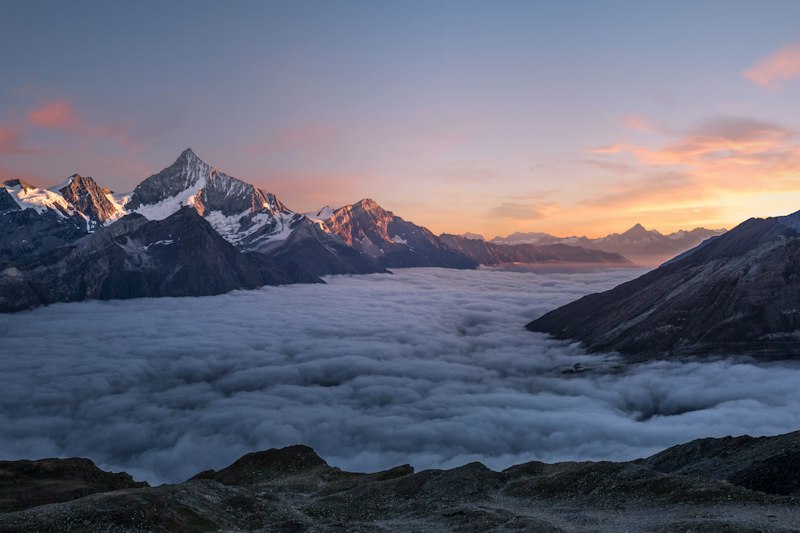
It is early morning in the hills of the Langhe. The fog lies over the vines like a silken veil, and somewhere in the distance a church bell is ringing. The air smells of damp earth, truffle, autumn leaves – and of anticipation. In this light, which softly traces the contours of the hills, the secret of Barolo begins.
Barolo is more than an appellation. It is a promise. A promise that patience is rewarded, that depth takes time, that great wines not only taste good, but move you. Anyone who has ever had a great Barolo at full maturity in their glass knows the feeling: as if you were not just drinking wine, but absorbing history, landscape, and people. A first sip that tastes like eternity.
---
The unmistakable terroir and climate
Barolo lies in the heart of the Langhe in southern Piedmont. The appellation comprises eleven communes – including Barolo, La Morra, Serralunga d’Alba, Monforte d’Alba, and Castiglione Falletto – each with its own character, yet all united by the overwhelming expressiveness of their terroir.
#### The soil: Marbled history in the glass
The soils of Barolo are a mosaic of marine sediments, limestone, clay, and sand – relics of a primordial sea that retreated millions of years ago. Two formations are decisive for the character of the wines:
- Helvetian (Serralunga) formations
Particularly in Serralunga d’Alba, Monforte d’Alba:
Heavy, lime-rich marl with a high clay content.
Result in the glass: taut tannins, profound structure, enormous longevity. Wines that demand time – and reward it generously.
- Tortonian formations
Above all in La Morra, Barolo, parts of Castiglione Falletto:
Calcareous marl, but somewhat lighter, with a higher proportion of sand.
Result in the glass: more fragrant, approachable Barolo with beguiling fruit, floral finesse, and silkier tannins.
This geological duality shapes Barolo like almost no other region. The limestone-rich subsoil gives the wines their firm acidity and noble coolness, while clay and marl provide depth and power. Every slope, every exposure, every subtle soil variation writes a new nuance into Nebbiolo’s song.
#### The climate: Fog that gives the grape its name
The name Nebbiolo probably derives from “nebbia” – the fog that often lies over the hills in autumn. The climate is continental with Alpine influences:
- Warm, sunny summers with large diurnal temperature swings
- Autumn fogs that extend the ripening period and concentrate aromas
- Cold winters that give the vines rest and regeneration
- Protection from the Alps to the north, moderating influence of the Mediterranean to the south
This combination allows a long growing season. Nebbiolo ripens late and continues to build aroma, tannin, and personality well into October. The result: wines with high natural acidity, firm structure, and an aromatic complexity found in only a handful of places in the world.
---
The grape varieties: The heart of the region
In Barolo there is one uncontested main actor: Nebbiolo. No other grape variety is permitted, no blending, no compromises. Barolo is always 100% Nebbiolo – and that is its greatest strength.
Nebbiolo is a diva in the vineyard, but a genius in the cellar:
- Thin skins, yet extremely high tannin content
- Light color – often translucent ruby to garnet – but with incredible inner density
- High acidity, which carries the wine and shapes its aging potential
- Aromatics of roses, violets, cherries, tar, truffle, leather, herbs, and dried flowers
Nowhere does Nebbiolo express itself as profoundly as in Barolo. In other parts of Piedmont it yields great wines – Barbaresco, Roero, Langhe Nebbiolo – but in Barolo it reaches a majestic, almost archaic force combined with touching delicacy. This paradox is what makes Barolo so irresistible.
---
History & tradition
Barolo is a wine that breathes history. Its development is closely linked with the Piedmontese nobility and the unification of Italy.
In the 19th century, Barolo was initially a sweet or off-dry wine. Only with the introduction of modern cellar techniques – driven by Marchesa Giulia Falletti and the influence of French oenologists – did Barolo evolve into the dry, long-lived red wine we know today. It soon became known reverently as the “king of wines and wine of kings”.
The 20th century brought turbulence: wars, economic crises, rural depopulation. But a handful of uncompromising vintners remained committed to quality and tradition. In the 1980s and 1990s came the famous clash between traditionalists (long macerations, large old casks) and modernists (shorter macerations, barriques, more fruit-driven style). These “Barolo Wars” shook the region awake and broadened its stylistic spectrum.
Today Barolo holds DOCG status, Italy’s highest quality designation. Many producers now combine the best of both worlds: respect for terroir, careful hand-harvesting, precise vinification, but with a more sensitive approach to extraction and oak. The result: wines with classical structure that are often somewhat more approachable earlier, without sacrificing depth.
---
Enjoyment & perfect pairings
#### Sensory profile: When time condenses in the glass
A young Barolo often appears closed, almost introverted. Yet even then its contours can be sensed:
- Color: Bright, luminous garnet, often with slightly orange reflections at the rim – already in youth a telltale sign of Nebbiolo.
- Nose: Rose petals, violets, cherry, raspberry, redcurrant. Behind that, tar, tobacco, licorice, anise, cedarwood, sometimes mint or eucalyptus. With age come truffle, leather, forest floor, dried herbs, tea leaves and an almost ethereal, balsamic note.
- Palate: Dry, structured, with pronounced yet finely balanced acidity. The tannins are present, often massive in youth, but in good wines always ripe and noble. Great Barolo is never clumsy – powerful yet transparent, linear yet multi-layered. The finish can last for minutes.
A mature Barolo (15–25 years or more) enters another dimension: the tannins turn silky, the fruit evolves into dried cherry, tea leaves, sweet spices, and truffle notes. Then, powerful red wine becomes pure emotional poetry.
#### Food pairing: Culinary partners on equal footing
Barolo demands culinary personality. Delicate dishes would simply be drowned out. Ideal are dishes with depth, umami, and structure:
- Piedmontese classics:
- Tajarin (fine egg noodles) with beef or game ragù
- Brasato al Barolo (beef braised in Barolo)
- Game dishes: roe deer, red deer, wild boar
- Vitello tonnato with older, matured Barolo (where the tannins have already softened)
- Refined companions:
- Truffle dishes (especially white Alba truffle in autumn)
- Braised leg of lamb, oxtail, ossobuco
- Aged hard cheeses such as Parmigiano Reggiano, Castelmagno, mature Comté
- Modern cuisine:
- Risotto with mushrooms, aged cheese, or beetroot
- Smoky components from the grill or smoker (beef, lamb, duck)
- Vegetarian dishes with intense flavors: lentil stew, mushroom ragout, oven-baked eggplant with herbs and tomato
Important: Barolo needs air. Young wines benefit from several hours in a decanter. The ideal serving temperature is about 16–18 °C (61–64 °F).
---
FAQ – The 10 most important questions about Barolo
1. What makes Barolo wines so special?
Barolo uniquely combines power, structure, and finesse. The combination of Nebbiolo, lime-rich soils, cool continental climate, and long maturation produces wines with high acidity, intense tannins, and tremendous aromatic depth. Added to this is the exceptional aging potential: great Barolo can develop for decades and reveal ever new facets.
2. Which grape varieties dominate in Barolo?
Only Nebbiolo is permitted in Barolo. The wine must be made 100% from this variety. Other grapes such as Barbera, Dolcetto, or Arneis are important in Piedmont but may not be used in Barolo.
3. What does a typical Barolo wine taste like?
A typical Barolo is dry, structured, and complex. Aromatically it shows red fruits (cherry, raspberry, redcurrant), floral notes (roses, violets), plus tar, licorice, tobacco, spices, and with age truffle, leather, and tea leaves. On the palate it is tannic, with vibrant acidity, medium to full body, and a very long finish.
4. How long should you age Barolo wines?
DOCG regulations require a minimum aging of 38 months (at least 18 of those in wood), and for Barolo Riserva at least 62 months. Many Barolo wines benefit from significantly longer aging:
- Entry-level Barolo: 5–10 years after the vintage
- Single-vineyard Barolo and top wines: 10–25 years, sometimes longer
The optimal drinking window depends on producer, vintage, and personal taste. Those who enjoy powerful youth can open earlier; those who prefer velvety tannins should wait longer.
5. Which dishes pair well with Barolo wines?
Ideal are flavorful, substantial dishes:
- Braised beef, lamb, or game
- Truffle dishes, mushroom risotto, hearty ragùs
- Aged hard cheeses
Light dishes, fish, or delicate vegetables are usually overwhelmed by the wine.
6. What is special about Barolo’s terroir?
The uniqueness of the terroir lies in its geological diversity (Helvetian vs. Tortonian formations), calcareous marl soils, long growing season, and strong diurnal temperature variations. Each commune – and often each single vineyard – yields noticeably different styles, from powerful and structured (Serralunga, Monforte) to more fragrant and elegant (La Morra, Barolo).
7. Which wineries in Barolo are particularly recommended?
The concentration of top estates is impressive. A non-exhaustive selection of renowned names (alphabetically):
- Aldo Conterno, Bartolo Mascarello, Bruno Giacosa
- Cavallotto, Elio Altare, Gaja (Barolo vineyards), Giuseppe Rinaldi
- Luciano Sandrone, Paolo Scavino, Pio Cesare
- Vietti, Giacomo Conterno, Roagna
Alongside them, a growing number of excellent small family estates offer outstanding value for money.
8. How much does a good Barolo wine cost?
The price range is broad:
- Entry-level Barolo from solid producers: about €30–50
- Single-vineyard Barolo and renowned estates: usually €60–150
- Icons and rare vintages: well over €200, in some cases far more
For many wine lovers, Barolo is an investment – not just financially, but emotionally and in terms of time. Good storage conditions are crucial to unlock its potential.
9. When is the best time to visit Barolo?
The best windows are:
- Autumn (September–November): harvest, truffle season, glowing autumn colors in the hills – probably the most magical time.
- Spring (April–June): blooming landscape, mild temperatures, fewer visitors.
High summer can be hot and very touristy; winter is quiet but bare in the landscape, with limited opening hours.
10. What are some alternatives to Barolo wines?
Those who love Nebbiolo’s character but seek different price points or styles will find exciting alternatives:
- Barbaresco DOCG: also 100% Nebbiolo, often a bit more approachable early on, with great elegance.
- Langhe Nebbiolo: ready to drink younger, fruitier, more moderately priced.
- Roero DOCG (Nebbiolo): delicate, with a charming aromatic profile.
Outside Piedmont there is Nebbiolo in Lombardy (Valtellina) and even overseas, but the soul of Nebbiolo is found most intensely in Barolo and Barbaresco.
---
Conclusion: A wine that touches the soul
Barolo is not a wine for quick consumption. It demands time, attention, and dedication – from the winemaker as much as from the drinker. But for those willing to engage with it, Barolo offers something increasingly rare: a wine that transcends boundaries, condensing landscape, climate, and history into a single glass.
Perhaps it is that moment when a mature Barolo glows ruby in the candlelight, when the scent of roses, tea leaves, and truffle rises from the glass and you briefly forget which year you are living in. Perhaps it is that quiet sense of wonder when you take the first sip and feel power and tenderness, structure and grace holding hands.
Barolo is longing in liquid form. A wine that does not shout, but quietly works its way deep under your skin. To truly understand it, you must not only taste it, but travel there, see the hills, breathe the fog, touch the soils. And then, in a quiet corner of a Piedmontese cellar, raise a glass and realize: some wines are more than pleasure. They are encounters. With a landscape. With a culture. And sometimes – with yourself.