Golden Gleam Roter Veltliner: The Quiet Majesty of the Danube in Your Glass
Roter Veltliner – ein stiller Donau-Schatz: cremig, würzig, goldschimmernd im Glas und ein faszinierender Speisenbegleiter mit großer Seele.
Golden Gleam Roter Veltliner: The Quiet Majesty of the Danube in Your Glass
Dear wine lovers,
there are grape varieties that are loud, that throw themselves into the spotlight with a grand gesture – and there are those quiet aristocrats whose greatness only reveals itself at second glance, in the second sip and in the long, lingering finish. Roter Veltliner belongs to the latter. It is not a noisy star, but a radiant secret of the Danube, a liquid sunset over the terraces of the Wagram.
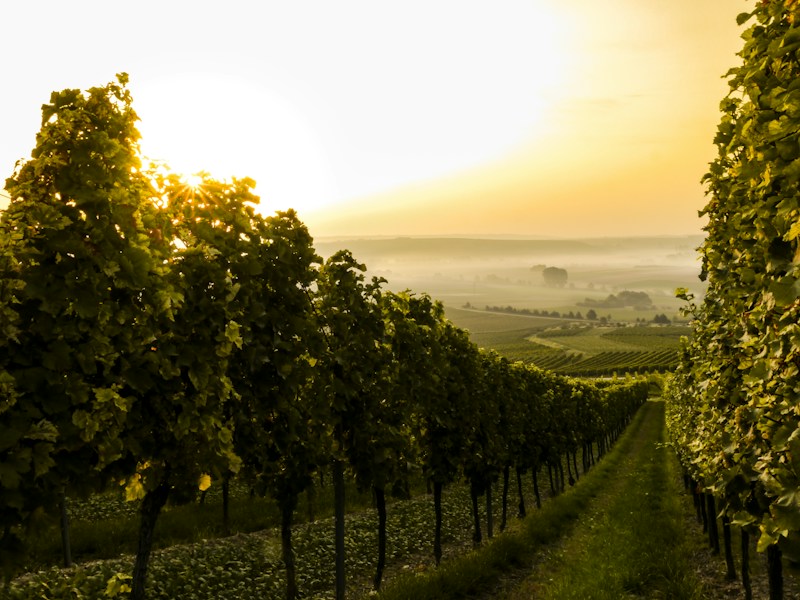
When evening gently settles over the hills of Wachau, Kremstal or Kamptal, when the sun sinks in deep gold into the river bends and loess banks, Roter Veltliner carries exactly this light into your glass. It smells of ripe apple and juicy pear, of citrus zest and honeydew melon, laced with delicate white blossoms and a warm, herbal-spicy note reminiscent of dried herbs on sun‑baked stone. It is like a stroll through a Wachau cellar lane on a late summer evening – cool in the shade, warm at heart.
On the palate it shows its true nature: full‑bodied, with a creamy melt that recalls butter on freshly baked bread or – staying true to its homeland – on a crispy Wiener Schnitzel. And yet there remains a quiet, pulsating energy, a medium but radiant acidity that carries everything and stretches it out on the finish. Roter Veltliner speaks of terraced rocks and summer sun, of cool nights and patient winemakers – and of an Austrian wine culture that preserves its quiet treasures.
---
1. The Globetrotter in the Glass: Where Roter Veltliner Calls Home
As much as we love the word “international” in the wine world – Roter Veltliner is, in the best sense, a local patriot. Its true home is Austria, above all the Danube valley and its side valleys. And yet in the glass it is a globetrotter: it unites warmth and coolness, power and finesse, fruit and spice – as if it had travelled the world only to return, in the end, to its loess and terraced soils.
Wagram – The Loess Heartland
Wagram is the stronghold of Roter Veltliner, its beating heart. Mighty loess walls, gentle hills rolling like waves towards the Danube – this is where the variety feels at home.
The wines from Wagram are often the most full‑bodied and opulent interpretations:
ripe yellow apples, stewed pear, honeydew melon, along with a warm, almost bready spiciness. The loess soils give it volume, creaminess and a melt that drapes across the palate like silk. Here, Roter Veltliner is born that invites you to a second glass – not because it is loud, but because it feels so incredibly harmonious.
Wachau – Terraces, Stone, Quiet Depth
In Wachau, that magical landscape of steep terraces and sparse rock, Roter Veltliner shows another side. The cool nights and stony soils lend it a cleaner line, more tension and a precise edge.
Wachau Roter Veltliner often smells of firmer core fruit, citrus zest and white blossoms, joined by dried herbs, a hint of chamomile and juniper. On the palate it appears somewhat tighter than in Wagram, with clear drive and an almost salty minerality. It is the contemplative philosopher among the Roter Veltliner wines – ideal for moments when you truly want to experience a wine with full awareness.
Kremstal – The Bridge Between Warmth and Freshness
Kremstal beautifully connects the Danube climate with cool side valleys. Roter Veltliner here often appears as a mediator between the richness of Wagram and the tension of Wachau.
The aromatics: ripe apple, pear, a hint of stone fruit, plus fine citrus notes and an elegant spiciness. On the palate, Kremstal Roter Veltliner is usually very well balanced – full‑bodied but not heavy, with medium acidity that is perfectly integrated. They almost feel like the “golden mean” of the styles: characterful, versatile at the table and wonderfully approachable.
Kamptal – Cool, Spicy Elegance
Kamptal, with its cool nights and varied soils, produces Roter Veltliner with particular spice and clarity. Here, aromas of dried herbs, white blossoms and fine citrus freshness often take center stage.
On the palate, Kamptal examples are often somewhat firmer, with clear structure and chiselled acidity. The weight is there, but in elegant form: more a lean athlete than a heavyweight lifter. Those who love spice, structure and fine playfulness will be happy in Kamptal.
Traisental – The Fine, Quiet Voice
Traisental, the smallest of the regions mentioned, is something like the chamber‑music stage of Roter Veltliner. Here, very precise, focused wines are often created, with a quiet but determined voice.
The fruit is rather restrained; instead, citrus zest, white blossoms and a crystalline herbaceousness come to the fore. On the palate, Traisental Roter Veltliner tends to feel a bit cooler, with firmer grip, without losing the variety’s typical breadth. They are the quiet intellectuals among the Danube wines – perfect for anyone who loves subtlety.
---
2. From Steel Tank to Silken Robe: How Maturation Shapes Its Character
Roter Veltliner is like a multi‑talented artist: depending on whether it is matured in stainless steel or wooden casks, it tells a different story. Its core identity – full‑bodied, medium acidity, ripe apple, pear, citrus zest, honeydew melon, white blossoms, dried herbs and fine spice – remains. But the pitch, texture and impact change.
Purist and Clear: Raised in Stainless Steel
In stainless steel, Roter Veltliner remains entirely itself. The stainless tank is neutral; it imparts no aromas, no vanilla, no toast – it is simply the vessel in which the fruit is allowed to speak.
A stainless‑steel Roter Veltliner shows:
- clear fruit of ripe apple and pear
- juicy citrus zest, sometimes a touch of grapefruit
- crisp but not aggressive acidity
- a defined, clean structure
The texture is full‑bodied, but without additional creaminess from wood. It feels leaner, fresher, more direct – ideal as a food wine when you want to highlight the clarity and vitality of the variety. Especially from Wachau, Kamptal or Traisental you will find many of these purist interpretations.
Silky, Multi‑Layered, Matured: Raised in Wooden Casks
In wooden casks, Roter Veltliner receives a new wardrobe. Particularly in large, usually used barrels – the classic approach in Austria – it develops an additional dimension: more contact with oxygen, more maturity, more texture.
Wines matured in wood often show:
- a creamier, almost buttery texture
- finer, often more yellow‑fruited aromatics: honeydew melon, candied citrus peel
- nutty hints (almond, hazelnut), light bread or brioche notes
- gentle, elegant acidity that nestles into the melt
Wood and Roter Veltliner form a relationship full of tension: too much new oak would drown out its fine spice, but careful use – especially in Wagram and Kremstal – can elevate the wine into something truly great: a slowly maturing character wine with impressive ageing potential. Over the years, such wines develop notes of dried herbs, honey, wax and fine spiciness, without ever feeling heavy.
---
3. Pairing Recommendations: The Perfect Partner
Roter Veltliner is a natural food companion. Its full‑bodied nature, paired with medium acidity and spicy depth, makes it a chameleon at the table – especially with Austrian cuisine, but far beyond as well.
| Gericht | Wein-Stil | Warum es funktioniert |
|--------|-----------|------------------------|
| Wiener Schnitzel mit Erdäpfelsalat | Im Stahltank ausgebauter, trockener Roter Veltliner aus dem Wagram oder Kremstal | Die vollmundige, aber klare Struktur schneidet durch das Fett der Panade, die mittlere Säure erfrischt den Gaumen, während die Noten von reifem Apfel und Birne die buttrigen Aromen des Schnitzels harmonisch aufgreifen. |
| Gebratenes Zanderfilet auf Kräuter-Risotto | Fein holzfassgereifter Roter Veltliner aus Wachau oder Kamptal | Die zarte, cremige Textur des Weins und seine kräuterwürzige Aromatik umschmeicheln den Fisch und spiegeln das Kräuter-Risotto. Die Zitruszeste und Honigmelone sorgen für Frische und Eleganz, ohne den Fisch zu überdecken. |
| Gebratene Wurzelgemüse mit Thymian & Ziegenkäse-Crumble | Puristischer, im Stahltank ausgebauter Roter Veltliner aus Traisental oder Kamptal | Die Trockenkräuter- und Würznoten des Weins verbinden sich mit Thymian und geröstetem Gemüse, während die mittlere Säure und die Frucht von Apfel & Birne dem cremig-würzigen Ziegenkäse eine wunderbare Bühne bieten. |
---
4. FAQ – 10 Questions for Roter Veltliner Lovers
❓ Is Roter Veltliner really a white wine, even though it’s called “red”?
Yes. The name is a bit misleading: the grape skins do show reddish to reddish‑brown tones, but the wine is made as a white. So the colour in the glass remains pale – often with a deep golden shimmer.
❓ What does Roter Veltliner typically taste like?
It is full‑bodied, with medium, well‑integrated acidity. On the nose and palate, ripe apple, pear, citrus zest and honeydew melon dominate, accompanied by white blossoms, dried herbs and a warm, spicy note. Depending on the maturation, creamy melt and nutty nuances can be added.
❓ How does Roter Veltliner differ from Grüner Veltliner?
Grüner Veltliner is often more peppery, more citric and usually higher in acidity. Roter Veltliner shows more breadth, creamier texture, riper fruit and deeper spiciness, with usually less “Pfefferl”. It often feels calmer, more composed – like a seasoned storyteller compared to an exuberant young friend.
❓ Is Roter Veltliner more for beginners or for advanced wine drinkers?
For both. Beginners love its accessibility, ripe fruit and harmony. Experienced tasters appreciate its complexity, the different styles from Wagram, Wachau & Co., and its ageing potential. It is a wine that grows along with you.
❓ How long can you age Roter Veltliner?
Good quality wines, especially from selected sites and careful maturation (including in wooden casks), can easily age 5–10 years, sometimes longer. Over time, more honey, herb, wax and nut notes emerge; the fruit becomes more golden and profound, the texture even creamier – without losing structure.
❓ Which dishes does Roter Veltliner pair particularly well with?
Classics: Wiener Schnitzel, Backhendl, roast poultry, cold cuts, fish dishes with creamy sides, roasted root vegetables, mushroom ragouts. Thanks to its spice, it also harmonises beautifully with herb‑driven cuisine, mild to medium‑strong cheeses and autumnal dishes.
❓ Do you really have to drink Roter Veltliner from Austria?
Almost yes. Roter Veltliner is an old, now rare variety whose true homeland is Austria; you will find significant plantings almost exclusively in the Danube region (Wagram, Wachau, Kremstal, Kamptal, Traisental). It is precisely there that it unfolds its most authentic character – deeply rooted in loess, stone and Danube climate.
❓ What is the ideal serving temperature?
For fresh, stainless‑steel‑raised Roter Veltliner: about 9–11 °C. For more complex, wood‑matured or aged wines: 11–13 °C. Too cold and they go mute; too warm and they lose tension. Give the wine a few minutes of air after opening – it will reward you with added depth.
❓ Is Roter Veltliner also suitable as a “casual glass” without food?
Absolutely. A fresh, clear Roter Veltliner is a wonderful aperitif if you prefer golden, harmonious fullness in the glass to zippy acidity. The ripe fruit, white blossoms and gentle spice make it the ideal companion to a late afternoon or early evening.
❓ Why should I actively seek out and try Roter Veltliner?
Because it is a quiet yet compelling voice in the wine world – a piece of Austrian identity in your glass. Roter Veltliner is not a mass‑market product, but a characterful variety, often tended in small quantities. When you drink it, you taste not only fruit, acidity and alcohol, but also the memory of the terraces, the gold of Danube evenings and the dedication of the growers who have chosen this gentle treasure.
---
Next time you stand in front of a wine shelf or browse a wine list and the name “Roter Veltliner” appears, let curiosity win. Choose the Danube gold in your glass – and listen to the quiet majesty that tells you of loess walls, summer sun and cool cellar lanes.