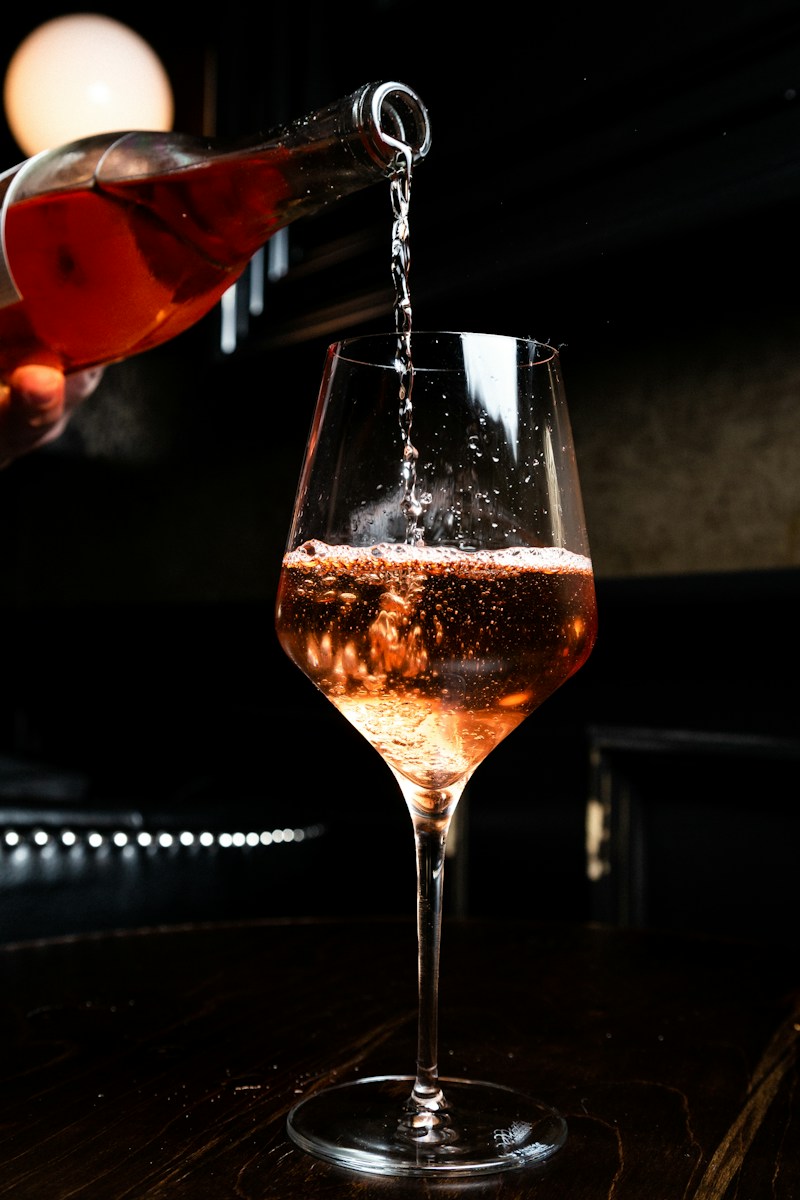
The Gentle Giant Merlot: Of Whispering Plums and the Language of the Heart
Merlot ist der sanfte Riese unter den Rotweinen – zugänglich, seidig, tiefgründig und ein idealer Begleiter für Herzen, Tische und lange Abende.
The Gentle Giant Merlot: Of Whispering Plums and the Language of the Heart
Dear wine lovers,
some grape varieties burst into the room like fireworks – loud, sparkling, demanding. Merlot, on the other hand, slips quietly through the door with a warm smile and a friendly nod – and then somehow stays until late into the night, because you simply can’t stop listening to it. It’s the wine that feels like a familiar sofa after a long day, like a conversation with a friend who has known you for years and needs no explanation.
What makes Merlot so special is this rare combination of approachability and depth. It’s the gentle giant among red wines: soft, round and velvety, with dark plums, ripe cherries and a delicate hint of chocolate and herbs. Its tannins caress rather than scratch. And yet, if you give it time and space – a good glass, a few minutes of air, perhaps a soft jazz record in the background – it opens up like a novel that seems light-footed on the first pages and later reaches straight for your heart.
Merlot is the wine that excludes no one. It’s restrained enough to take away the fear of red wine from newcomers, and at the same time complex enough to captivate experienced palates. A wine for everyday life and for special moments, for pasta at the kitchen table and for the evening when you decide to treat yourself to something good. A wine like a warm light at dusk.
---
1. The Globetrotter in the Glass: Where Merlot Feels at Home
Merlot is a child of the Old World – but its heart now beats all around the globe. It adapts like a traveller who shows a new face in every city without ever losing its soul.
Bordeaux – The Cradle: Pomerol & Saint-Émilion
In Bordeaux, especially in Pomerol and Saint-Émilion, Merlot finds its most classic and perhaps noblest expression.
Here it appears dark, mysterious and at the same time silky:
- Aromas of ripe plum, black cherry, cassis
- Fine notes of violet, cedar wood, tobacco and sometimes truffle
- Medium to full body, soft yet present tannins
- Medium acidity that gives the wine backbone
The lime- and clay-rich soils lend Merlot structure and depth here. In Pomerol, a great Merlot can be so concentrated, dense and multi-layered that it can age for decades – transforming from a dark, closed youngster into a velvety, complex philosopher.
Toscana – The Lavish Charmer
In Toscana, Merlot encounters sunshine, Mediterranean breezes and the passion of Italian winemakers. It is often blended in so-called "Supertuscans" with Cabernet Sauvignon and other varieties, but varietal Merlots can be magnificent as well.
- Juicy, ripe cherry, blackberry and plum
- Warm notes of chocolate, espresso, dried herbs
- Powerful, full-bodied structure
- A touch more opulence, sometimes with a sensual sweetness at the core of the fruit
Tuscan Merlots feel like an invitation to a long dinner: lively, hearty and always a little extravagant – as if the sun were still glowing in the glass.
Chile – The Clear, Cool Storyteller
Chile has become a true paradise for Merlot over the past decades, especially in regions such as the Central Valley, Colchagua or Maule. The climate is often moderate, the nights cool – ideal for preserving the freshness of the fruit.
- Clean, precise fruit: plum, red and black cherry
- Light herbal notes, sometimes a hint of bell pepper or bay leaf
- Medium body, silky tannins
- A somewhat cooler, fresher style with great drinkability
Chilean Merlot is often the uncomplicated friend for every day: honest, direct, accessible – a wine you can open without any big ritual and that still never feels trivial.
Kalifornien – The Sunny Stage
In Kalifornien, particularly in regions such as Napa Valley, Sonoma or Paso Robles, Merlot presents its warm, opulent side. The sun is kind to the grapes – sometimes almost too kind – and that shows in the glass.
- Ripe to very ripe fruit: plum jam, black cherry, blackberry jelly
- Pronounced notes of vanilla, caramel, chocolate from barrel ageing
- Full-bodied, soft, almost creamy texture
- Very gentle tannins, often low perceived acidity
Californian Merlot is the Hollywood charmer: it wants to please, flatter, seduce. A wine that embraces you with a single sip and says: "Lean back, I’ll take care of the rest."
---
2. From Steel Dance to Oak Embrace: How Ageing Shapes Merlot
Merlot is a sensitive mirror of how it is aged. Like a musician who shines both in an intimate jazz cellar and in a grand concert hall, it appears pure and direct in stainless steel – and multi-layered and deep in oak.
Ageing in Stainless Steel – Pure, Unadorned Fruit
When Merlot is aged in stainless steel tanks, it remains very close to its original aromatics. Steel does not interfere with flavour; it is neutral – like clear glass.
Typical characteristics:
- Emphasis on fruit: plum, cherry, blackberry in the foreground
- Floral notes such as violet come through more clearly
- Fresh, juicy impression, often somewhat lighter in body
- Little to no notes of vanilla, toast, chocolate from wood
Such Merlots feel lively, youthful, uncomplicated. They are perfect if you want to get to know the pure character of the variety – no mask, no make-up, just the grape and the soil it grew on.
Ageing in Oak – The Warm Embrace of Wood
In barriques or larger wooden casks, Merlot starts to whisper and tell stories. Wood is not just a vessel; it is a dialogue partner. It lends spice, structure, depth – and allows the wine to breathe and mature through oxygen.
Typical characteristics:
- Additional aromas of vanilla, caramel, cedar wood, chocolate, sometimes coconut
- More complexity through secondary and tertiary notes (tobacco, leather, truffle with maturity)
- Rounder, even softer tannins thanks to micro-oxidation
- Longer, warmer finish
A Merlot aged in oak is like a fireplace on a winter evening: comforting, deep, inviting. It doesn’t necessarily demand attention loudly, but if you give yourself over to it, it tells stories of time, patience and craftsmanship.
Flavour Differences at a Glance
- Fruit:
- Stainless steel: clear, fresh red and black fruit
- Oak: darker, riper fruit with spicy integration
- Texture:
- Stainless steel: straightforward, juicy, rather slender
- Oak: creamier, smoother, fuller-bodied
- Complexity:
- Stainless steel: focus on primary aromas (fruit, flowers)
- Oak: added spice, roasted notes and multi-layered development
---
3. Pairing Recommendations: The Perfect Partner
Merlot is a gifted team player at the table. Its soft tannins and medium acidity make it an exceptionally versatile food companion.
| Dish | Wine Style | Why It Works |
|--------------------------------|--------------------------------------|-------------------------------------------------------------------------------|
| Veal ragout with root vegetables | Merlot from Bordeaux, partly oaked | The gentle tannins and plum notes caress the delicate meat; herbal aromas link beautifully with the vegetables. |
| Pasta with mushroom ragout & thyme | Toscana or Chile Merlot, medium body | Earthy mushrooms and herbs harmonise with dark fruit and violet notes; the medium acidity keeps the dish in balance. |
| Grilled chicken with BBQ sauce | Californian Merlot, full-bodied | The sweet-spicy sauce meets ripe fruit and chocolate notes; soft tannins and richness capture the roasted flavours perfectly. |
---
4. FAQ – 10 Questions for Merlot Lovers
❓ 1. Is Merlot better suited for beginners or connoisseurs?
Both. Merlot is accessible because its tannins are soft and its fruit is clear and inviting – ideal for beginners. At the same time, high-quality Merlots from Bordeaux, Toscana or top sites in the New World offer enormous depth and ageing potential that will captivate seasoned wine lovers.
---
❓ 2. Does Merlot always taste sweet?
No. Merlot is generally a dry red wine. The ripe plum and cherry aromas can give the impression of “sweetness”, even though there is little or no residual sugar in the wine. Only in rare cases is Merlot actually made off-dry or sweet.
---
❓ 3. How does Merlot differ from Cabernet Sauvignon?
Merlot is usually softer, rounder and more approachable when young. Cabernet Sauvignon typically has firmer tannins, higher acidity and more pronounced structure, often needing more time to mature. Aromatically, Cabernet often shows blackcurrant, bell pepper and cedar wood, while Merlot leans more towards plum, cherry, blackberry and violet.
---
❓ 4. At what temperature should I serve Merlot?
Ideally at 16–18 °C. Too warm and it comes across alcoholic and heavy; too cold and its fruit closes up and the tannins seem harsher. If the wine comes from the cellar, let it breathe briefly in the glass; if it comes from a warm room, give it a few minutes in the fridge.
---
❓ 5. Do I need to decant Merlot?
Young, powerfully structured Merlots (especially from Bordeaux or Toscana) often benefit from 30–60 minutes in a decanter. This opens up the fruit and further softens the tannins. Mature, older vintages should be handled more carefully – here you decant mainly to separate the sediment and give just a little air.
---
❓ 6. How long can Merlot be aged?
That depends heavily on quality and origin. A simple supermarket Merlot is made for immediate enjoyment and should be drunk within 2–3 years. High-quality Merlots from Pomerol, Saint-Émilion or top Tuscan sites can easily last 10–20 years or longer and develop beautifully over time.
---
❓ 7. Does Merlot pair well with vegetarian dishes?
Yes, extremely well. Especially with earthy components such as mushrooms, lentils, roasted root vegetables or Mediterranean bakes with tomato, aubergine and herbs. A medium-bodied Merlot with good freshness is often ideal here, as it doesn’t overwhelm the dish.
---
❓ 8. Why does Merlot sometimes have a bad reputation as “boring”?
Because it became so popular, Merlot was long produced in large quantities for the mass market – often harvested too early or vinified too technically, without character. This earned it the reputation of a “generic wine”. But if you try Merlot from carefully farmed vineyards and dedicated estates, you’ll quickly realise: there is nothing boring here.
---
❓ 9. What are typical aromas that help me recognise Merlot?
Look for:
- Dark plum, ripe cherry, blackberry
- Floral notes such as violet
- With oak ageing: chocolate, vanilla, coffee, subtle herbal spice
The tannins are usually soft and velvety, the body medium to full, the acidity medium-high – a harmonious, rounded impression.
---
❓ 10. How can I train my palate for Merlot?
Taste comparatively and consciously:
- A young, fruity Merlot from Chile (stainless steel)
- A Merlot with oak ageing from Kalifornien
- A classic Bordeaux Merlot from Pomerol or Saint-Émilion
Write down three words for each wine – one each for fruit, structure and mouthfeel. This is how you start to notice the fine differences – and suddenly Merlot is no longer “one” wine, but an entire world.
---
Next time you hold a glass of Merlot in your hand, take a brief moment before you drink. Look into the dark, velvety colour, breathe in the plum, the cherry, the violet. And then feel how this gentle giant touches not only your palate, but also a small corner of your soul.