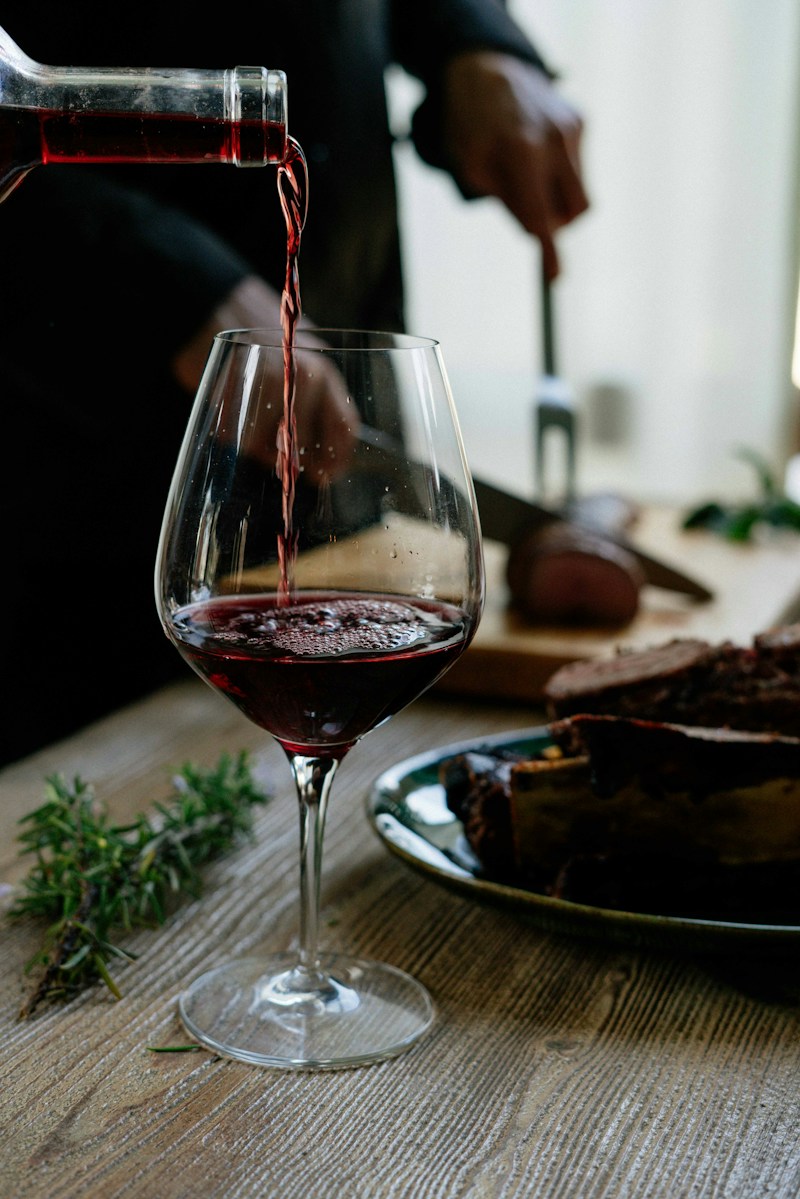
The King in Dark Red Cabernet Sauvignon: When Tannin Turns into Poetry
Cabernet Sauvignon ist kein Wein, den man nur trinkt – man begegnet ihm. Eine leidenschaftliche Reise durch Herkunft, Ausbau, Reife und Foodpairing.
The King in Dark Red Cabernet Sauvignon: When Tannin Turns into Poetry
Dear wine lovers,
there are grape varieties you drink – and there are grape varieties you encounter. Cabernet Sauvignon undoubtedly belongs to the second category. It is not simply a glass of red wine; it is an apparition: majestic, concentrated, with an almost aristocratic severity that truly reveals itself only to those willing to give it time and attention.
What makes this wine so special? Perhaps it is its inner tension: that deep ruby red, resting almost impenetrably in the glass like a silent lake at night. The promise of blackcurrant, plum and cherry, underpinned by cedarwood, dark chocolate and that subtle, almost nostalgic scent of a freshly sharpened pencil point. On the palate it is structured and muscular, with tannins that recall both velvet and steel – gripping, but never clumsy; powerful, yet never without elegance.
Cabernet Sauvignon is the king of red grape varieties – and like all great personalities, it demands patience. In its youth it can appear angular, proud, almost unapproachable. But with time it unfolds a depth that evokes old libraries and leather armchairs: tobacco, leather, dried herbs – the calm wisdom of a wine that has nothing left to prove. Whoever opens up to it experiences more than just flavour – they experience character.
---
1. The Globetrotter in the Glass: Where Cabernet Sauvignon Feels at Home
Cabernet Sauvignon is a child of Bordeaux – but has long since become a citizen of the wine world. It travels well, it adapts, and yet remains true to itself. Wherever it goes, it brings its dark fruit, its structure, its distinctive tannins – but every region tells its own story.
Bordeaux – The Classic Homeland Where It All Began
In Bordeaux, especially in the Médoc (Pauillac, Margaux, Saint-Julien, Saint-Estèphe), Cabernet Sauvignon shows its noblest, most traditional side. Here, it is rarely alone in the glass – most often married to Merlot, Cabernet Franc and sometimes Petit Verdot.
The style:
- Aromatics: blackcurrant, cassis, cedarwood, graphite, tobacco
- Structure: firm tannins, medium to high acidity, often more slender than opulent
- Impression: a wine like a perfectly tailored bespoke suit – precise, structured, built to last
In the great Bordeaux vintages, Cabernets are created that can age for decades. In their youth they often appear closed, almost stoic. But with time they open up and reveal a depth reminiscent of old leather armchairs, cigar boxes and autumn leaves.
Napa Valley – The Opulent, Sun-Drenched Interpretation
If you travel with your glass to California, especially to Napa Valley, you’ll meet the same Cabernet – but bathing in sunlight. Days are warm here, nights usually cool enough to preserve acidity. The result is wines that feel like a symphony in Dolby Surround.
The style:
- Aromatics: ripe blackcurrant, plum, blackberry, often dark chocolate, vanilla and coconut from new oak
- Structure: full-bodied, powerful, soft ripe tannins, medium to high acidity, high alcohol
- Impression: a Cabernet like a blockbuster movie – loud, emotional, immediately impressive
Napa Cabs virtually embrace you: dense fruit, creamy texture, often a hint of sweetness in the mouthfeel from alcohol and oak. They are like rock stars in tuxedos: powerful, charismatic, hard to forget.
Chile – The Cool Precision of the Andes
In Chile, above all in Maipo Valley, Colchagua and Aconcagua, Cabernet Sauvignon reveals a fascinating blend of Old World and New World. Proximity to the Andes brings cool nights and a long ripening period – perfect for refining the aromatics.
The style:
- Aromatics: blackcurrant, cherry, often a characteristic bell pepper or green capsicum note (pyrazines), plus herbs, eucalyptus
- Structure: medium to full-bodied, fresh acidity, firm but usually well-integrated tannins
- Impression: a Cabernet with clear contours – not as opulent as Napa, not as strict as Bordeaux, but somewhere in between
Chilean Cabernets often feel precise and cool, with a green, almost peppery freshness that makes the wine lively and highly drinkable.
Australia – When Sun and Spice Set the Tone
Australia’s Cabernet strongholds such as Coonawarra and Margaret River once again showcase a different facet. Coonawarra, with its famous “Terra Rossa” soils, produces wines with intense fruit and clear structure, while Margaret River stands for elegance and maritime freshness.
The style:
- Aromatics: blackcurrant, plum, mint, eucalyptus, cedarwood
- Structure: full-bodied, pronounced tannins, vibrant acidity
- Impression: a confident, characterful Cabernet where you can feel the Australian sun and the ocean breeze
This is how Cabernet Sauvignon becomes a globetrotter that speaks its own language wherever it goes – and yet always remains unmistakably itself.
---
2. From Stainless Steel to Oak: How Maturation Shapes Character
Cabernet Sauvignon is like a great actor: the script is soil and climate, but the direction is the ageing in the cellar. Whether in cool stainless steel or warm oak – the path from must to wine decisively determines style and expression.
Ageing in Stainless Steel – Pure, Unadorned Fruit
In stainless steel, the wine remains untouched by oak aromas. Steel is neutral; it preserves what the grape brings without adding anything of its own.
What does that mean in the glass?
- Focus: primary fruit – blackcurrant, cherry, plum, sometimes bell pepper
- Texture: rather linear, taut, clear, with noticeable, lively acidity
- Impression: precise, fresh, often somewhat more “youthful” and accessible
Pure stainless-steel Cabernets are rarer in the high-quality segment, but when you find them, they show a refreshing honesty: no make-up, no disguise – just the naked grape and its terroir.
Ageing in Oak – When Oak Becomes a Second Skin
The showpiece stage for Cabernet Sauvignon is almost always ageing in oak, often in barriques (small oak barrels of around 225 litres). This is where magic happens: the wine breathes through the wood, taking up a fine dose of oxygen; tannins become rounder, and complex aromas develop.
What does the oak contribute?
- Aromatics: vanilla, cedarwood, tobacco, coffee, dark chocolate, sometimes coconut (especially with American oak)
- Structure: tannins become more integrated, the wine feels smoother, rounder, denser
- Impression: more depth, more complexity, more longevity
New oak (new barrels) intensifies spice and toasted notes – too much can “smother” the wine. Used barrels are gentler and leave more room for fruit. The winemaker’s art lies in finding the right measure: the oak should dress the Cabernet like a tailored coat, not like heavy armour.
The Ageing Process – When Time Becomes the Secret Ingredient
Cabernet Sauvignon is famous for its ageing potential. In its youth, fruit and structure dominate: cassis, firm tannins, fresh acidity. Over the years, the aromatic spectrum shifts:
- Young: blackcurrant, plum, cherry, bell pepper, cedarwood
- Medium maturity: dark chocolate, tobacco, cigar, graphite, balsamic notes
- Advanced maturity: leather, undergrowth, dried herbs, often an almost meditative, quiet depth
Time transforms power into elegance. The muscular frame becomes more supple, the edges soften, the aromas grow more complex – and suddenly you are no longer facing a loud king, but a wise, serene monarch.
---
3. Pairing Recommendations: The Perfect Partner
Cabernet Sauvignon is not a quiet companion at the table. It needs counterparts with backbone – dishes that can stand up to its structure and intensity and bring out its strengths.
| Dish | Wine Style | Why It Works |
|------------------------------------|-------------------------------------|-------------------------------------------------------------------------------|
| Dry aged beef steak (ribeye) | Powerful, barrique-aged Cabernet (e.g. Napa, Bordeaux) | The fat in the steak tames the tannins; grill roast notes pick up the oak and smoke in the wine. |
| Leg of lamb with herb crust | Elegant, structured Cabernet (e.g. Bordeaux, Chile) | The spice of the herbs and the intense meat flavour harmonise with cassis, herbs and the wine’s acidity. |
| Aged hard cheese (Comté, Manchego) | Mature Cabernet with tertiary aromas | Salt, umami and nuttiness in the cheese meld with tobacco, leather and dark fruit in a deep, complex pairing. |
---
4. FAQ – 10 Questions for Cabernet Sauvignon Lovers
❓ 1. Is Cabernet Sauvignon always heavy and tannic?
Not always, but often. Cabernet naturally has thick skins and plenty of tannin. Depending on region, yield, ageing and maturity, however, wines can range from medium-bodied and elegant to powerful and massive. A Bordeaux from a cooler year often seems leaner and more taut than an opulent Napa Cabernet from a hot year.
---
❓ 2. How long should I cellar a Cabernet Sauvignon?
That depends strongly on quality and style:
- Everyday Cabernet: usually drinking well for 3–5 years
- Better qualities: 8–15 years
- Top wines (top Bordeaux, top Napa, iconic wines from Chile/Australia): 20 years and more
In general: if you’re drawn to primary fruit and freshness, drink it earlier. If you love leather, tobacco and mature notes, give it time.
---
❓ 3. What is the ideal serving temperature for Cabernet Sauvignon?
Between 16 and 18 °C. Too warm, and the alcohol dominates and the wine feels heavy; too cold, and tannins become angular and aromas stay locked. If the wine comes from a cool cellar, give it a few minutes in the glass – you’ll feel it "waking up".
---
❓ 4. Should I decant Cabernet Sauvignon?
In many cases: yes.
- Young, powerful Cabernets benefit greatly from 1–2 hours in a decanter: tannins soften, aromas open up.
- Mature wines should be decanted more gently and for a shorter time, primarily to separate sediment. Overlong decanting can dissipate fragile aromas.
A rule of thumb: young and muscular = decant longer. Old and delicate = decant gently and shorter.
---
❓ 5. Why does my Cabernet sometimes smell like bell pepper or green capsicum?
This note comes from so-called pyrazines – aromatic compounds that are more pronounced in cooler vintages or regions, and also when grapes are not fully ripe. In moderation they can lend freshness and character; in excess they seem green and unbalanced.
---
❓ 6. How can I recognise high-quality Cabernet Sauvignon?
Look for:
- Balance: fruit, acidity, tannin and alcohol should feel harmonious.
- Depth: multi-layered aromas that evolve in the glass.
- Structure: a clear build on the palate, presence of tannin without bitterness.
- Length: a long finish is often a reliable indicator of quality.
Renowned origin, a serious producer and the vintage all play a role as well.
---
❓ 7. Is Cabernet Sauvignon always aged in oak?
No. Many high-quality Cabernets are aged in oak, mostly barrique, but especially in the entry-level segment you’ll also find wines from stainless steel or large, neutral oak. These are often more fruit-driven, earlier-drinking and more affordable – and can be wonderfully enjoyable if you love pure fruit.
---
❓ 8. Does Cabernet Sauvignon pair with vegetarian dishes?
Yes, if the dishes offer enough structure and umami. Examples:
- Grilled vegetables (aubergine, bell pepper, mushrooms) with herbs
- Lentil stew with roast flavours
- Spicy, tomato-based pasta dishes with plenty of Parmesan
What matters is that the dish is robust enough so the wine doesn’t overpower it.
---
❓ 9. Why is Cabernet Sauvignon so widespread?
Because it is robust, adaptable and reliable. Cabernet copes with many climates, consistently delivers good quality, has a distinctive, recognisable style and, above all, produces wines with great ageing potential. Winemakers love its reliability; wine drinkers love its expressiveness.
---
❓ 10. How does Cabernet Sauvignon differ from Merlot?
Cabernet is generally:
- more tannic
- more structured
- higher in acidity
- often a bit more angular and longer-lived
Merlot tends to be:
- softer, rounder
- fruitier (plum, red fruits)
- earlier-drinking
In Bordeaux, they complement each other beautifully: Cabernet provides structure and backbone, Merlot the fullness and charm. Together they tell the complete story.
---
Cabernet Sauvignon is more than just a grape variety – it is a companion for life. You meet it young and untamed, encounter it again in maturity, wise and complex, and each time it tells a different story. Next time you swirl that deep, dark ruby red in your glass, take a moment: smell, taste, listen. You might just hear the king of red grapes softly whispering his story.