Wine Fridge Instead of Wine Cellar? Benefits, Temperatures and Buying Guide
A constant 12 degrees without a vaulted cellar: when a wine fridge is the better choice, which temperature every wine type needs and what to look for when buying – with jump links to every section.
A humid vaulted cellar at a constant 12 degrees – every wine lover's dream. Reality looks different: heating pipes in the basement, temperature swings, air that is far too dry. This is exactly where the wine fridge comes in. We show you when it is the better choice, which temperature your wine really needs – and what to look for when buying.
Jump straight to a section:
- Wine fridge: the better wine cellar?
- What are the benefits of a wine fridge?
- The right temperature for every wine type
- What to look for when buying
- Wine fridge or wine cellar – which is right for you?
- Frequently asked questions
Wine fridge: the better wine cellar?
Wine is a delicate natural product. To mature rather than spoil, it needs four things: a constant cool temperature, protection from light, sufficient humidity and rest. The classic wine cellar used to deliver all of this almost by itself – modern basements with heating systems, washing machines and dryers no longer do.
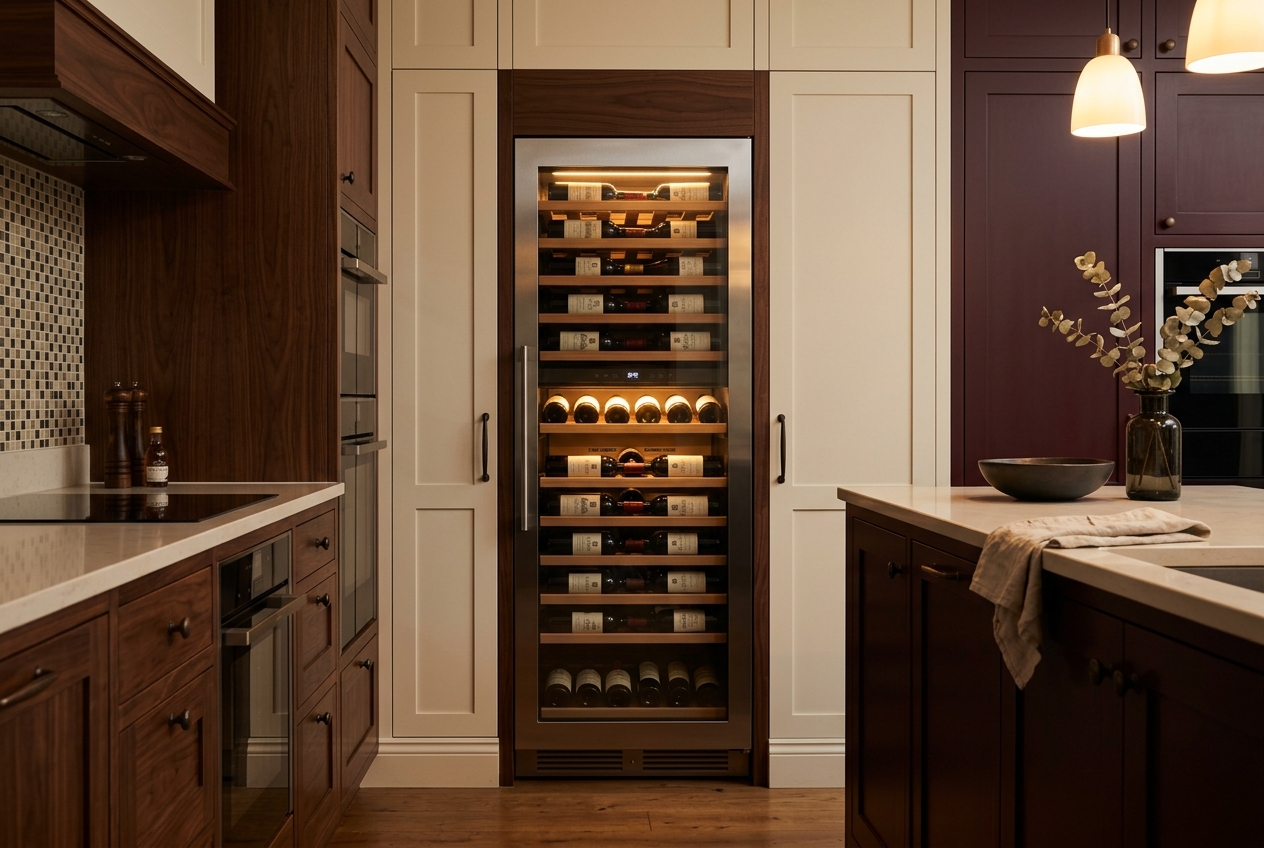
A wine fridge (also called a wine climate cabinet) recreates the conditions of an ideal cellar – often more precisely than a real cellar ever could. Temperature stability within fractions of a degree, UV-protective glass and low-vibration compressors make it the better solution for most households. The traditional cellar remains unbeatable only for very large collections and decades-long maturation – provided it truly offers constant conditions.
Quick takeaways: For 20 to 200 bottles and storage periods of up to about 10 years, a good wine fridge clearly beats the typical hobby basement. A genuine vaulted cellar only wins for large collections and decades of ageing.
What are the benefits of a wine fridge?
- Constant temperature: Electronic control keeps the chosen temperature within ±1 degree – the single most important factor for maturation. Fluctuations age wine prematurely.
- UV protection: Tinted specialty glass blocks sunlight and artificial light that would destroy aromas ("light strike").
- Controlled humidity: 50 to 80 percent keeps natural corks elastic and tight – in a heated basement corks dry out and oxygen creeps in.
- Low-vibration storage: Special compressors and wooden shelves protect the sediment and the maturation process.
- Multiple climate zones: Two or three independently controlled zones store red, white and sparkling wine correctly at the same time – or bring bottles to serving temperature.
- Always within reach: No basement stairs – and your collection is elegantly presented, often illuminated like a display cabinet.
The right temperature for every wine type
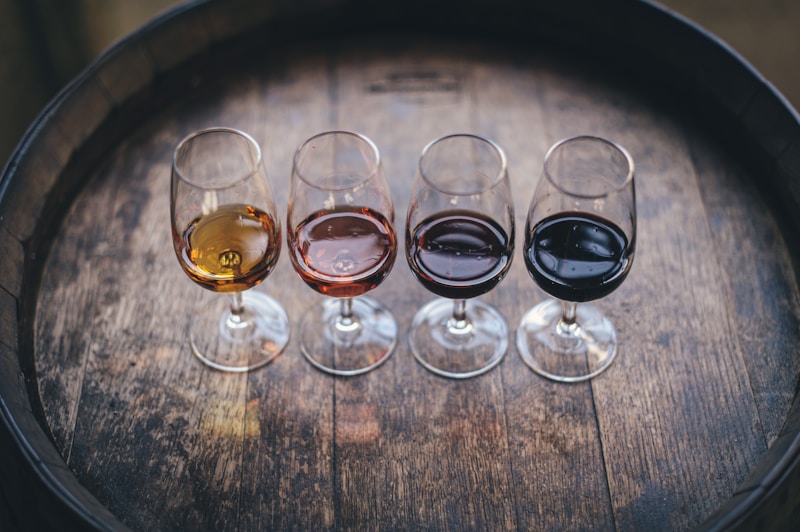
The ideal storage temperature for all wines is between 10 and 14 degrees. The serving temperature differs considerably by type:
- Sparkling wine & Champagne: serve at 6–8 °C
- Light white wines & rosé: serve at 8–10 °C
- Full-bodied whites (e.g. barrel-aged Chardonnay): serve at 10–12 °C
- Light reds (e.g. Pinot Noir, Gamay): serve at 14–16 °C
- Full-bodied reds (e.g. Bordeaux, Barolo, Syrah): serve at 16–18 °C
- Sweet and fortified wines: serve at 8–12 °C
Rule of thumb: white wine usually arrives too cold at the table, red wine too warm. "Room temperature" dates from times when rooms were 17 degrees – not 23.
A two-zone wine fridge solves this elegantly: a storage zone at 12 degrees below, a serving zone on top.
What to look for when buying
- Plan size realistically: Collections grow. If you own 30 bottles today, plan for 60 – upgrading later costs more than sizing correctly now.
- Climate zones: One zone is enough for pure storage. If you also want wines ready to serve, choose two – sparkling lovers three.
- Noise level: For open-plan kitchens stay below 40 dB. Compressor models are more efficient, thermoelectric ones quieter but weaker.
- UV protection & humidity control: Mandatory for multi-year storage, not a nice-to-have.
- Energy consumption: A good unit runs 24/7 for years – the efficiency class shows up clearly on your electricity bill.
- Built-in or freestanding: Built-in units need defined ventilation channels. Freestanding models are more flexible and often cheaper.
Wine fridge or wine cellar – which is right for you?
A wine fridge suits you if you store between 20 and 200 bottles, have no naturally cool cellar, plan to drink your wines within 1 to 10 years and care about serving temperature.
A classic wine cellar pays off if you collect several hundred bottles, age wines over decades and have a room that is naturally cool, humid and dark – or one you can climatise accordingly.
Many enthusiasts combine both: long-term storage in the cellar, the next 50 drinking bottles within reach in the wine fridge.
Wherever your bottles rest: keep track with your digital wine cellar. Scan the label, record drinking window and storage location – done. Start your digital wine cellar now
Frequently asked questions
Can I store wine in a normal fridge?
For a few days, yes. For longer storage, no: 4 to 5 degrees is too cold, the air is too dry (corks!), and the compressor vibrates more. Wine also picks up food odours.
What temperature should I set for a mixed collection?
12 degrees is the best compromise for storing all wine types. For serving, move whites to the fridge earlier or let reds warm up briefly in the glass.
How much electricity does a wine fridge use?
Depending on size and efficiency class, roughly 100 to 200 kWh per year – comparable to a small refrigerator. Multi-zone units run slightly higher.
Do bottles have to be stored lying down?
With natural corks, yes – the cork stays moist and tight. With screw caps and synthetic corks, orientation does not matter.
Is a wine fridge worth it for beginners?
Yes – especially then. Small units for 20 to 40 bottles protect your first good bottles from the biggest wine killer: fluctuating kitchen temperatures.