Which Wine with Duck? From Peking Duck to Confit – The Pairing Guide
Pinot Noir is the gold standard for duck breast, but Peking Duck calls for Gewürztraminer. All pairings from classic to surprising.
---
Duck ranks among the most demanding protein bases in wine pairing – rich in fat, intense in flavor, and depending on preparation ranging from aromatic-sweet (Peking Duck) to butter-tender-salty (Confit). The gold standard? Pinot Noir. Its combination of fruit, acidity and fine tannin structure harmonizes almost universally with the fat content of duck breast. But the reality at the table is more complex: the Hoisin sauce of Peking Duck requires aromatic white wines, while Confit de Canard with root vegetables calls for more robust red wines.
Our database of 30,162 wines and over 1,900 regional pairings shows: successful duck pairing follows clear logic – fat needs acidity, roasted aromas can handle tannin, sweetness seeks fruit. This guide leads through the three most important preparations and shows when the rule applies and where the exciting exceptions lie.
💡 Quick takeaways
•Duck breast roasted pink: Pinot Noir with cherry notes and medium acidity is the universal pairing•Peking Duck: Gewürztraminer or off-dry Riesling for Hoisin sauce and spring onions•Confit de Canard: Merlot or southern French blends with power for the salty intensity
The Pairing Logic: Why Pinot Noir Is the Gold Standard
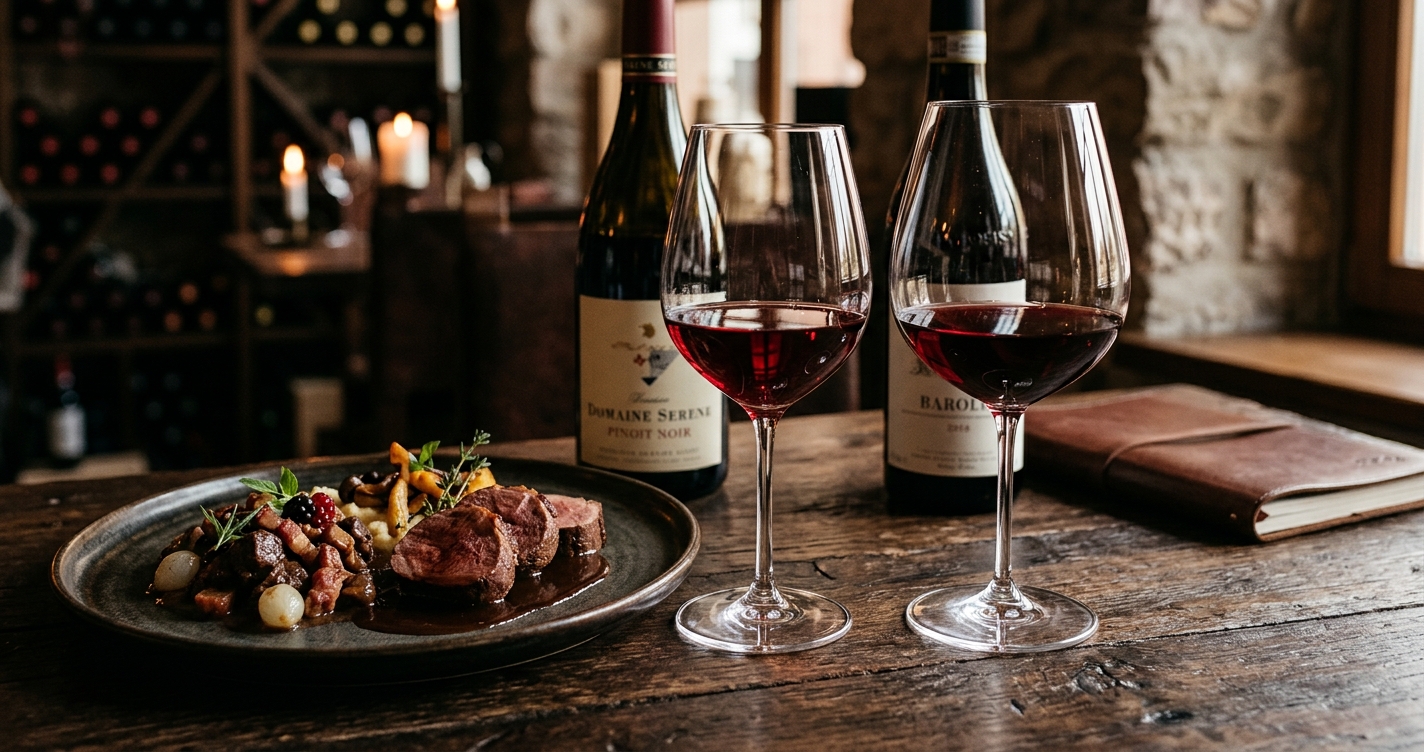
Duck breast combines two challenges: the fat of the skin (often crisply roasted) and the lean, aromatic meat. Pinot Noir brings exactly the balance both components need. Its vibrant acidity cuts through fat, while cherry, cranberry and undergrowth aromas complement the game-like meat without dominating it. The silky, never aggressive tannins support the delicate texture instead of overwhelming it.
The classic pairing works particularly well with duck breast with orange sauce or port reduction: the fruit notes of Pinot Noir mirror the sauce, the acidity prevents the dish from feeling heavy. With pink-roasted meat, the wine remains elegant enough to preserve the nuances – a Burgundian or South Tyrolean Pinot Noir shows its full capability here.
The Rule: Fat + Acidity, Roasted Aromas + Tannin
All successful duck pairings follow this principle: fat-rich preparations require wines with clear acid structure. This explains why Barbera or Sangiovese also work with Confit de Canard – both varieties with high natural acidity. The roasted aromas of crisply seared duck skin can handle moderate tannins that create texture without being astringent.
With duck breast with mushrooms or truffles, the Pinot Noir may be earthier – Burgundian sites or wines with longer bottle aging bring the necessary tertiary aromatics. The rule of thumb: the more intense the accompaniment (porcini, bacon, dark sauces), the more structure the wine may have.
The Exceptions: When Gewürztraminer and Merlot Shine
Peking Duck breaks all red wine rules. The combination of Hoisin sauce (sweet, salty, with star anise), cucumber and spring onions in paper-thin pancakes demands aromatic white wines. Gewürztraminer with its lychee, rose and spice note palette harmonizes perfectly with the five-spice complexity. The slight residual sugar (8-12 g/l) balances salt and umami, while the aromatics complement the herbs.
Confit de Canard – poached in fat, crisply finished – is more intense than seared breast. Here Merlot or southern French blends (Grenache, Syrah) are appropriate. The plum fruit and rounder tannin structure of Merlot suit the butter-tender, salt-intense texture. With Confit accompanied by lentils or root vegetables, this power is needed – Pinot Noir seems too delicate here.
Another exception: Duck à l'Orange with caramelized notes. Here mature Spätburgunder with 3-5 years of bottle age or even off-dry Chenin Blancs from the Loire can surprise – the honey and quince notes mirror the sauce perfectly.
From Our Database: 5 Concrete Recommendations
- Alois Lageder Pinot noir (Alois) – South Tyrol, Italy
The universal companion to pink-roasted duck breast. Cherry fruit and alpine herbal spice pair perfectly with orange sauce or port reduction, the acidity cuts effortlessly through the fat of the skin.
- Alois Lageder Gewürztraminer (Alois) – South Tyrol, Italy
The aromatic answer to Peking Duck. Rose petals and lychee harmonize with Hoisin sauce and spring onions, the subtle residual sugar elegantly balances the salty components.
- Alois Lageder Pinot noir Trentino (Alois) – Trentino, Italy
Slightly more robust than the South Tyrolean version, ideal for duck breast with porcini or bacon. The earthy notes and firmer structure carry more intense preparations confidently.
---
---
- Tenuta dell'Ornellaia Masseto – Tuscany, Italy
A luxurious statement pairing for Confit de Canard. The velvety Merlot texture and concentrated plum fruit match the butter-soft, salt-intensive confit – a pairing for special occasions.
- Pinot Noir from Burgundy (medium maturity)
Wines with 3-5 years of bottle age develop undergrowth, mushroom and spice notes that pair beautifully with duck with truffles or dark mushroom sauces. The evolution in the glass mirrors the complexity of the dish.
The Pairing Science
Duck meat – dark, aromatic, with a characteristic fat layer – demands wines that bring both structure and aromatics. The secret lies in the interplay of tannin and fat: tannins from red wines bind with the fat molecules of the duck, creating a creamy texture in the mouth that elevates both partners. Pinot Noir delivers elegantly silky tannins and red fruit that don't overpower tender duck breast. Merlot brings rounder, softer structure and suits heartier preparations like confit. With both varieties, moderate acidity creates the necessary counterpoint to the fat and keeps the palate fresh.
Preparation is crucial: Peking duck with its caramelized skin, hoisin sauce and spice notes can handle aromatic white wines like Gewürztraminer – whose rose scent, lychee and subtle residual sweetness harmonize perfectly with sweet-spicy components and even tame sharp accents. Umami from soy sauce, roasted notes or reduced stocks intensifies beautifully with fruit-forward red wines, while too much oak or alcohol would mask the delicate meat flavours. The balance between the wine's power and the preparation's intensity is decisive – rosé-roasted duck breast needs finesse, while slowly braised confit can handle fuller-bodied maturation as well.
VinExplorer says …
In our database with over 1,900 regional pairings, a clear pattern emerges: duck is one of the most versatile protein sources in cuisine – and that's precisely why it's so exciting for pairing. From Burgundian Pinot Noir with rosé duck breast to Alsatian Gewürztraminer with Peking duck to southwestern French Merlot-based wines with confit – each tradition has its logic. Important: don't let rigid rules restrict you. The 30,162 wines in our system show that successful pairings depend on the specific preparation, accompaniments and your personal preference. A chilled, fruit-forward red wine can delight with crispy duck breast on warm days just as much as an off-dry white wine with the Asian-spiced version. Taste, experiment – and use technology as a compass, not as dogma.
Frequently Asked Questions
Does white wine pair with duck?
Absolutely – especially with Asian preparations. Gewürztraminer with its aromatics and subtle sweetness harmonizes beautifully with Peking duck, while powerful Pinot Blanc suits mildly spiced duck dishes. The rule of thumb: the stronger the spices and sweet sauces, the better aromatic white wines work. With classic European preparation featuring jus and root vegetables, however, it's better to reach for red wine.
Which red wine pairs best?
Pinot Noir is the classic – its elegance, red fruit and silky tannins flatter tender duck breast perfectly. For heartier preparations like confit or braised legs, Merlot-based wines with their soft structure and plum fruit are ideal. Important: moderate alcohol levels (under 14%) and not too much new oak, so the delicate meat flavours aren't overwhelmed.
Rosé or well-done – does it matter?
Definitely. Rosé-roasted duck breast shows finer, almost veal-like aromas and calls for more elegant, less tannic wines – younger Pinot Noir or lighter Merlot are ideal. Well-done or confit meat develops more intense roasted aromas and can handle fuller-bodied, more mature wines with more structure. The cooking method significantly influences texture and intensity.
What if the sauce dominates?
Then the pairing is guided by the sauce, not the meat. Orange sauce calls for wines with fruit sweetness and acidity, balsamic reduction for red wines with their own spice, mushroom cream for earthy Burgundies. With boldly spiced Asian sauces featuring chili, off-dry white wines often work better than reds – the residual sweetness elegantly tempers heat.
🍷 discover your pairing now → Our AI sommelier recommends from 30,162 wines in seconds.
---