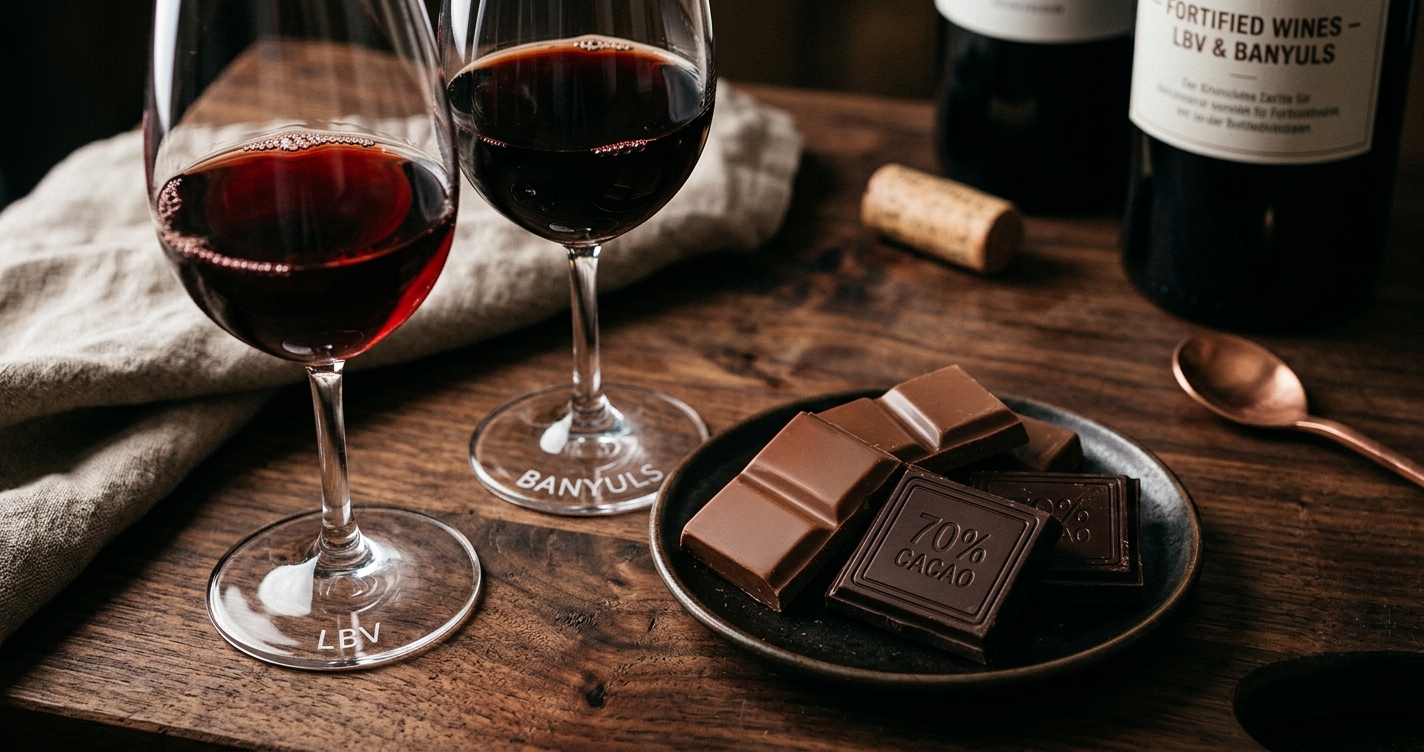
Chocolate Wine: Milk, Dark, 100% – the Percentage Logic
Milk chocolate, bittersweet, or 100% cacao? The percentage logic reveals which wine pairs with which chocolate – no guesswork required.
---
The classic dinner party question: Does red wine pair with chocolate? The answer is unsatisfying: It depends. More precisely: on the cocoa percentage. A 35% milk chocolate demands completely different flavors than a 100% dark chocolate. The decisive factor is the percentage logic: The higher the cocoa content, the more tannic, concentrated, and higher in alcohol the wine may – no, must – be. In our database of 30,162 wines, over 1,900 regional pairings from Switzerland, Italy, France, and Portugal show that successful chocolate-wine combinations follow clear patterns. While light Vin Doux Naturels harmonize with milk chocolate, high-percentage dark chocolates require oxidative powerhouses like Amarone or mature LBV Port wines. The good news: Once you understand the basic rules, you'll always make the right choice – whether for dessert or solo evening enjoyment.
💡 Quick takeaways
•Milk chocolate (30–40%): Sweet, oxidative wines (Ruby Port, Banyuls) – sugar needs sugar•Dark chocolate (70%+): Concentrated red wines (Amarone, LBV Port, Recioto) – tannin needs tannin•100% cocoa: Only mature, high-alcohol sweet wines or nothing at all – bitterness leaves no room for compromise
The Percentage Logic: Cocoa Meets Alcohol
Milk Chocolate (30–40% Cocoa): Sweet Seeks Sweet
Milk chocolate is the beginner-friendly option: creamy, sugary, barely bitter. The mistake? Dry red wines. Tannin clashes with milk fat, dry acidity makes sugar taste metallic. The solution lies in fortified or naturally sweet wines with oxidative notes. Port wine (Ruby, Tawny), Banyuls, or Maury work because their residual sweetness mirrors the chocolate's sweetness and roasted aromas (nut, caramel) build bridges. Even mousse au chocolat based on milk chocolate demands this balance: The airiness of the mousse is complemented by the viscosity of the Port, without being overwhelmed.
Dark Chocolate (70–85% Cocoa): Tannin Meets Tannin
This is where the game begins for advanced players. 70% chocolate brings tannin, roasted bitterness, and dark fruit – just like an Amarone della Valpolicella or a Late Bottled Vintage Port. The pairing rule: Concentration against concentration. Amarone (14–16% alcohol, dried grapes, oxidative maturity) has enough power to embrace the astringency of the chocolate rather than fight against it. Its notes of dried plum, cocoa, tobacco, and leather connect directly to the roasted aromas of the chocolate. LBV Port (approx. 20% alcohol, 4–6 years cask aging) additionally brings a subtle sweetness that softens bitter peaks. This also works with mousse au chocolat made with dark chocolate: The texture of the mousse moderates the tannin duel, while the wine provides aromatic depth.
100% Cocoa: The Limit of What's Possible
Pure cocoa mass without sugar is the Mount Everest challenge. Here, 95% of all wines don't stand a chance – too bitter, too astringent, too unforgiving. Only very mature, high-alcohol sweet wines (Vintage Port with 20+ years, PX Sherry, old Banyuls) can hold their own, because their residual sweetness (80–120 g/l) and oxidative complexity (chocolate, coffee, dried fig) envelop the bitterness. But honestly: With 100%, silence is often the better choice. Coffee, tea, or water aren't capitulation, but rather respect for the purity.
The Exceptions: When the Rule Breaks
White chocolate (no cocoa, only cocoa butter + sugar) calls for Moscato d'Asti, Sauternes, or light Muscat – sweetness needs fruit and acidity as a counterweight. Ruby chocolate (pink, fruity) harmonizes with fruit-forward sweet wines (Rosé Port, Maury Rosé). Spiced chocolates (chili, cinnamon, cardamom) open the door for Vin Santo, Málaga Dulce, or oxidative Grenache wines.
From Our Database: 5 Concrete Recommendations
- Pinot Noir Amarone-Style 2023, Weingut Möhr-Niggli (Graubünden, Switzerland) – Pinot Noir, €€€€
Dried grapes from Graubünden's high-altitude vineyards bring concentration and fine roasted notes – ideal for 70% dark chocolate or mousse au chocolat. The alpine freshness prevents the pairing from becoming too heavy.
- Amarone della Valpolicella Classico «Vigneto Sant'Urbano», Speri (Veneto, Italy)
The classic from Valpolicella: oxidative power, dried plum, tobacco, cocoa – a textbook match for 70–85% chocolate. Its aging potential also makes it compatible with aged chocolate pralines.
- Late Bottled Vintage Port 2018 (Douro, Portugal) – field blend
20% alcohol, 5 years cask aging, subtle sweetness – the bridge between milk chocolate (too little power) and dark chocolate (perfect). Blackberry, plum, and vanilla complement chocolate mousse with berry coulis.
- Banyuls Traditionnel, Domaine de la Rectorie (Roussillon, France) – Grenache
Naturally sweet, oxidative, notes of cocoa, fig, nut – pairs with 50–70% chocolate and bridges the transition from milk to bitter. The acidity keeps the pairing fresh.
---
---
- Recioto della Valpolicella Classico, Tommasi (Veneto, Italy) – Corvina, Rondinella
Amarone's sweet sibling: less alcohol, more residual sugar, the same oxidative depth. Ideal with chocolate desserts featuring fruit compote or with milk chocolate with nut filling.
The Pairing Science
The success of a chocolate-wine pairing depends significantly on the cocoa content. With milk chocolate, the high fat content (25–30%) neutralizes the wine's tannins—a classic case of tannin-fat balance. At the same time, the sugar content presents a residual sweetness challenge: the wine must be at least as sweet as the chocolate, otherwise it tastes metallic and flat. LBV Port with 19–20% alcohol and 90–120 g/l residual sugar masters this task with ease. With dark chocolate (70% cocoa), the balance shifts: less fat, more tannin from cocoa. Here a tannin-on-tannin encounter emerges, calling for spicy, concentrated wines with their own sweetness—Banyuls made from oxidatively aged Grenache grapes offers precisely this complexity.
With 100-percent chocolate, we reach the limits of classic pairings: without sugar, with maximum bitter compounds, wines with extreme fruit concentration and residual sweetness are required. Amarone della Valpolicella, produced from dried grapes with 15–18% alcohol and intense dried fruit notes, can embrace this bitterness. The Appassimento method creates a density that can stand up to the power of pure chocolate. With Mousse au Chocolat, the airiness also plays a role: the creamy texture calls for wines with a velvety structure that don't cut through with too much acidity—this is where the oxidative character of Banyuls shines with its nut-caramel complexity.
VinExplorer says …
After analyzing over 1,900 pairings, our database shows: chocolate is not created equal. The cocoa percentage is your most important compass. With milk chocolate and Mousse au Chocolat, LBV Port and Banyuls regularly land among the top 3 recommendations—the combination of residual sweetness, alcoholic warmth and spicy fruit creates harmony rather than competition. Amarone shows its strength particularly with dark chocolate above 70%: its dried cherry and fig notes form an aromatic bridge to the roast profile of the cocoa bean. An insider tip from our community: let the wine breathe for 15 minutes and bring the chocolate to room temperature—temperature shock is the most common pairing killer with this duo.
Frequently Asked Questions
Which wine pairs with white chocolate?
White chocolate contains no cocoa solids, only cocoa butter, sugar and milk—it's essentially a sweet fat product. Classic chocolate wines like Port often seem too heavy here. Lighter sweet wines with fruity freshness work better: a young Moscato d'Asti with peach notes or a Sauternes with creamy texture. The sweetness must balance the high sugar content (45–50%) without overpowering the delicate vanilla note.
Why does red wine sometimes taste metallic with chocolate?
This is usually due to insufficient residual sugar in the wine. Chocolate (especially milk chocolate with 50+% sugar) lowers the taste threshold for sweetness in the mouth. A dry red wine with 0–4 g/l residual sugar then tastes bitter and astringent. Additionally, cocoa tannins and wine tannins intensify each other—without a sugar buffer, this unpleasant metallic taste emerges. Always choose wines with natural residual sweetness (at least 40 g/l with milk chocolate).
Does it always have to be sweet wine?
With milk chocolate: practically yes. With very dark chocolate (85–100%), a window opens for dry but extremely concentrated red wines. A mature Châteauneuf-du-Pape with 15% alcohol and prune notes can harmonize with 85-percent chocolate because the fruit concentration creates a "perceived sweetness." But beware: this only works with minimal chocolate portions (5–10 g) and is definitely expert territory—for most chocolate situations, sweet and fortified wines remain the safe bet.
Does Champagne work with chocolate?
Dry Champagne (Brut) with chocolate is a classic misconception. The high acidity (6–8 g/l) and minimal residual sweetness (0–12 g/l) clash with chocolate's sweetness and fat. It's different with Demi-Sec Champagne (32–50 g/l residual sugar): these rarer bottlings can work with milk chocolate—the mousse softens tannins, the sweetness balances. Even better: a Rosé Champagne Demi-Sec with strawberries in dark chocolate. But for pure chocolate bliss, Port remains the first choice.
🍷 discover your pairing Now → Our AI sommelier recommends from 30,162 wines in seconds.
---


