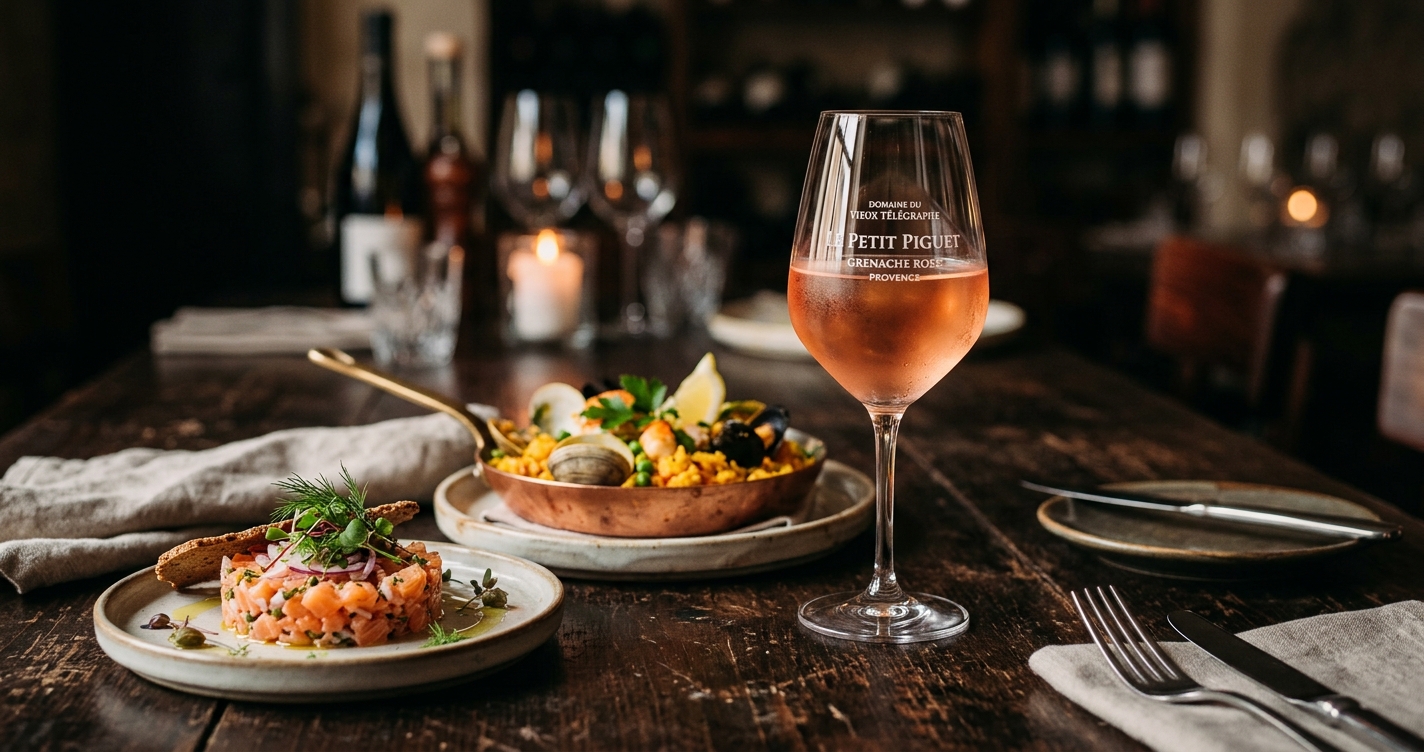
Rosé Wine Pairing: More Than Just Summer – Year-Round Uses
Rosé is not purely a summer wine. Discover data-driven pairings with salmon tartare, paella, and chicken Provençale for all seasons.
---
Rosé carries the image of a light summer drink – a misconception that wastes many excellent pairing opportunities. While pale Provence rosés do indeed shine on hot days, fuller-bodied representatives from Grenache or Pinot Noir demonstrate their strength with a surprisingly wide range of dishes throughout the year. In our database of 30,162 wines, over 1,900 regional pairings position rosé far beyond terrace season. The bridging position between white and red makes this wine category the most flexible partner in the kitchen: fruity freshness meets subtle tannic structure, acidity meets body. Whether with raw salmon tartare, spicy paella, or herb-rich Provençal chicken – rosé navigates confidently between delicate and aromatic dishes. The key lies in the conscious choice of grape variety and origin, not the season.
💡 Quick takeaways
•Variety rule of thumb: Grenache rosé for spicy dishes, Pinot Noir rosé for delicate textures, Provence blends as all-rounders•Year-round strengths: Rosé combines white wine freshness with red wine structure – ideal for seafood, poultry, and Mediterranean aromatics•Temperature matters: 10–12°C in winter for full-bodied styles, 8–10°C in summer for pale Provence rosés
The Pairing Logic: Colour is Programme
A rosé's colour intensity reveals more about its pairing potential than many think. Pale, salmon-coloured Provence rosés from Grenache, Cinsault, and Syrah emerge from brief skin contact and offer delicate red berry aromas, vibrant acidity, and a lean body. They harmonise brilliantly with raw fish – salmon tartare finds its ideal partner in this category. The acidity cuts through the fish's fat, while the subtle fruit underscores freshness without competing with citrus or herbs.
Bolder, onion-skin-coloured rosés – often from Grenache or southern locations – develop more body and phenolic content. Here emerges the bridge to spiced, more complex dishes like paella. The combination of saffron, paprika, seafood, and rice demands a wine that brings both freshness and substance. A structured Grenache rosé masters this task: it carries the spice, cools the heat, and complements both the maritime and earthy components.
Pinot Noir rosés from cooler regions like Germany or Burgundy are distinguished by finer texture and red berry elegance. Their moderate acidity and silky structure predestine them for poultry with herbs – Provençal chicken with thyme, rosemary, and tomatoes benefits from this finesse. The herbs mirror in the aromatics, while the acidity balances the tomato's acidity.
The Rule: Seasonality is Context, Not Boundary
Rosé pairings work best where neither the power of a red wine nor the purity of a white is required. This 'grey zone' exists all year round: winter bouillabaisse, autumn mushroom risotto with herbs, spring asparagus with salmon. The season defines the dish, not the wine choice. A full-bodied rosé served at 12°C develops the same harmony with braised rabbit in November as with grilled swordfish in June.
The Mediterranean origins of many rosé styles – Provence, Languedoc, Spain – explain their affinity for olive oil, garlic, tomatoes, and seafood. These ingredients aren't bound to summer. An aioli in March, a ratatouille in October: rosé remains the logical choice.
The Exceptions: When Rosé Fails
Heavy, reduction-driven dishes overwhelm most rosés. Beef roast with dark sauce, game, or heavily smoked meats need the tannic structure and concentration of a red wine. Similarly, delicate rosés fail with extremely spicy Asian dishes – here they lack the residual sugar that Riesling or Gewürztraminer provide. With creamy, butter-rich sauces (Beurre Blanc, Hollandaise), a full-bodied Chardonnay delivers more substance.
From Our Database: 5 Concrete Recommendations
- Roséwein – Empfehlung zu gegrilltem oder mariniertem Lachs (Kellerei Beispiel) — Pfalz, Germany — Pinot Noir Rosé — €€
This German Pinot Noir rosé shows the silky texture that salmon tartare needs: fine red berry notes without dominance, acidity without sharpness. The Pfalz origin guarantees ripeness while maintaining freshness – ideal for raw fish with capers and citrus.
- Côtes de Provence Rosé "Château Minuty M" (Château Minuty) — Provence, France — Grenache, Cinsault, Syrah — €€€
A Provence classic with the typical pale salmon hue and precise minerality. The blend of three varieties balances between floral notes and red fruit – perfect with paella, where saffron and seafood demand elegance.
---
---
- Tomares Ballus Côtes de Provence Rosé (Restaurant Die Waid) — Côtes de Provence, France — Grenache, Cinsault — mid-range
Grenache-dominated, with more body than pure Cinsault wines. This structure carries Poulet Provençale, where tomatoes, olives and herbs demand a wine with backbone. The wine's Mediterranean DNA mirrors the flavours of Provençal cuisine.
- Miraval Côtes de Provence Rosé (Château Miraval) — Correns, France — Cinsault, Grenache, Rolle, Syrah, Tibouren — premium
The complex five-variety blend brings depth without heaviness: Tibouren contributes spice, Rolle freshness. An all-rounder for sophisticated pairings from salmon tartare to paella – the premium quality justifies itself through length and texture.
- Domaine Saint-Jean de Villecroze Côtes de Provence Rosé (Domaine Saint-Jean de Villecroze) — Villecroze, France — Cinsault, Grenache, Syrah, Tibouren — mid-range
An artisanal Provence rosé with a Tibouren component that contributes spicy notes. The balance between Cinsault freshness and Grenache body makes it a reliable companion for Mediterranean dishes across all seasons – authentic without price excess.
The Pairing Science
Rosé unites the best of both worlds: the fresh acidity of white wines and the subtle tannic structure of red grape varieties. This balance makes it the ideal partner for fatty dishes like salmon tartare – the vibrant acidity cuts through the oils of the fish, whilst the delicate tannins underscore the umami notes without dominating. With paella, another advantage comes into play: the medium body of Grenache rosé stands up to both the spicy saffron notes and the various protein components without being overwhelmed by their complexity.
The minerals in Provence rosé harmonise particularly elegantly with herbs – a crucial factor with Poulet Provençale. Thyme, rosemary and lavender find their echo in the stony terroir notes of these wines. Pinot Noir rosé additionally brings red fruit aromas that combine with roasted or caramelised elements, thus unlocking more complex flavour layers. The moderate alcohol strength (typically 12–13.5% vol.) prevents subtle aromas from being masked – a common pitfall with more powerful red wines.
VinExplorer says …
'Rosé is chronically underestimated,' explains our Head of Pairing. 'Our database shows over 1,900 successful regional pairings where rosé doesn't just "work", but brilliantly so.' Particularly intriguing: versatility varies greatly by origin and grape variety. Whilst Provençal rosés with their pale salmon colour and crisp acidity tend towards raw and lightly cooked dishes, darker Grenache or Pinot rosés offer more structure for more intense preparations. 'The most frequent question in our tool: "Which rosé with which dish?" The answer lies in the production method – press wine versus saignée, short versus longer maceration. These nuances make the difference between a good pairing and an unforgettable one.'
Frequently Asked Questions
What temperature is ideal for rosé with food?
Serve rosé at 10–12 °C – cooler than red wine, but warmer than many white wines. Too cold masks the aromatics, too warm makes the wine flat. With multi-course menus, it may rise to 13–14 °C in the glass, which particularly benefits structured rosés from Pinot Noir and allows their complexity to unfold.
Does rosé also pair with spicy Asian dishes?
Absolutely. The residual sugar in some rosés (often 4–8 g/l) effectively tempers heat, whilst the fruit notes harmonise with sweet-and-sour sauces. Grenache rosé with strawberry and melon aromas complements Thai curries or Vietnamese summer rolls beautifully. Only avoid extremely dry Provence styles with very spicy dishes.
Does rosé work with cheese?
Yes, especially with fresh and soft cheeses. Goat's cheese, mozzarella and young Brie benefit from the acid structure. Provence rosé with its minerality lifts creamy textures without being overwhelmed by salty notes. With aged hard cheeses, however, most rosés reach their limits – here, red wines are the better choice.
Can rosé be served with desserts?
With fruit-based, not overly sweet desserts, certainly. Strawberry tart, peach Melba or rhubarb compote pair well with aromatic Pinot Noir rosés. Important: the wine should be at least as sweet as the dessert, otherwise it appears thin and sour. For chocolate or very sweet creations, however, rosé is unsuitable.
🍷 discover your pairing Now → Our AI sommelier recommends from 30,162 wines in seconds.
---


