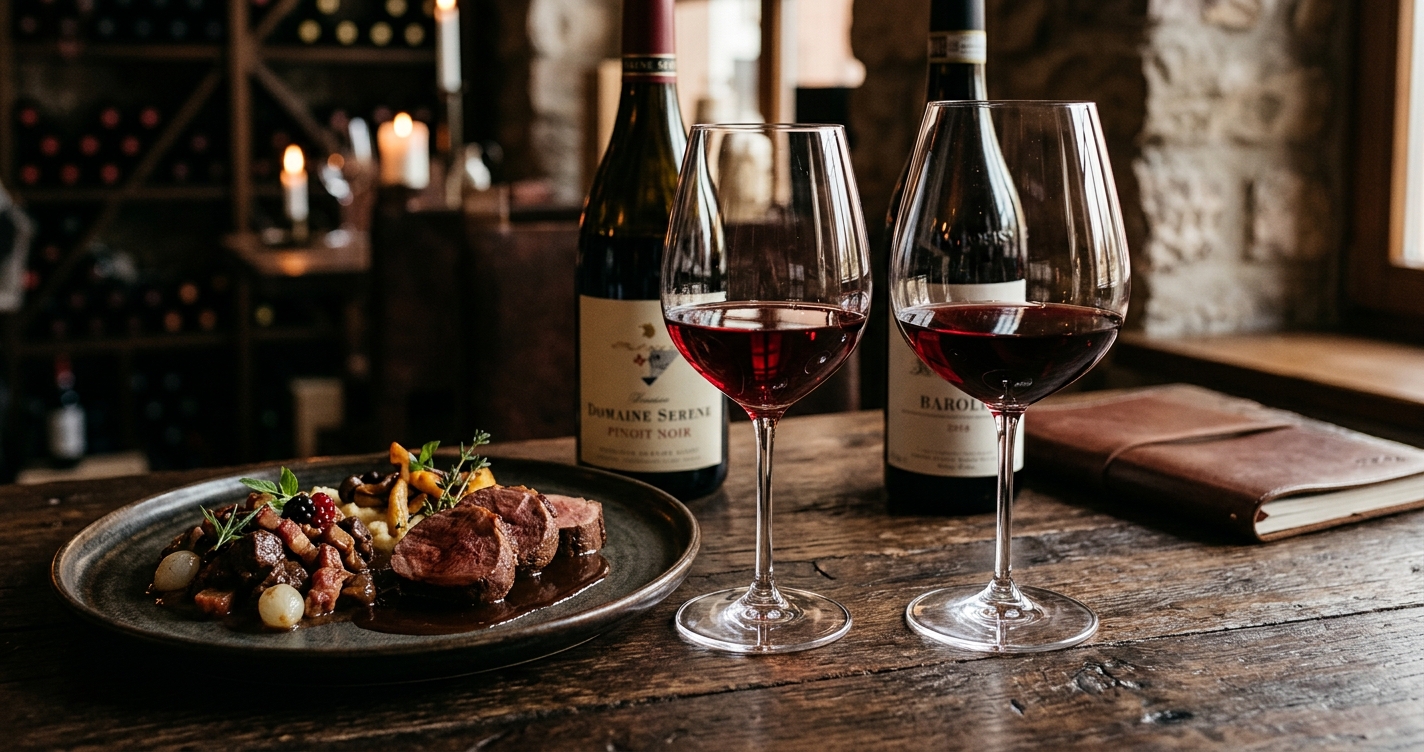
Tannins & Fat: Why Red Wine & Steak Work
Why does Cabernet Sauvignon pair perfectly with steak? The chemistry behind tannin-fat pairings – with 5 specific wine recommendations from our database.
---
It's one of the classics of wine pairing: a juicy steak, a tannin-rich red wine. What seems to come together naturally on the plate and in the glass is based on a precise biochemical reaction. Tannins – those astringent polyphenols from grape skins, seeds, and oak barrels – bind with proteins and fats in meat. The result: the wine loses its bitterness, the fat is "cut," and both components enhance each other. In our database of 30,162 wines, over 1,900 regional pairings demonstrate that this combination is not coincidental – it follows clear chemical patterns. Whether entrecôte, leg of lamb, or dry-aged ribeye: fatty meat dishes demand tannin-rich red wines that can keep up structurally. Why this is the case and which grape varieties are particularly suitable, we explore in this article.
💡 Quick takeaways
•Tannins bind to fat and protein, neutralizing astringency and cleansing the palate•Cabernet Sauvignon, Nebbiolo, and Tannat deliver the necessary structure for fatty meat dishes•Without sufficient fat, tannin-rich wines taste dry and bitter – dosage is crucial
The Biochemical Foundation of Tannin-Fat Pairing
Tannins are phenolic compounds that react with salivary proteins, creating that furry, dry sensation in the mouth. Upon contact with fat and protein from meat, the binding dynamics change: the tannins preferentially attach to food proteins rather than salivary proteins. The result is a noticeable reduction in astringency – the wine tastes softer, fruitier, more accessible.
At the same time, tannins act as natural fat solvents. They emulsify lipids on the tongue and leave behind a clean palate after each sip – ready for the next bite. This alternation between fat accumulation and tannin-based cleansing creates that rhythmic enjoyment that distinguishes great meat-wine pairings.
The Most Tannin-Rich Grape Varieties in Focus
Cabernet Sauvignon leads the list. Small, thick-skinned berries deliver high tannin concentrations, often complemented by barrique aging. A grilled steak with roasted aromas pairs perfectly with the smoky, spicy notes of a mature Cabernet.
Nebbiolo from Piedmont shows a different tannin texture: finer, yet penetrating. The high acidity adds additional cutting power, ideal for fatty leg of lamb or beef brisket.
Tannat, originally from southwestern France, now primarily cultivated in Uruguay, is considered the most tannin-rich grape variety of all. Here you truly need fatty meat – Argentine asado cuts or US prime ribs – to tame the massive tannins.
The Exceptions: When Tannin Doesn't Work
Not every meat dish can handle high tannin levels. Lean poultry, steamed fish, or breaded schnitzel offer too little fat for the chemical reaction. The wine then tastes bitter, disharmonious, out of place. Even with dishes featuring sweet sauces (balsamic reduction, port wine jus), tannins can amplify undesirably harsh notes.
The rule of thumb is: the higher the fat content and the more intense the roasted aromas, the more tannin the dish can handle. A Wagyu steak with marbling grade 9+ can even carry a young Barolo or a massive Cahors. A filet steak without a fat rim, on the other hand, would be better accompanied by a softer Merlot or Pinot Noir.
From Our Database: 5 Concrete Recommendations
- Alois Lageder Cabernet Sauvignon (Südtirol, Italy)
A straightforward, medium-weight Cabernet with precise fruit and balanced tannin structure. Pairs excellently with entrecôte with herb butter – the alpine coolness of the Südtirol terroir is reflected in the clear aromatics.
- Alois Lageder LÖWENGANG Cabernet (Südtirol, Italy)
The single-vineyard version with more density and depth. Extended aging in wood brings additional complexity, ideal for dry-aged steaks with pronounced roasted aromas and intense meat character.
- Alois Lageder Cabernet Trentino (Trentino, Italy)
Somewhat warmer, somewhat more fruit-forward than the Südtirol counterparts. The softer tannins make it the ideal companion for oven-roasted leg of lamb, where delicate fat meets Mediterranean herbs.
---
---
- Tenuta dell'Ornellaia ORNELLAIA (Tuscany, Italy)
This Bordeaux blend of Cabernet Sauvignon and Merlot embodies Tuscan elegance. The silky tannin structure and perfect balance of power and finesse pair beautifully with premium cuts like Japanese Wagyu or US prime ribs.
- Marqués de Riscal Baron de Chirel (Rioja, Spain)
A Tempranillo-Cabernet blend from the luxury category. The Cabernet component contributes international tannin structure, while Tempranillo provides Spanish spice – perfect with Chuletón (Spanish T-bone steak) from the charcoal grill.
The Science of Pairing
Tannins are polyphenols from grape skins, seeds, and oak barrels – they create that furry, drying mouthfeel that often perplexes red wine newcomers. Fat is their natural counterpart: proteins and lipids in meat bind tannins mechanically, softening astringency while simultaneously allowing the wine's fruit and structure to emerge more clearly. A Cabernet Sauvignon with lean chicken appears edgy and bitter; the same wine with marbled entrecôte reveals cassis, cedarwood, and silky length. The chemistry behind this is simple: tannin molecules preferentially react with fat and protein compounds rather than saliva proteins – the mouthfeel remains supple, the palate ready for the next bite.
Acidity plays the second leading role: it cuts through fat layers, refreshes the palate, and elevates umami-rich roasted aromas. Tannat from Uruguay or Nebbiolo from Piedmont deliver both – tannin and acidity – and therefore harmonize brilliantly with leg of lamb or dry-aged steaks. Umami from the Maillard reaction (the brown crust) amplifies fruit in the wine and dampens bitter notes. The classic steak pairing is no accident, but biochemistry: tannin binds fat, acidity balances umami, and the roasted aromas of the meat mirror the wood and roasted notes of aged red wines.
VinExplorer says …
We've analyzed over 1,900 regional pairings – and the pattern is crystal clear: high-quality, tannin-rich red wines are served almost exclusively with fatty meat dishes in their regions of origin. Nebbiolo with Brasato al Barolo, Tannat with Asado, Cabernet Sauvignon with rib-eye – tradition is rooted in sensory science. Our AI sommelier uses this data to provide precise recommendations from 30,162 wines and 313 grape varieties. Lean grilled vegetables? A light Pinot Noir. Dry-aged entrecôte with a fat cap? Then by all means choose a structured Barolo or Napa Cabernet. The rule is simple: the more fat, the more tannin the pairing can handle (and needs).
Frequently Asked Questions
Why does red wine often taste bitter with lean meat?
Without sufficient fat, there's no counterpart for the tannins. They bind to saliva proteins, creating a rough, dry sensation and allowing bitter compounds to dominate. Lean poultry or veal harmonizes better with low-tannin red wines (Pinot Noir, Gamay) or fruit-forward white wines.
Does this principle work with vegetarian dishes as well?
To a degree. Mushrooms (especially porcini, shiitake) provide umami and meaty texture, avocado or nut sauces bring fat – a Nebbiolo with risotto ai funghi porcini is a classic. Still, the intensity of meat is usually missing; in that case, choose wines with ripe tannin structure rather than raw astringency.
Which grape variety has the strongest tannins?
Tannat leads the rankings, followed by Nebbiolo, Cabernet Sauvignon, and Petite Sirah. However, élevage also plays a crucial role: barrique aging extracts additional wood tannins. A young Tannat from Uruguay demands Asado or lamb shoulder, while an aged Barolo Riserva also harmonizes with more finely marbled meat.
Does a dry-aged steak really need an expensive wine?
No – but quality in the glass elevates quality on the plate. Dry-aging concentrates umami and fat; an over-extracted cheap Cabernet comes across as one-dimensional. A balanced mid-range wine (structured Malbec, Priorat, Bordeaux Cru Bourgeois) often delivers more harmony than an immature Grand Cru.
🍷 discover your pairing Now → Our AI sommelier recommends from 30,162 wines in seconds.
---