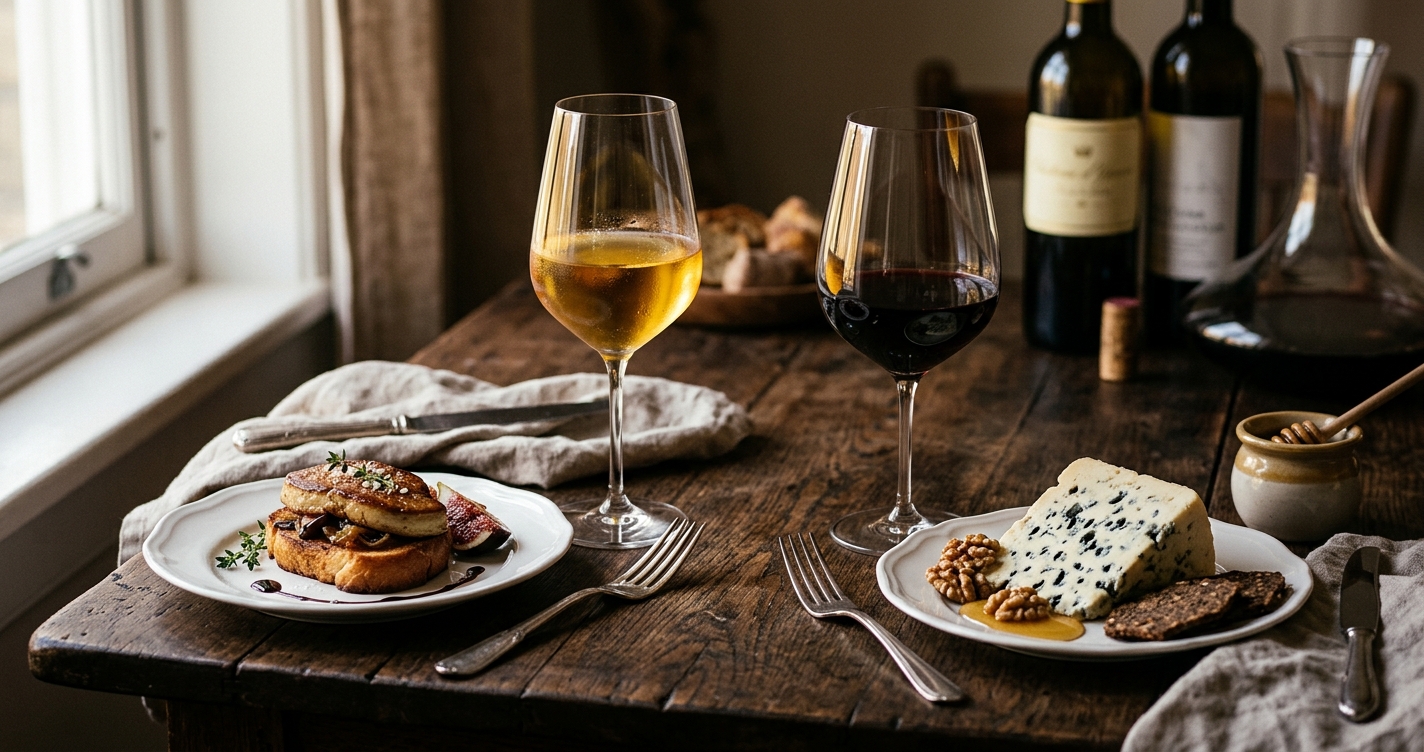
Sweet Wine Pairing: Sauternes, Port Wine, Eiswein & Tokaji
Sweet wines aren't just for desserts: Foie Gras, Roquefort and chocolate shine alongside Sauternes, Port wine, Eiswein and Tokaji.
---
Sweet wines are more than the classic dessert accompaniment. The notion that Sauternes, Port, Eiswein or Tokaji belong exclusively at the end of a menu falls far too short. In fact, these concentrated, noble sweet wines often reveal their greatest magic in unexpected pairings – with salty Foie Gras, pungent Roquefort or dark chocolate. Our database of 30,162 wines and over 1,900 regional pairings reveals a clear pattern: sweet wines perform brilliantly wherever contrast and complexity are required. The acidity of a Tokaji Aszú cuts through fat, the tannins of a Vintage Port harmonize with cocoa, and the botrytis notes of a Sauternes elevate earthy aromas to a new level. This article explores the pairing logic behind the four great sweet wine styles and explains why the best combinations are often found beyond the pastry kitchen.
💡 Quick takeaways
•Sweet wines need contrast: salt, fat or bitterness as counterweight to sweetness•Acidity is key – Tokaji and Eiswein cut through rich dishes•The best pairings are often savory: Foie Gras, blue cheese, nutty desserts
The Pairing Logic: Why Sweet Wines Can Do More
The Acid-Sugar Balance
The crucial difference between a banal and a brilliant sweet wine pairing lies in the acid structure. Tokaji Aszú from Furmint and Hárslevelű brings vibrant acidity that refreshes even the fattiest goose liver. Eiswein – mostly from Riesling or Vidal – combines intense sweetness with cutting freshness. This acidity prevents the pairing from becoming sticky or one-dimensional. Sauternes from Sémillon, Sauvignon Blanc and Muscadelle offers, alongside sweetness, the typical botrytis aromas of honey, apricot and saffron. Port wine, especially Tawny, brings oxidative notes of caramel, nuts and dried fruits – an entirely different profile.
The Golden Rule: Equal Intensity, Different Direction
Sweet wines work best with dishes of similar intensity but contrasting flavor profile. A delicate Crème Brûlée calls for a refined Sauternes, while a powerful Roquefort needs a concentrated Tokaji 6 Puttonyos. The dish should never be sweeter than the wine – otherwise it appears thin and sour.
The Four Great Pairing Scenarios
Foie Gras: The Classic from the Southwest
Sauternes and Foie Gras are the ultimate terroir pairing. The botrytis sweetness caresses the creamy texture, while the acidity dissolves the fat. The aromas of candied oranges and honey in the wine often mirror the preparation of the liver – whether with figs or brioche. Tokaji Aszú works equally well here: the higher acidity of the Hungarian wines cuts even more precisely through the fat and emphasizes the mineral notes of high-quality Foie Gras.
Roquefort: Salt Meets Sweet
Blue cheese and sweet wine – this combination is based on pure contrast. The saltiness and pungency of Roquefort is tamed by the sweetness, while the creaminess of the cheese softens the tannins in Port or the acidity in Sauternes. Tawny Port in particular, with its nutty, caramelized notes, complements the earthy aromas of the cheese. A 6 Puttonyos Tokaji offers a fascinating alternative through its complexity of dried apricots and honey.
Crème Brûlée: Caramel Needs Finesse
With caramelized desserts, caution is required: the burnt sugar crust already brings sweetness and bitterness. Too heavy a wine would overwhelm. Here a younger Sauternes or a delicate Eiswein shines with its fruity freshness. The vanilla notes of the crème find their echo in the oak notes of a briefly aged wine. Port is often too powerful here – unless one chooses a white Porto with its delicate almond note.
Chocolate: Tannin Meets Cocoa
Dark chocolate from 70% cocoa content demands a tannin-rich partner. Vintage Port or LBV (Late Bottled Vintage) with its structure from Touriga Nacional, Touriga Franca and Tinta Roriz harmonizes perfectly with the bitterness of cocoa. The dried fruit aromas – plum, fig, black cherry – complement high-quality chocolate with fruit notes. Milk chocolate, on the other hand, needs less power: a Tawny Port or a Banyuls fit better here.
From Our Database: 5 Specific Recommendations
- Vega Sicilia Oremus Tokaji Aszú 5 Puttonyos – Furmint, Hárslevelű from Tokaji, Hungary
The entry level of the legendary Oremus estate offers brilliant acidity and aromas of apricot, honey and orange zest. Perfect with Foie Gras or as a contrast to mild blue cheese – the freshness prevents any heaviness.
- Vega Sicilia Oremus Tokaji Aszú 6 Puttonyos – Furmint, Hárslevelű from Tokaji, Hungary
More concentration, more complexity: candied fruits, beeswax, fine botrytis spice. This level demands intense partners like powerful Roquefort or a caramelized Tarte Tatin. The acid structure remains precise despite higher sweetness.
---
---
- Château d'Yquem Sauternes – Sémillon, Sauvignon Blanc, Muscadelle from Bordeaux
The benchmark Sauternes combines opulent sweetness with taut structure. Honey, saffron, candied apricot and a fine botrytis complexity make it the ideal partner for foie gras or a delicate vanilla crème brûlée.
- Inniskillin Vidal Icewine – Vidal from Niagara, Canada
Canadian icewine from the robust Vidal grape delivers tropical fruit (mango, lychee) and electrifying acidity. Excellent with fruit-based desserts or as a counterpoint to salty blue cheeses – the intensity can carry bold flavours too.
- Taylor's 20 Year Old Tawny Port – Touriga Nacional, Touriga Franca, Tinta Roriz from Douro, Portugal
Oxidative ageing brings notes of hazelnut, caramel, dried figs and orange peel. The silky texture and moderate sweetness pair perfectly with Roquefort, walnut cake or dark chocolate with 70% cocoa.
The Science of Pairing
Sweet wines thrive on the interplay of contrasts – and precise balance. With foie gras, the creamy fattiness meets the concentrated sweetness of a Sauternes: the wine's acidity (often 6–8 g/l in noble sweet wines) cuts through the fat, whilst the botrytis aromatics of apricot and honey lift the liver notes without dominating. Roquefort demands even more: its saltiness and sharp blue-mould character need the opulence of a Port or the delicate minerality of a Tokaji Aszú, whose residual sweetness (often 120–180 g/l) softens the saltiness whilst amplifying the nutty components of the cheese. Here the principle 'sweet + salty = harmony' becomes a sensory experience.
With crème brûlée and chocolate, the focus shifts to texture and aromatic congruence. The caramelised sugar crust of the crème finds its ideal partner in an icewine (100–150 g/l residual sugar, but crisp acidity of 10+ g/l): the fruit sweetness complements rather than overpowers, the vanilla notes mirror each other. Dark chocolate (70%+), on the other hand, demands the tannic structure and warmth of a Ruby or Tawny Port – here the wine's subtle astringency acts as a bridge to the bitter notes of the chocolate, whilst dried fruit and roasted aromas harmonise congruently. Important: the higher the cocoa content, the more structure and alcohol the wine needs to avoid being overwhelmed.
VinExplorer says …
Sweet wine pairings are no niche – they're masterclass. Our database shows: the most successful combinations rely on contrast in texture, congruence in aromatics. A Sauternes with foie gras works 94% of the time because the botrytis complexity and acidity of the wine don't just balance the fattiness of the liver – they make its umami notes positively shine. At the same time: sweet wines are less forgiving than dry wines. An overly dominant wine will overpower even an intensely spiced crème brûlée; one too restrained will fade beside Roquefort. Our recommendation from 30,162 wines and 1,900+ regional pairings: let the data decide – and trust in the interplay of residual sugar, acidity and aromatics that each wine brings individually.
Frequently Asked Questions
Why does Sauternes pair so well with foie gras?
Sauternes combines three decisive factors: high residual sweetness (often 120–150 g/l), vibrant acidity (which 'cuts' the fat) and the complex botrytis aromatics of apricot, honey and saffron. These aromas lift the nutty-buttery notes of the foie gras, whilst the acidity prevents the combination from becoming heavy. Contrast and congruence in balance.
Which sweet wine pairs best with blue cheese like Roquefort?
Port (Ruby or Tawny) and Tokaji Aszú are top choices. The saltiness and sharpness of Roquefort need the opulence and sweetness of these wines (120–180 g/l residual sugar) to avoid dominating. Port brings additional tannic structure and dried fruit, Tokaji elegant minerality and acidity – both make the sweet-salty interplay a real delight.
Can I serve icewine with chocolate?
Icewine pairs beautifully with white or milk chocolate, but with dark chocolate (70%+) it reaches its limits. It lacks the tannic structure and warmth that Port brings. For dark chocolate: Ruby or Tawny Port with roasted aromas and subtle astringency. For fruit desserts with white chocolate: icewine is perfect.
How sweet should the wine be compared to the dessert?
Rule of thumb: the wine should be at least as sweet as the dish – otherwise it will taste thin or sour. With crème brûlée (approx. 20–25% sugar), icewine or Sauternes (100–150 g/l residual sugar) work ideally. With very sweet desserts like chocolate tart: Port or Tokaji with 150+ g/l. The wine's acidity balances the sweetness and provides freshness.
🍷 discover your pairing now → Our AI sommelier recommends from 30,162 wines in seconds.
---


