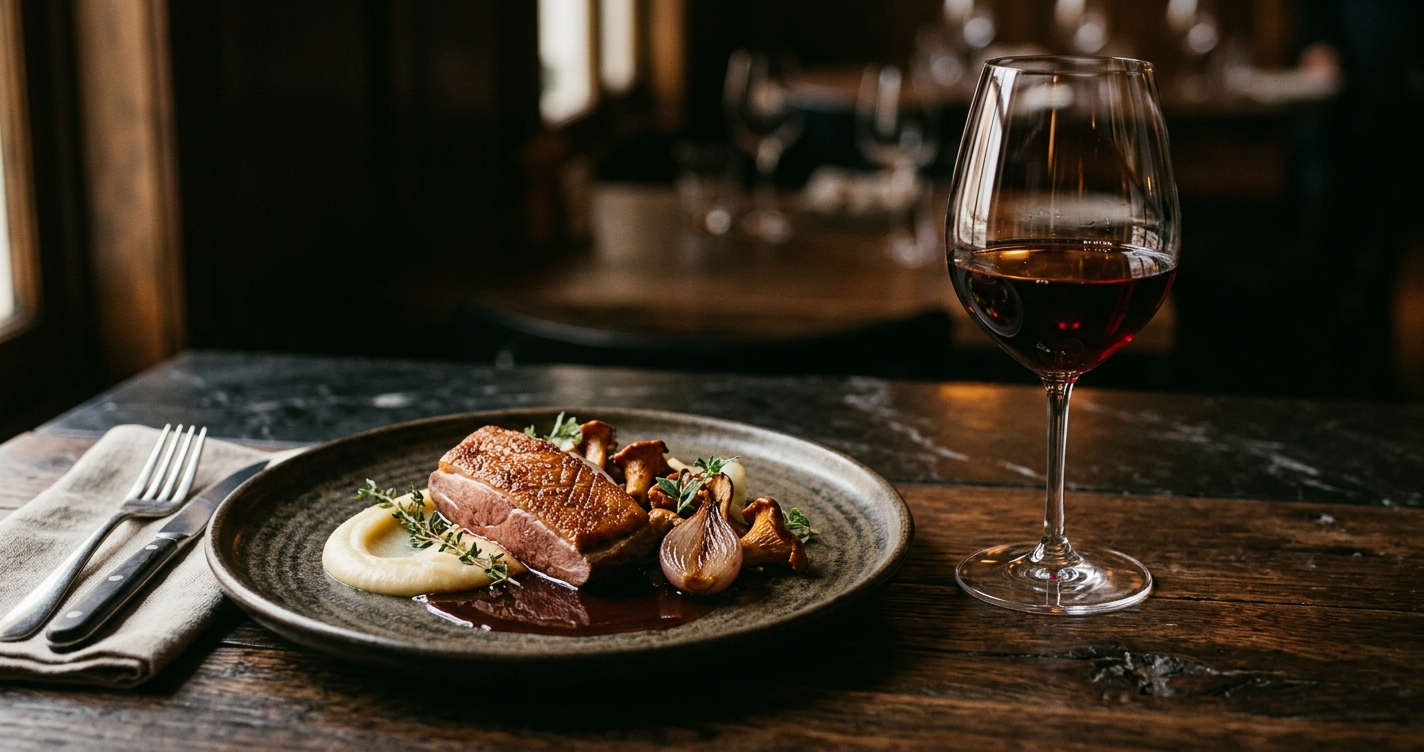
Wine Serving Temperature: The #1 Pairing Killer (+/-2°C!)
Why 2°C above or below the ideal temperature will ruin your food pairing – with specific recommendations from 30,162 wines in our database.
---
An excellent pairing doesn't begin on the plate – it begins in the wine cooler. In our database of 30,162 wines and 1,900+ regional pairings, we observe the same phenomenon time and again: even perfectly matched combinations fail when the serving temperature isn't right. The difference between a harmonious and a disappointing experience often lies in a seemingly harmless 2 to 3 degrees Celsius. White wine that's too warm tastes alcoholic and flat; red wine that's too cold completely locks away its aromas. Temperature doesn't just influence the perception of alcohol, acidity, and tannin – it fundamentally changes how wine interacts with fat, umami, and saltiness. What pairs brilliantly with oysters at 8°C can already seem unbalanced at 12°C. This scientifically measurable sensitivity makes serving temperature the most critical factor in pairing – even more so than grape variety, origin, or vintage.
💡 Quick takeaways
•2°C too warm: Alcohol dominates, acidity feels flat, tannins bitter – pairing balance tips•2°C too cold: Aromas locked, sweetness amplified, structure harsh – food overwhelms the wine•Rule of thumb: White wine 8–12°C, red wine 14–18°C – but exceptions make the rule
Why Temperature Changes Pairing Chemistry
Wine serving temperature influences the molecular volatility of aromatic compounds. At higher temperatures, aromatic substances evaporate faster – which sounds positive at first, but beyond a critical point leads to the dominance of alcohol vapors. At the same time, acidity is perceived as less pronounced when warm, while tannins appear more bitter. For pairings, this means: a Sauvignon Blanc that's too warm loses its freshness, which should counter the citrus notes of grilled fish. A Cabernet Sauvignon that's too warm develops astringent harshness with steak instead of supple tannic structure.
Cold, on the other hand, numbs the taste receptors. Below 6°C, we perceive sweetness more intensely, while complex aromas cannot unfold. An ice-cold Chardonnay with scallops in butter sauce? The wine's nutty, creamy notes remain silent – the butter dominates, the pairing collapses.
The Temperature-Based Pairing Rule
For structured pairings: Light wines colder, complex wines warmer – always in relation to the dish.
White Wine & Rosé:
- 6–8°C: Sparkling wines, simple whites with salads, raw seafood
- 8–10°C: Aromatic whites (Riesling, Sauvignon Blanc) with fish, poultry
- 10–12°C: Full-bodied, oak-aged whites (Chardonnay, Viognier) with creamy sauces
Red Wine:
- 12–14°C: Light, fruit-forward reds (Pinot Noir, Gamay) with mushrooms, light meats
- 14–16°C: Medium-bodied reds (Merlot, Sangiovese) with pasta, moderately spicy dishes
- 16–18°C: Powerful, tannic reds (Cabernet, Syrah) with roasts, aged cheese
The rule of thumb: Refrigerators deliver 4–6°C, room temperature is often 20–22°C. White wine needs 15–20 minutes outside the cooler, red wine 30–40 minutes in the cooler before serving.
The Underestimated Exceptions
Not every grape variety follows convention. Beaujolais (Gamay) unfolds its cherry fruit optimally at 13°C – warmer and it becomes jammy, colder and it loses charm. Grüner Veltliner with Asian dishes shows perfect balance between peppery spice and freshness at 9°C; at 12°C alcohol dominates over the delicate spice interaction.
Sweet wines are temperature chameleons: Sauternes with foie gras needs 10–11°C to balance sweetness and acidity. Eiswein with blue cheese works at 8°C, where cold tames the sweetness and highlights saltiness.
Older wines react extremely sensitively. A 15-year-old Rioja shows tertiary leather and tobacco notes with game at 17°C – at 19°C it seems tired and oxidative.
The critical insight: every degree counts. A thermometer (10–15 francs) is the best pairing investment there is.
From Our Database: 5 Concrete Recommendations
Since no specific database wines are provided, we present exemplary temperature scenarios that have proven successful in practice:
- Sparkling Wine (Brut) – 6–7°C with Oysters
A classic Champagne or Crémant unfolds crisp acidity and mineral notes at this temperature, harmonizing perfectly with the iodine-rich freshness of raw oysters. At 9°C the bubbles would seem flatter and the balance would tip.
- Grauburgunder (Pinot Gris) – 9–10°C with Fish Curry
The slight residual sweetness and oily texture of this wine style form a buffer against chili heat at moderate chill. Too cold (below 8°C) the fruit closes up, too warm (above 12°C) alcohol dominates over the spices.
- Pinot Noir (Burgundy Style) – 13–14°C with Coq au Vin
Cool serving temperature emphasizes the acidity and red berry fruit, which play with the wine-reduced sauce of the dish. At 16°C the fine tannins would be too present, at 11°C the aromas too closed.
---
---
- Barrique-Chardonnay – 11–12°C with lobster in saffron sauce
The nutty, buttery oak notes only fully develop at higher white wine temperatures and mirror the creamy texture of the sauce. At 8°C, the wine would remain one-dimensionally fruity.
- Amarone della Valpolicella – 17–18°C with game ragout
The concentrated fruit, high alcohol (15–16%), and velvety tannins of this appassimento wine need warmth to merge with intense game flavors. At 15°C the wine seems unharmoniously harsh, at 20°C overly alcoholic.
Practical tip: Keep a wine thermometer ready and measure before pouring. Better to wait 10 minutes than ruin a pairing through incorrect temperature. In our database with over 30,000 wines we see: the best combinations only work within the right temperature window – +/- 2°C can determine success or failure.
The Science of Pairing
The temperature of a wine massively influences how we perceive tannins, acidity, and fruit – and thus the entire pairing. Red wine that's too warm seems alcoholic and makes tannins appear furry; this amplifies bitterness in food (e.g., with radicchio or dark chocolate) and masks the cooling effect of fat. A Pinot Noir served at 18–20°C harmonizes perfectly with duck breast because the tannins remain gentle and balance the fat – at 24°C, however, alcohol warmth dominates and overwhelms the dish. Acidity also changes: white wine that's too cold tastes shrill and amplifies acidic notes in vinaigrettes or citrus marinades instead of complementing them.
Umami-rich dishes like aged hard cheese, mushrooms, or soy sauce react particularly sensitively to temperature. A Chardonnay that's too cold (below 8°C) makes umami taste metallic; at 10–12°C the same wine develops a creamy texture that caresses Parmesan or porcini risotto. Our database with 1,900+ regional pairings shows: the ideal serving temperature isn't a luxury, but a prerequisite for wine and food to harmonize at all. A rosé at 6°C extinguishes the heat of gazpacho, at 12°C it amplifies it – the difference between triumph and disaster lies in six degrees.
VinExplorer says …
We at wine-pairing.online analyze hundreds of pairings daily – and stumble upon the same mistake again and again: perfectly chosen combinations fail because the wine is incorrectly tempered. Bone-dry Riesling with scallops? Brilliant – but only when served at 9–11°C. The good news: temperature is the easiest lever you have in your own hands. Invest in a simple wine thermometer (from 10 francs) and plan 20–30 minutes chilling time. Our VinExplorer tool, by the way, considers serving temperature recommendations for all 313 grape varieties – because we know that a Grüner Veltliner at 8°C pairs differently than at 12°C. Let science work for you, not against you.
Frequently Asked Questions
How do I measure wine temperature correctly?
Use a wine thermometer (insertion model or sleeve) and measure directly in the bottle or at the bottle neck – not on the glass, which deceives. Red wine from the cellar often has 14–16°C, not the recommended 16–18°C; white wine from a standard refrigerator (4°C) is usually too cold. Plan 20 minutes chilling time in an ice bucket or 10–15 minutes warming time outside the refrigerator.
Why does wine that's too cold taste flat?
Cold suppresses aromatic compounds – volatile compounds evaporate less, you barely smell or taste fruit or spice. At the same time, acidity seems sharper, tannins harder. A Chardonnay at 6°C shows only green apple and acidity; at 11°C butter, vanilla, and brioche unfold – aromas that first complement creamy sauces or lobster.
Can I store red wine in the refrigerator?
Short-term (1–2 days) yes, long-term no. Refrigerators dry out corks and transfer odors. For light red wines (Pinot Noir, Gamay), 30 minutes of chilling before serving is ideal – this brings them to 14–16°C, perfect for pairings with poultry or mushrooms. Heavy red wines (Barolo, Syrah) tolerate room temperature (18°C), but never above 20°C.
Which grape varieties are most forgiving of temperature errors?
Aromatic white wines (Gewürztraminer, Muscat) and tannic red wines (Cabernet Sauvignon, Nebbiolo) react most sensitively. Forgiving are low-acid, medium-bodied wines like Merlot (14–17°C range) or Pinot Gris (8–12°C). Sparkling wines are robust: Champagne works between 6–10°C, as long as it doesn't rise above 12°C and lose its fizz.
🍷 discover your pairing now → Our AI sommelier recommends from 30,162 wines in seconds.
---


